Singapore's police force has launched an investigation into an altercation at an East Coast coffee shop involving an elderly man who was allegedly shoved to the ground after he patted a young girl on the head. The incident has drawn scrutiny for raising questions about cultural boundaries, public safety, and the use of force in response to perceived slights, particularly when elderly individuals are involved.
The police confirmed receipt of a formal report on Sunday, 16 August, with investigations proceeding according to standard procedures. The matter came to public attention through a Facebook post by a user identifying himself as Bei-ing Wanton Noodle, who stated that the elderly man at the centre of the incident was his father. In his appeal for information, the son sought to identify the man responsible for pushing his father to the ground, indicating that the family was pursuing the matter through both law enforcement and public channels.
According to the son's account, his father is in his 70s and experiences significant mobility challenges. Rather than remaining idle, the elderly man helps operate a stall at the coffee shop, demonstrating continued engagement in family business activities despite his physical limitations. This background is relevant to understanding the dynamics of the incident, as it suggests the man was moving through a familiar environment where he worked, rather than acting as a random visitor.
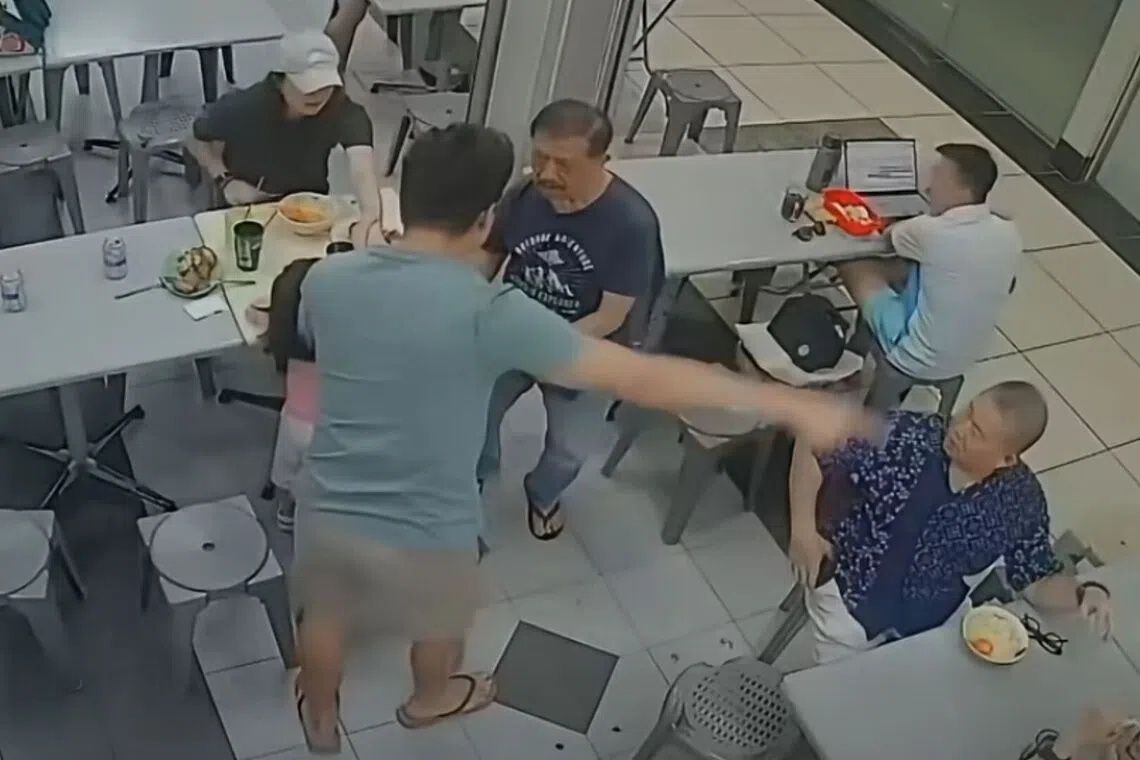
Security camera footage posted alongside the Facebook appeal provides crucial visual documentation of what occurred. The video shows the elderly man navigating the interior of the coffee shop, using tables on either side for stability and support as he moves through the space. His gait and reliance on furniture for balance underscore his physical vulnerability and the care required in his movements. This visual evidence becomes particularly significant when assessing the proportionality of the response that followed.
As the elderly man passed a table where a young girl was seated, he extended his hand to pat her head. This gesture, while potentially well-intentioned, prompted an immediate reaction from a woman seated with the girl. The woman attempted to prevent the contact by pushing his hand away, a defensive action that preceded the more serious confrontation. The intervention suggests concern about the unsolicited physical contact with the child, even before the male companion became involved.
A man at the table, who had apparently stepped away moments earlier, quickly returned upon witnessing the interaction. He verbally engaged with the elderly man, creating an escalating confrontation in the coffee shop setting. Within seconds, the situation deteriorated when the man shoved the elderly man to the ground. The forceful nature of the push raises critical concerns about the use of physical force against a vulnerable elderly person, particularly one with documented mobility issues and difficulty walking.
In a subsequent development that complicates the narrative, the man who pushed the elderly patron later approached the victim to apologise and offered him a drink. This gesture, while potentially meaningful, does not negate the initial incident or its consequences. The son reported that his father sustained severe back pain following the fall, indicating that the physical impact had genuine medical ramifications. Injuries to elderly individuals from falls can have long-term health implications, making this incident more than a momentary discomfort.
The family's efforts to identify the man responsible demonstrate the limitations of relying solely on formal police investigations when specific individuals need to be located. The son's follow-up post on 16 August indicated that despite significant social media engagement and public concern expressed by netizens, the family had still not obtained concrete information regarding the man's identity. This gap between the incident, community awareness, and actual identification highlights challenges in accountability and follow-up.
The incident raises broader questions about social norms in shared public spaces, particularly regarding unsolicited physical contact with children and appropriate responses to such situations. While the woman's attempt to stop the patting was a reasonable protective measure, the subsequent physical confrontation with an elderly person introduces proportionality concerns. Many observers across Southeast Asia, including Malaysia, would likely question whether physical force was a justified response, particularly given the victim's age and physical condition.
From a Malaysian perspective, the incident reflects broader cultural and legal considerations around personal space, consent, and intergenerational conduct. Malaysian society, like Singapore's, values respect for elders, yet also increasingly prioritises child safety and parental authority in protecting children from unsolicited contact. The competing values at play in this incident—respect for the vulnerable elderly versus protection of children—illustrate the complexity of modern urban social dynamics.
The case also underscores the role of CCTV footage in modern law enforcement investigations. Security camera evidence has become invaluable in clarifying disputed incidents and can significantly influence how authorities assess responsibility and proportionality. As urbanisation continues across Southeast Asia, such visual documentation increasingly shapes outcomes in complaints and investigations.
Looking forward, the police investigation will need to weigh multiple factors: the elderly man's conduct in patting the child, the woman's defensive response, the man's use of physical force against a vulnerable person, and the subsequent apology and gesture of reconciliation. The outcome may influence community expectations around intervention in similar situations and the appropriate threshold for physical responses in public spaces.

