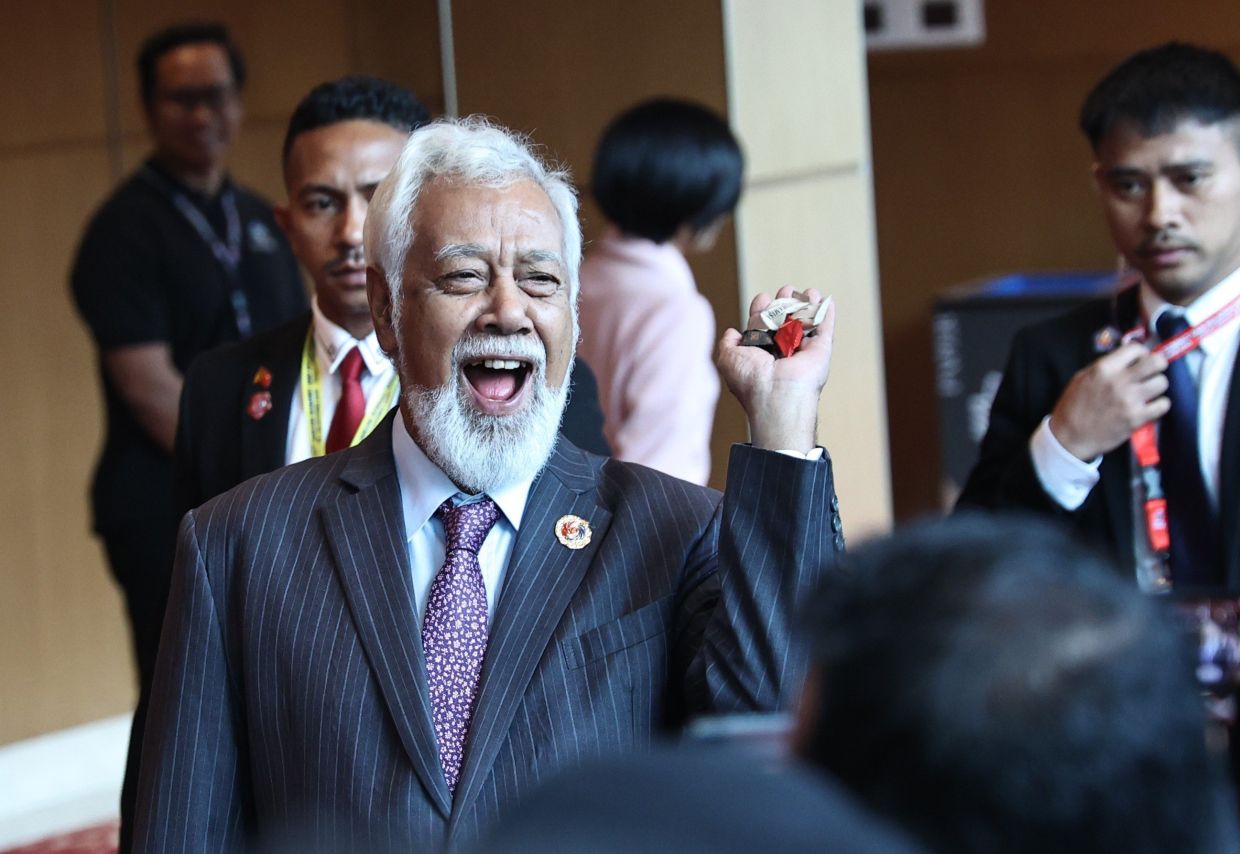
Prime Minister Lawrence Wong has signalled Singapore's commitment to supporting Timor-Leste's fuller integration into the Association of Southeast Asian Nations, framing the relationship around mutual contribution rather than one-way assistance. During a two-day visit to Dili on July 3, Wong articulated a vision whereby the newest Asean member would move beyond simply enjoying membership privileges to becoming an active, responsible contributor to the regional bloc's collective endeavours. This messaging reflects a subtle but important shift in how Singapore approaches its relationship with Timor-Leste, positioning the island nation not as a perpetual aid recipient but as an emerging partner with its own role to play in regional affairs.
Timor-Leste's journey to full Asean membership represents a long and painstaking process. The country first applied for membership in 2011, was granted observer status in 2022, and finally achieved full membership on October 26, 2025, becoming Asean's eleventh member state. This delayed trajectory reflects the complex geopolitical and economic realities facing a young nation that only gained independence in 2002 following decades of conflict and foreign occupation. Singapore's proactive engagement signals recognition that Timor-Leste's successful integration into Asean carries implications for regional stability and the bloc's cohesion during a period of significant strategic competition in Southeast Asia.
The centrepiece of Singapore's renewed commitment is an upgraded support package designed to facilitate Timor-Leste's transition from peripheral observer to meaningful participant in Asean activities. Rather than detailing the specific contents of this package in his public remarks, Wong emphasized that Singapore was "doing as much as we can" to assist Timor-Leste in maximizing its membership benefits. This deliberate ambiguity may reflect the sensitive nature of capacity-building assistance, which can sometimes be perceived as patronizing or interventionist. Nevertheless, the announcement of concrete measures suggests Singapore is prepared to invest significant resources in ensuring Timor-Leste does not become a passive or ineffectual member.
Central to Singapore's strategic calculus is Timor-Leste's expressed ambition to assume the rotating Asean chairmanship in 2029. This aspiration carries considerable symbolic weight, as the chair rotates annually among member states and represents a significant organizational and diplomatic responsibility. Wong acknowledged the magnitude of this undertaking, noting that "all of us who have gone through Asean chairmanships know it is a massive and significant responsibility and undertaking." Singapore's decision to prepare Timor-Leste for this role reflects not merely bilateral goodwill but a broader interest in ensuring the chairmanship functions smoothly and enhances Asean's effectiveness at a critical juncture in regional affairs.
As part of its enhanced assistance package, Singapore will provide tailored workshops for Timorese officials specifically addressing the administrative and diplomatic requirements of the Asean chairmanship. Additionally, Singapore will host attachments from Timorese officials to its own chairmanship teams when Singapore assumes the rotating role in 2027. This mentorship approach allows Timor-Leste to gain practical experience and institutional knowledge from observing an experienced hand navigate the complexities of coordinating among ten diverse member states with competing interests and priorities. The two-year gap between Singapore's and Timor-Leste's chairmanships provides an optimal learning window.
Wong's visit to Dili marked the first-ever trip by a Singapore prime minister to Timor-Leste, underscoring the historical significance of the moment. The timing was deliberately chosen to coincide with Timor-Leste's achievement of full Asean membership, positioning the visit as a natural inflection point in bilateral relations. Wong described sensing "a sense of confidence and optimism from the Timorese officials about their future, especially as the country enters a new phase with its membership in Asean." This characterization suggests that despite Timor-Leste's challenges—persistent poverty, governance issues, and dependence on oil revenues—there exists genuine momentum and appetite for deeper regional engagement among Dili's leadership.
Singapore and Timor-Leste also formalized a bilateral consultation mechanism between their foreign ministries during the visit, mirroring arrangements Singapore maintains with other Asean partners. This institutional framework will enable regular dialogue at senior official and ministerial levels, creating formal channels for addressing bilateral concerns and identifying areas for expanded cooperation. Such mechanisms, though sometimes dismissed as bureaucratic formalism, serve important functions in building trust and preventing misunderstandings. For Timor-Leste, access to Singapore's institutional diplomatic experience represents valuable learning opportunities, while for Singapore, regular consultations provide insights into Timorese policy priorities and strategic thinking.
The bilateral relationship extends beyond political and diplomatic dimensions into concrete cooperation in human resource development, education, and healthcare. These sectors represent areas where Singapore possesses recognized expertise and where Timor-Leste faces genuine capacity constraints. Educational exchanges and technical training programs can help build institutional capacity in Dili while creating networks of officials and professionals with firsthand experience of Singapore's developmental model. Healthcare cooperation addresses immediate public health needs while potentially creating pathways for medical tourism and healthcare service delivery as Timor-Leste's economy develops.
Wong's remarks regarding business opportunities signal Singapore's interest in facilitating private-sector engagement with Timor-Leste's emerging market. The prime minister noted that several Singaporean entrepreneurs have already established operations in Dili across various sectors, demonstrating that despite obstacles, commercial possibilities exist. As Timor-Leste seeks to diversify beyond its traditional oil and gas dependence into hospitality, infrastructure, and blue economy activities, Singapore-based companies possess relevant expertise and capital. Wong's suggestion that Singapore business associations consider mounting trade missions reflects calculated recognition that private-sector enthusiasm, properly channelled, could generate mutual benefits while reducing the burden on government assistance programs.
Yet Wong's cautionary language about emerging markets deserves scrutiny. His advice that businesses "come in with their eyes open, recognising that there are always going to be complexities" acknowledges that Timor-Leste remains a challenging operating environment characterized by infrastructure gaps, governance uncertainties, and limited institutional development. His observation that "not everyone is as successful; that is the nature of business" reflects pragmatism about inevitable failures alongside successes. These caveats suggest Singapore is attempting to calibrate expectations, neither overselling Timor-Leste's opportunities nor discouraging legitimate private-sector interest.
Wong's comments about the importance of cultural sensitivity and mutual learning carry particular resonance for Malaysian and broader Southeast Asian audiences grappling with questions of development assistance and regional cooperation. His exhortation that visitors to Timor-Leste "make the effort to learn local cultures, local norms, learn a little bit of the local language, understand the people where they are" and his acknowledgment that "in many ways, we can learn from them as well" suggest a refreshingly non-hierarchical approach to engagement. This framing rejects the assumption that more developed nations have nothing to gain from interaction with less-developed neighbours, instead positioning Timor-Leste as a source of knowledge and cultural wisdom alongside being a recipient of technical assistance.
For Malaysia and other Southeast Asian nations, Singapore's approach to Timor-Leste offers instructive lessons about managing integration of newer, less-developed members into regional institutions. As Asean navigates questions about its own expansion, relevance, and coherence amid great-power competition, the question of how established members support newcomers while encouraging genuine contribution becomes increasingly salient. Singapore's investment in Timor-Leste's success reflects understanding that the regional bloc functions most effectively when all members, regardless of economic capacity or institutional maturity, feel genuinely invested in collective outcomes rather than marginal participants accommodated out of principle.
Looking ahead, the success of Singapore's support initiatives and Timor-Leste's integration trajectory will reveal much about Asean's capacity for inclusive development. If Timor-Leste emerges as a capable, engaged member by 2029 and successfully executes its chairmanship, the model could provide a template for integrating future members. Conversely, if Timor-Leste struggles with institutional capacity or remains peripheral to Asean's core work despite external support, questions will arise about whether the bloc can meaningfully integrate nations with limited governance capacity. Singapore's current initiatives represent a significant bet that proper support structures and mentorship can overcome developmental disparities and create conditions for successful integration.

