Singapore's parliament has endorsed an amended motion concerning the country's economic trajectory, following an extended parliamentary debate that exposed fundamental disagreements between the ruling People's Action Party and the opposition Workers' Party over how economic growth should be structured and distributed across society.
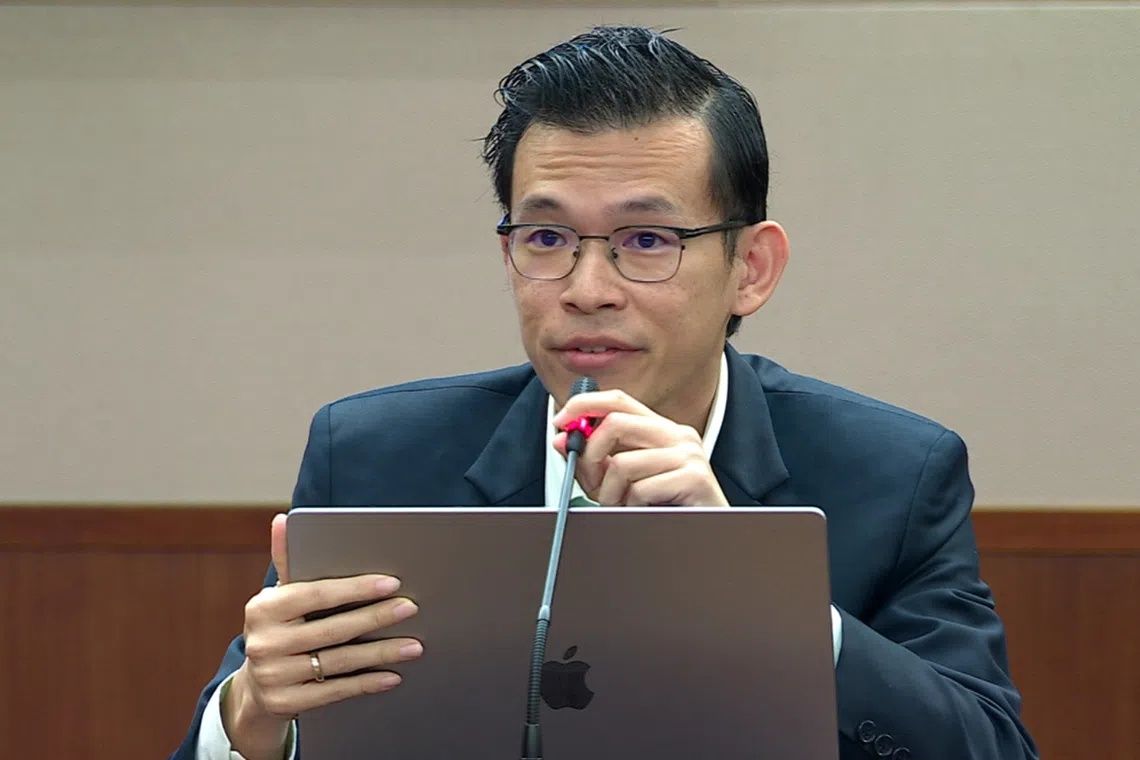
The motion, originally filed by Workers' Party MP Kenneth Tiong, prompted the government to propose four amendments before parliament affirmed the revised version. All 12 Workers' Party MPs voted against the final motion, signalling their dissatisfaction with the government's preferred framing of Singapore's economic challenges and solutions. The extended deliberation, which consumed nearly nine hours, underscores growing pressure within Singapore's political discourse to reassess whether the current economic model adequately serves younger generations and local entrepreneurs.
Tiong's core argument centred on reimagining Singapore's development pathway. Rather than pursuing expansion first and then attempting to redistribute gains through targeted vouchers and rebates, his vision emphasized building equitable distribution into the growth process itself. He envisioned an economy anchored by robust local companies with strong domestic purchasing power, alongside Singaporean firms and capital making meaningful international investments. This represents a philosophical departure from the developmental state approach that has historically dominated Singapore's policymaking.
Critically, Tiong challenged the sustainability of Singapore's longstanding reliance on foreign multinational corporations as economic anchors. He contended that this model has become less effective at creating quality employment for younger Singaporeans while simultaneously constraining the development of homegrown enterprises. This critique resonates across Southeast Asia, where several nations grapple with similar questions about balancing foreign direct investment with indigenous entrepreneurial capacity.
Minister Tan See Leng, who holds the trade and industry portfolio, countered by emphasizing that Singapore's economic strategy has never prioritized growth as an end in itself, but rather as a means to generate employment, raise living standards, and enable social mobility across generations. He acknowledged the government's responsibility to ensure this model remains relevant in a substantially altered global environment. His response highlighted the government's confidence in the existing framework while recognizing necessary adjustments.
Tan's personal narrative provided the government's rhetorical centerpiece. As a physician who co-founded Healthway Medical Group at 27 without formal business training, he positioned himself as evidence that Singapore's institutional environment enables entrepreneurial success. His company's growth trajectory—beginning in niche corporate healthcare provision in HDB estates and industrial zones, then expanding through partnerships with multinational clients—illustrated the government's contention that MNCs create enabling conditions rather than crowding out local competitors.
However, this narrative itself reveals potential blind spots in the government's analysis. Tan's success depended partly on education and professional credentials, access to networks, and the ability to serve MNC clients—advantages not uniformly distributed across the population. His experience, while illustrative of possibilities, may not reflect typical pathways available to average Singaporean entrepreneurs, particularly those lacking professional qualifications or existing capital.
The government's policy response focuses on bridging five sequential gaps in the entrepreneurial journey: from aspiration to first venture, research to commercial innovation, product prototype to initial customer acquisition, early success to sustainable scaling, and domestic foundation to global expansion. Programmes like Startup SG Founder provide seed capital and mentorship, while the Partnerships for Capability Transformation scheme deliberately facilitates connections between local SMEs and multinational supply chains. The Enterprise Singapore Scale-Up programme, highlighting S$2.5 billion in additional revenue across 80 companies within three years, with S$1 billion derived from overseas operations, suggests measurable success in nurturing growth.
Yet the Workers' Party's continued opposition indicates skepticism about whether such initiatives adequately address their core concern: structural inequality in how growth is distributed. The emphasis on programmes that require sophistication, networking capacity, and risk tolerance may inadvertently disadvantage less privileged segments while championing market-driven solutions over redistributive mechanisms. This tension reflects deeper ideological differences about whether capitalism's gains should be shaped primarily through institutional frameworks favouring entrepreneurship or through more direct income and asset redistribution.
For Malaysian and broader Southeast Asian observers, Singapore's parliamentary debate illuminates broader regional anxieties. Rapid technological change, geopolitical uncertainty, and intergenerational economic expectations challenge the high-growth, MNC-dependent development models adopted across the region. Singapore's debate demonstrates that even highly developed, stable economies must periodically defend their foundational economic premises. Malaysia, Thailand, and Vietnam face similar questions about whether foreign investment-led growth models adequately serve local populations or whether alternative approaches merit exploration.
Tan's assertion that "government support should be a springboard for enterprise" rather than a business model itself articulates a philosophy of market-led development with targeted state facilitation. This approach has delivered prosperity but may underestimate the structural barriers facing those without existing advantages. The Workers' Party's rejection of the amended motion suggests that parliamentary confidence in the current model is not universal, even in Singapore's relatively stable political environment.
Looking forward, the motion's passage and the Workers' Party's dissent establish a baseline position for ongoing economic policy debates. Subsequent parliamentary sessions will likely revisit questions about SME support, wage adequacy, job quality, and the pace of technological disruption affecting workers. As Southeast Asian economies navigate similar transitions, Singapore's public airing of these tensions may encourage other regional parliaments to more explicitly examine whether their economic models serve broader populations or concentrate gains among entrepreneurial and investor classes.

