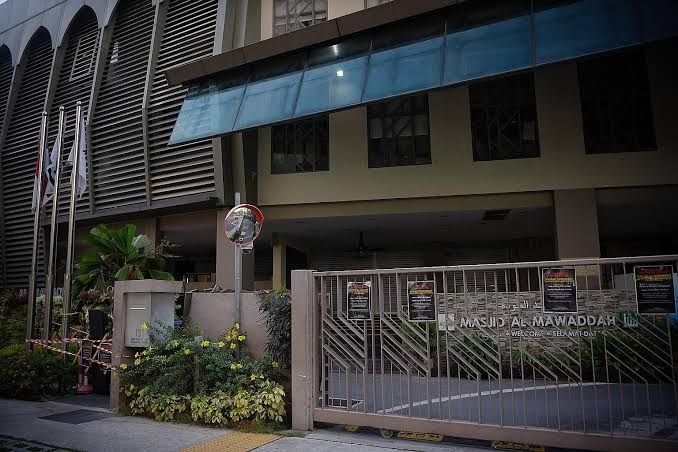
A senior finance executive at the Al-Mawaddah Mosque in Compassvale Bow, Sengkang, has been charged with criminal breach of trust following allegations that he misappropriated more than S$14,000 from the mosque's donation boxes. Mohamed Muhaimin Mohamed Sulaiman, 42, appeared in court on August 12 to face one count of the charge, with prosecutors alleging that the offence occurred on at least 15 separate occasions spanning from February 6 through May 15.
The investigation began after police received a report on May 16 regarding the missing funds from the donation boxes. Officers subsequently launched an enquiry into the matter, leading to formal charges being laid against the accused individual. The timing of the complaint suggests that mosque officials discovered irregularities during a routine financial audit or review of donation collection procedures, though specific details about how the discrepancy was detected remain unclear.
Donation boxes represent a critical funding mechanism for mosques across Singapore and the broader region, serving as a direct conduit between the Muslim community and religious institutions. These contributions support daily operations, maintenance, welfare programmes, and community initiatives. The alleged breach therefore carries implications beyond the immediate financial loss, affecting the trust that congregants place in their religious institutions to manage contributions responsibly and ethically.
Muhaimin's position as a senior finance executive within the mosque's administrative structure meant he held significant responsibility for financial management and oversight. His seniority and access to donation collection systems would have placed him in a position of considerable trust. The nature of the allegations suggests that access to donation boxes and financial records granted through his role may have been exploited for personal gain over an extended period.
The court has set bail at S$10,000, allowing Muhaimin to remain free pending further proceedings. The next mention of his case is scheduled for September 16, providing time for both prosecution and defence to prepare their respective arguments. This timeline suggests that the investigation remains ongoing, with additional evidence gathering likely continuing before trial proceedings commence.
If convicted of criminal breach of trust under Singapore law, Muhaimin faces substantial penalties including imprisonment of up to 15 years and potential fines. These severe consequences reflect the seriousness with which Singapore's legal system treats breaches of trust and fiduciary responsibility, particularly in institutional contexts where individuals hold positions of authority over communal resources.
The Islamic Religious Council of Singapore has been contacted regarding the status of the accused's employment and whether disciplinary action has been initiated internally. Religious institutions across Southeast Asia occasionally face governance challenges when trusted employees engage in financial misconduct, and responses to such incidents frequently set precedents for how communities address accountability and institutional reform.
This case highlights broader concerns about financial safeguarding within religious organisations. While most employees and volunteers demonstrate integrity in managing community contributions, the centralisation of donation handling responsibilities creates vulnerability to misconduct. Many institutions have subsequently implemented enhanced controls including dual authorisation systems for financial access, regular independent audits, transparent reporting mechanisms, and rotation of staff responsibilities to prevent prolonged unsupervised access to funds.
For Malaysian readers, the case serves as a reminder of governance best practices applicable to religious and community organisations locally. Despite operating under different legal frameworks, Malaysian mosques and Islamic bodies face comparable risks and can benefit from examining how Singapore's investigation and prosecution proceed, particularly regarding institutional responses to financial irregularities and employee accountability measures.
The incident also reflects how globalised standards of financial transparency and accountability increasingly apply to religious institutions. As communities demand greater openness about how donations are managed and deployed, organisations that implement robust financial controls and independent oversight mechanisms strengthen both their operational integrity and congregant confidence.

