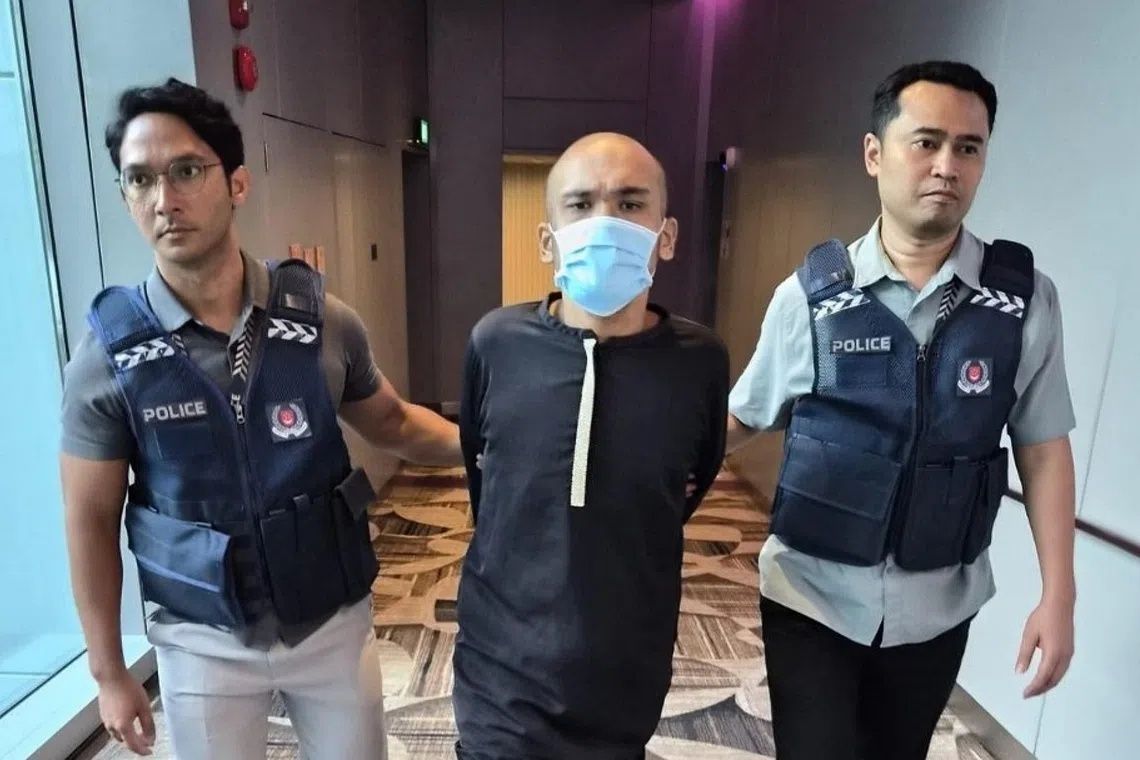
A 27-year-old Singaporean will appear in court on August 7 to face charges related to insulting and profane comments directed at the Muslim community, which he posted on social media platforms earlier this year. The case underscores Singapore's strict approach to protecting religious harmony and the cross-border coordination required to enforce such laws in the digital age.
The investigation began when police received a report on March 1 about the man's offensive remarks. However, by the time authorities took action, he had already departed Singapore, complicating efforts to bring him before the courts. The offender's decision to leave the country was not uncommon in cases involving sensitive religious and racial matters, where individuals sometimes attempt to evade legal consequences by crossing borders.
The breakthrough in the case came through cooperative efforts between Singapore's police force and the Royal Malaysia Police. The Malaysian authorities located the man and facilitated his deportation back to Singapore on August 6. Upon his arrival the same day, he was immediately arrested by Singapore police, initiating the formal legal process that would culminate in his court appearance just hours later.
The severity of potential penalties reflects the weight that Singapore places on such offences. If convicted, the man faces imprisonment of up to five years, financial penalties, or both. These stringent measures are designed to deter individuals from making inflammatory statements that could destabilize the country's multicultural society, where religious sensitivities have historically been closely guarded.
The case extends beyond the social media insults that triggered the initial investigation. Police have revealed that the same individual is also the subject of a separate inquiry involving a video showing a person desecrating a Quran, Islam's holiest text. The Straits Times has confirmed through sources that the man appearing in the Quran-desecration footage is the same offender now facing charges. This second incident appears particularly inflammatory, as it involves the physical desecration of a religious text rather than merely offensive speech.
According to police statements, the video showing the disrespect to the Quran was filmed on a public bus within Singapore, suggesting the acts took place in a shared public space where members of the Muslim community could have directly witnessed or learned about the conduct. This location amplifies the potential harm, as public transport is a space where diverse communities regularly interact, and such acts could create genuine tension and fear among Muslim passengers who rely on these services.
In response to the Quran desecration video, Singapore police moved quickly to limit its spread. On March 7, the police issued five separate disabling directions to Meta, the parent company of Facebook and Instagram, instructing the platform to prevent access to the offending content for users within Singapore. This proactive approach demonstrates how authorities work with technology companies to contain potentially divisive material before it can generate wider community backlash.
Singapore's police force issued a formal statement on August 6 emphasizing the government's zero-tolerance stance toward actions threatening racial and religious harmony. The statement warned that any individual making remarks or engaging in conduct designed to incite enmity, hatred, ill-will, or hostility between different racial or religious communities would face swift and firm legal action. This messaging serves both as a deterrent and as reassurance to minority religious communities that their concerns are being taken seriously.
The case carries particular significance for Malaysia and the broader Southeast Asian region, given that the offender was apprehended with Malaysian cooperation. The incident highlights how religious sensitivities transcend borders in an increasingly connected digital landscape, where inflammatory content created in one nation can rapidly spread across the region. Malaysia's willingness to cooperate in deporting the individual demonstrates regional commitment to protecting religious harmony across national boundaries.
For Malaysian readers, the case illustrates both the strengths and limitations of cross-border law enforcement in addressing digital crimes. While the Royal Malaysia Police's cooperation enabled authorities to apprehend the offender, it also raises questions about what transpired during the period he spent in Malaysia and whether he engaged in similar conduct there. The incident underscores the need for coordinated regional approaches to monitor and address religiously inflammatory content on social media platforms.
The broader context reveals Singapore's sophisticated understanding of how social media can amplify divisive messages. By targeting not just the individual but also the platforms hosting the content, authorities attempt to address both the source and the distribution mechanism. This multi-pronged strategy represents a model increasingly adopted across Southeast Asia as governments grapple with maintaining social cohesion in diverse societies while respecting free expression.
As technology companies expand their presence across the region, cases like this establish precedents for how they must respond to removal requests from government authorities. The requirement for platforms to disable access to specific content within particular jurisdictions creates operational complexity for global companies, but Singapore demonstrates that such requirements can be enforced.
The case will likely be closely watched by civil liberties advocates and religious organizations across Southeast Asia. While the charges appear justified given the explicit nature of the conduct described, observers will monitor how courts balance the legitimate need to protect religious harmony against concerns about restricting speech. The outcome may influence how similar cases are handled in other regional jurisdictions wrestling with comparable challenges.

