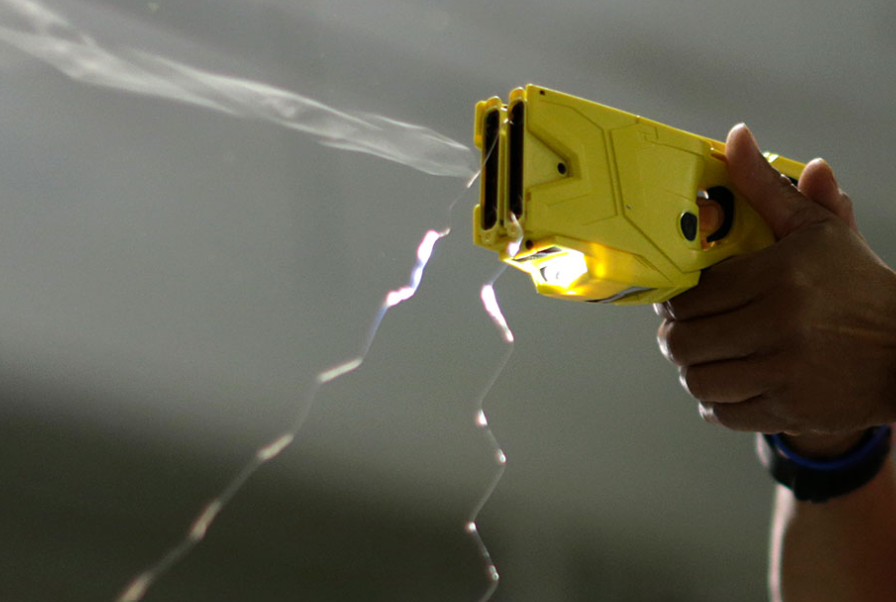
Singapore police deployed a Taser to subdue a 55-year-old man who was swinging a saw and refusing to obey commands at a Housing Board block in Bedok North on July 5. The incident underscores the continuing challenges law enforcement faces when managing situations involving weapons and potential substance use in public residential areas across the city-state.
Police received an emergency call shortly before 3.30pm reporting the incident at Block 539 Bedok North Street 3. The caller's alert prompted a rapid response to what officers quickly recognised as a potentially volatile situation requiring immediate intervention. The rapid response reflected the standard operating procedures that Singapore's police force employs when weapons are involved in populated neighbourhoods, where resident safety is paramount.
Upon arrival, officers repeatedly instructed the man to relinquish the saw, but he rejected their appeals and instead continued to wave the weapon whilst shouting incoherently. His refusal to cooperate with lawful commands and erratic behaviour suggested he was in an agitated state, creating genuine risk to himself and people in the vicinity. The escalating nature of the standoff prompted officers to consider escalated force options to bring the situation under control.
Recognising the need to rapidly contain the threat without causing unnecessary harm, police officers deployed a Taser device against the man. This non-lethal electroshock weapon is part of Singapore's law enforcement arsenal and is employed when de-escalation verbal tactics have failed and a subject poses an immediate danger. The use of the Taser successfully immobilised the man, allowing officers to apprehend him safely and prevent further escalation.
Following his apprehension, the man was transported to Changi General Hospital whilst remaining conscious, indicating the Taser deployment did not result in severe injury. Medical evaluation was necessary given the circumstances of his arrest and the involvement of potential substance use. Authorities confirmed that no other individuals sustained injuries during the incident, a key consideration in residential areas where bystanders could have been endangered.
The man faces multiple charges reflecting different aspects of the incident. Public nuisance charges address the disturbance caused in a shared residential space. Possession of an offensive weapon in a public place carries serious weight in Singapore's strict regulatory framework governing weapons and dangerous implements. Officers also flagged suspected consumption of a controlled drug, suggesting intoxication or substance use may have contributed to his erratic behaviour and refusal to comply with police.
The drug-related allegation represents a significant dimension of the case, as substance use often correlates with unpredictable and aggressive behaviour during police encounters. Singapore's Central Narcotics Bureau has assumed responsibility for investigating the suspected drug offence, separating this strand of the investigation from the weapons-related charges. Their involvement indicates authorities are pursuing comprehensive accountability across all aspects of the incident.
For Malaysian observers, this case illustrates the operational realities of urban policing in densely populated city-states where public safety and residential harmony are particularly sensitive. The incident demonstrates how quickly situations can escalate when weapons are involved in neighbourhood settings, and the importance of rapid police response protocols. It also highlights ongoing challenges across Southeast Asia regarding substance-related incidents in public spaces and the intersection between drug use and violent or threatening behaviour.
The deployment of Taser technology in this instance reflects broader trends in law enforcement across developed Asian jurisdictions, where non-lethal options are increasingly prioritised to reduce harm during apprehensions. Singapore's police force has gradually expanded access to such devices as part of their strategy to manage dangerous situations with proportionality. The successful outcome here—apprehension without serious injury—represents the ideal scenario when such technology is deployed appropriately.
The investigation's ongoing status means the full circumstances and the man's background remain to be clarified. Understanding what prompted the incident, whether the weapon was obtained legally, and the nature of the suspected drug involvement will emerge as the case progresses through investigation and potentially prosecution. These details will prove important in determining appropriate penalties and understanding contributing factors.
Beyond the individual case, the incident reflects broader public safety concerns in Singapore's residential areas and the human behaviour patterns that create flashpoints for police intervention. It underscores why rapid response capabilities and appropriate use-of-force protocols remain central to policing in high-density urban environments where civilian populations are close to potential incident sites.

