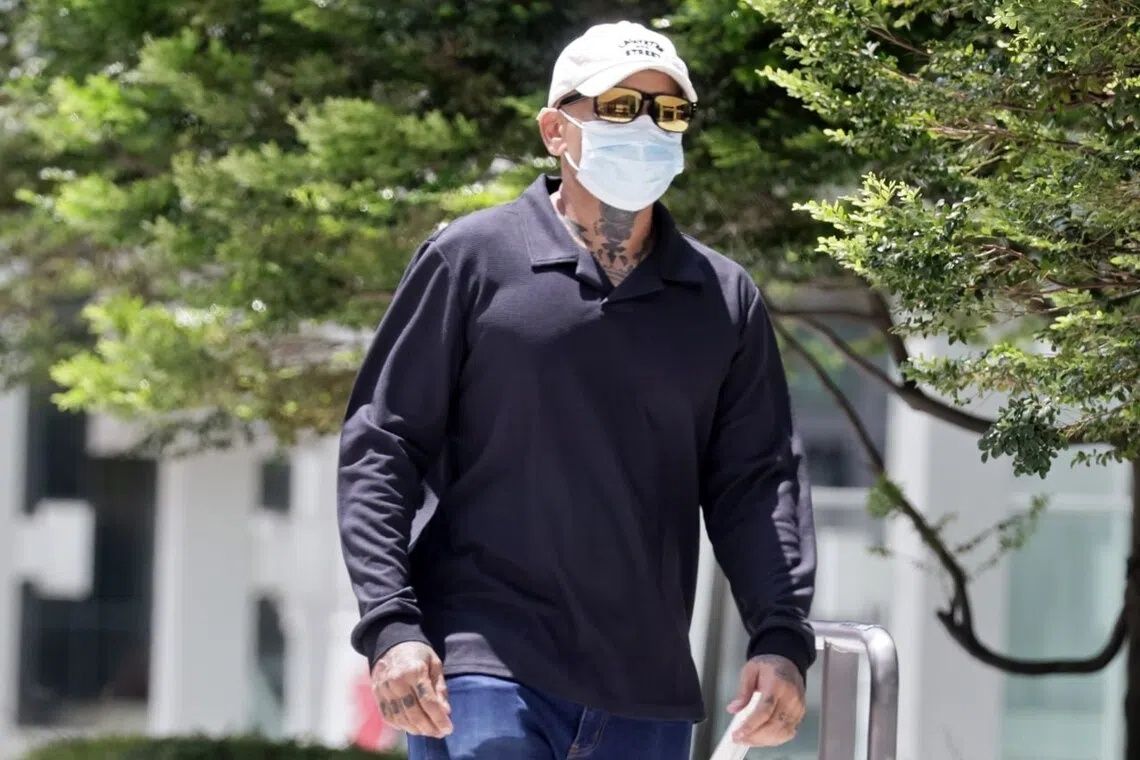
A Singapore court has handed down a three-week jail sentence to a man convicted of physically assaulting his girlfriend in a public shopping mall, following his guilty plea to charges of voluntarily causing hurt. Andrew Suresh Markandan, 47, faced the court system after the February incident at Lucky Plaza was captured on camera and subsequently circulated widely in media outlets, drawing public scrutiny to the case.
The explosive confrontation unfolded on February 8 after Andrew encountered his girlfriend at the shopping complex. According to court submissions, the accused became deeply aggrieved upon learning that his girlfriend's teenage son had received financial assistance from his biological father. Andrew's distress stemmed partly from his own contributions to the family's welfare, creating what prosecutors described as a trigger for his jealous and controlling behaviour towards the woman.
The situation escalated when Andrew observed his girlfriend's female friend greeting her affectionately at a pub venue. Feeling increasingly alienated and upset, he made his displeasure known, prompting his girlfriend and her friend to leave the establishment. Rather than accepting this separation, Andrew pursued them, determined to continue their interaction. When he spotted his girlfriend on her mobile device, he jumped to conclusions that she was contacting her ex-partner, reigniting his insecurity and suspicion.
What transpired next became the defining moment of the legal case. Andrew aggressively attempted to seize her phone by reaching for her handbag, leading to a physical struggle inside the shopping centre. He forced her into a corner while restraining her from behind with both arms, continuing his attempts to access her bag. When he tried to push her towards a nearby lift, she resisted strenuously, attracting the attention of bystanders who gathered as the disturbance grew more visible and alarming.
Desperate to escape the assault, the woman fled into a nearby shop seeking refuge and assistance from staff. Andrew, undeterred, pursued her into the retail space where he then struck her repeatedly—punching the back of her head and kicking her lower back with considerable force. Only through the intervention of compassionate onlookers was she able to exit the mall safely, while other witnesses physically restrained Andrew to prevent further harm. Medical examination revealed the woman had sustained bruising across multiple body areas including her shoulder, thigh, and shin, documenting the severity of the physical violence inflicted.
When Andrew learned that video footage of the assault had circulated publicly and attracted media attention, he attempted damage control by contacting his girlfriend on February 10. Rather than showing genuine remorse, he pressured her to reconsider reporting the incident to authorities and offered financial compensation as an incentive for her silence. This attempt at intimidation and bribery ultimately backfired; the victim rejected his overtures and filed a formal police report the following day, demonstrating her determination to pursue justice through official channels.
However, the February incident was not an isolated occurrence of violence in their relationship. An earlier assault had taken place on March 30, 2025, near a hotel in the Bugis district. The couple had attempted to secure accommodation but encountered an obstacle when Andrew realized he was without his physical NRIC identity card. As the evening grew late, the woman reasonably suggested they return to their respective homes, but Andrew insisted on going to his residence to retrieve the documentation so they could return to complete their hotel booking.
This disagreement erupted into physical violence. Andrew confiscated his girlfriend's mobile phone and threw it forcefully to the ground, then attempted to grab her handbag to compel her compliance with his demands. When she resisted his controlling actions, he escalated the violence by slapping her across the face twice and forcefully pushing her to the ground. The woman managed to walk away and seated herself outside the hotel entrance in an attempt to distance herself from her aggressor. Andrew pursued her even as she retreated, pulling her handbag from her grasp and leaving the scene with the stolen item.
Hotel security personnel intervened when Andrew attempted to re-enter the building, preventing him from continuing his pursuit. The woman quickly sought help from the hotel staff, who contacted police to report the assault and abduction of her property. The injuries she sustained during this earlier attack included facial redness, scratches on her right forearm, and abrasions on her right knee. Officers recovered the handbag that same evening, documenting the chain of evidence.
The pattern of behaviour revealed in court demonstrates escalating domestic violence, beginning with controlling tendencies and jealous accusations, progressing to repeated physical assault and attempts at intimidation. The case underscores the challenges faced by victims in Southeast Asia who attempt to leave abusive relationships and the importance of public witnesses in documenting crimes that might otherwise remain hidden from authorities. The viral circulation of the Lucky Plaza footage served an important societal function by bringing attention to intimate partner violence and by supporting the victim's decision to pursue legal remedies rather than accept her abuser's offers of hush money.
Under Singapore's Penal Code provisions addressing voluntarily causing hurt, perpetrators face maximum sentences of three years' imprisonment, fines reaching S$5,000, or both penalties combined. The relatively lenient sentence of three weeks reflects Andrew's guilty plea and cooperation with the court system, though many observers and women's rights advocates have questioned whether this punishment adequately reflects the severity and pattern of his abusive conduct. The case contributes to broader regional discussions about domestic violence sentencing and victim protection frameworks across Malaysia and Southeast Asia.

