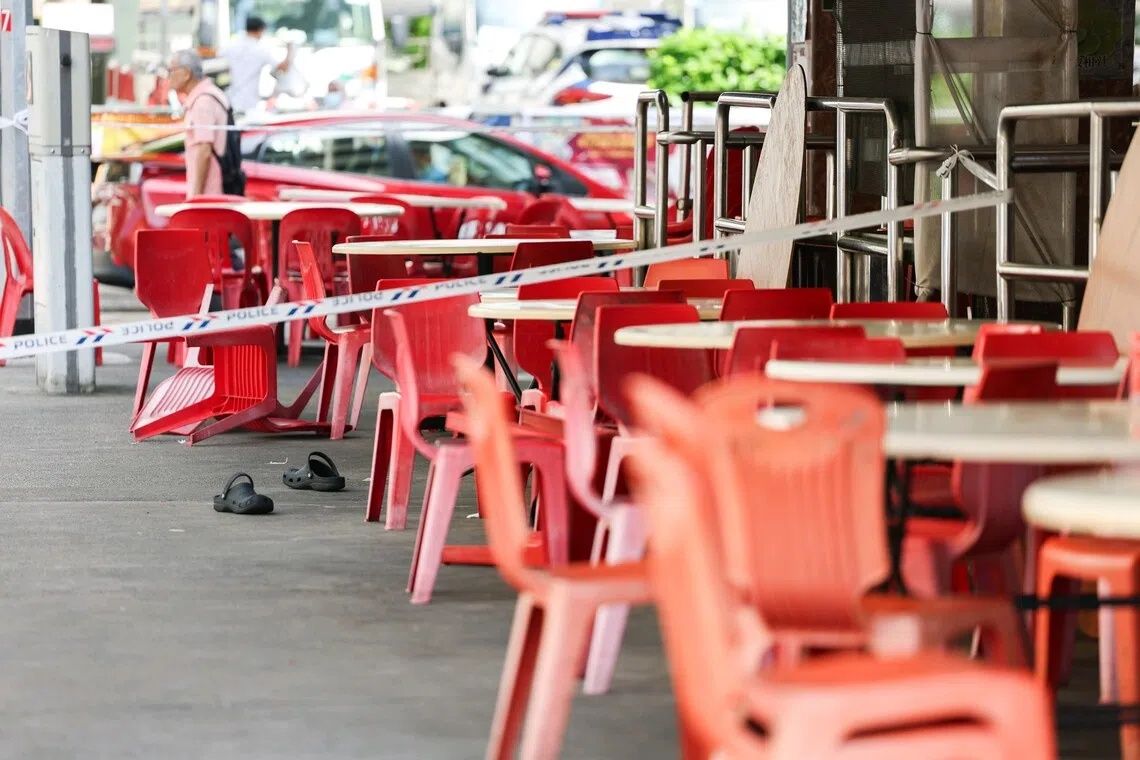
A 22-year-old Singaporean has been handed a 17-month custodial sentence after admitting to attacking a man with a chair during a vicious street fight that claimed a life. Pradave Shashi Kumar entered a guilty plea on Tuesday (Aug 4) to charges of voluntarily causing hurt using a dangerous weapon in relation to the fatal September 22, 2024 incident along Kitchener Road. His conviction represents the first resolution among four individuals implicated in the case, with three others still facing significantly graver charges including murder and rioting offences.
The victim, Dhinessh Vasie, was only 25 years old when he sustained fatal stab wounds to his heart during the chaotic altercation. Court proceedings revealed that Dhinessh succumbed to injuries inflicted during what began as a seemingly routine night out. Understanding the sequence of events provides critical insight into how a casual drinking expedition descended into lethal violence within the span of a few hours.
The incident originated when Pradave and three companions—Muhammad Sajid Saleem, Satish Jason Prabhas, and Kirrthik Roshan Prem Ananth—departed from a club located in Golden Mile Tower at approximately 4 in the morning. Their group, accompanied by two women, had hired a private vehicle to reach a pub along Sam Leong Road to extend their night of drinking. Upon arrival at the destination, they walked through a back alley where they encountered an entirely separate gathering comprising eight men engaged in a heated dispute with three women.
Escalation occurred swiftly when Satish began exchanging hostile words with one member of the eight-man group before initiating physical confrontation. This verbal exchange rapidly transformed into a broader physical altercation involving Pradave, Satish, and several individuals from Dhinessh's group. During the ensuing melee, Dhinessh's companions moved toward the alleyway in the direction of Verdun Road, with witnesses later reporting observing Muhammad Sajid Saleem wielding a small knife with a 7.5-centimetre blade held in a downward-pointing position.
Upon recognizing the weapon, Dhinessh and his associates began fleeing from the scene. However, their pursuers—Pradave, Sajid, Satish, and Kirrthik—quickly closed the distance. Deputy Public Prosecutor Jonathan Tan detailed to the court how Pradave witnessed Sajid slashing Dhinessh and two other individuals with the blade as they attempted escape. The victims' flight continued until Dhinessh reached a coffee shop situated at the intersection of Verdun Road and Sam Leong Road, where his pace slowed considerably before he came to a halt.
This momentary pause proved catastrophic. Sajid managed to catch up with the wounded man and allegedly drove the knife deep into his upper back. It was at this critical juncture that Kirrthik seized a chair from the coffee shop premises and repeatedly struck Dhinessh with it. Pradave subsequently retrieved a second chair and delivered two forceful blows to the victim's head and chest regions. Throughout the sustained assault, Dhinessh remained slumped and defenceless, making no attempt to fight back or protect himself, according to the prosecution's account.
Following the attack, the four assailants abandoned the scene and made their way toward City Square Mall. Emergency services arrived within minutes of the assault, and Pradave was apprehended at approximately 5:15 in the morning on the same day. The judicial system's response to his specific actions—the chair attacks—resulted in his current sentence, though he could theoretically have faced substantially harsher penalties. Statutes governing voluntary causing of hurt using dangerous weapons in Singapore permit sentences extending up to seven years imprisonment, alongside potential fines, caning, or combinations thereof.
The broader criminal justice implications remain substantial. Muhammad Sajid Saleem continues to face murder charges related to the fatal stabbing, which represents an entirely distinct and considerably more serious allegation than Pradave's conviction. Satish Jason Prabhas and Kirrthik Roshan Prem Ananth remain before the courts on rioting charges, reflecting their participation in the initial altercation and subsequent chase. The differentiation in charges and sentences underscores how Singapore's legal framework evaluates degrees of culpability based on the precise nature of each defendant's individual actions.
For Malaysian and regional observers, this case illuminates the severe consequences of late-night confrontations in urban settings, particularly in densely populated areas where recreational activities concentrate in specific precincts. The incident demonstrates how quickly recreational gatherings can deteriorate into lethal violence, especially when alcohol consumption coincides with interpersonal friction among strangers. The tragic outcome—a young man's death resulting from what may have been merely a territorial dispute or momentary disrespect—serves as a cautionary example of how societal norms around confrontation and masculinity can lead to irreversible consequences.
The sentencing of Pradave reflects judicial recognition that while his actions contributed materially to the victim's suffering, others bore greater responsibility for the fatal outcome. This graduated approach to accountability provides important precedent for assault cases where multiple perpetrators participate in violence of varying degrees. As the remaining three defendants proceed through Singapore's courts, the full narrative of accountability will gradually emerge, potentially revealing whether other institutional or social factors might have prevented such tragedy.

