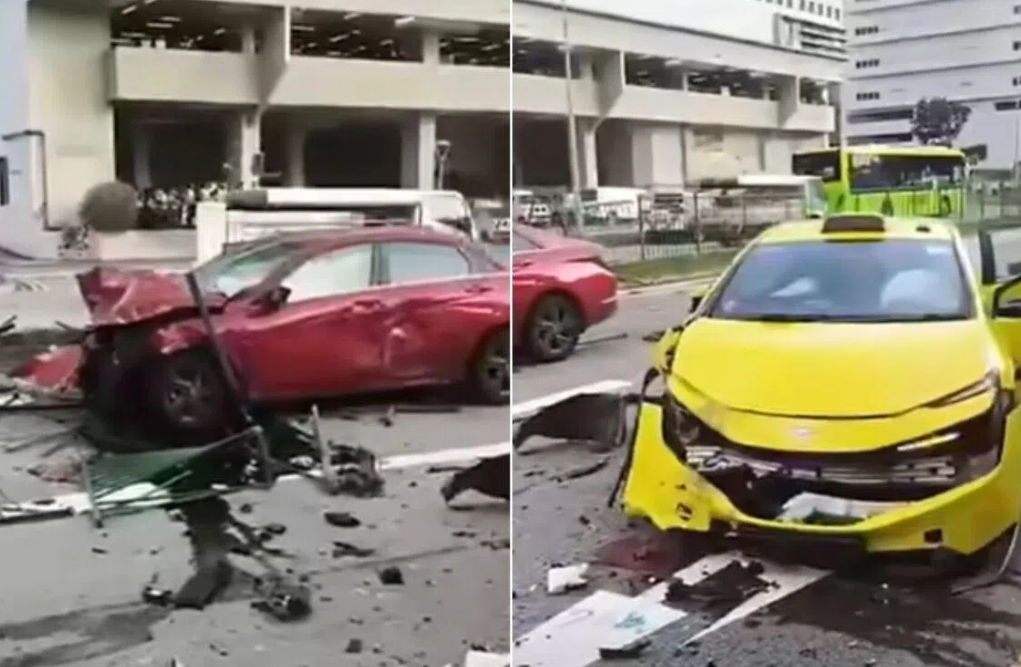
A 36-year-old Singapore resident faces a battery of criminal charges stemming from a vehicle collision in Kallang that left two people injured, with authorities alleging he was operating the vehicle while under the influence of methamphetamine. Mohamed Firdouz Mohamed Akram was formally charged on June 19 with multiple traffic and drug-related offences following the incident that occurred early morning on June 17 along Kallang Bahru, drawing fresh attention to the persistent problem of impaired driving in the city-state.
Court documents reveal that Firdouz allegedly consumed Ice before getting behind the wheel around 8am that Tuesday morning. The substance, a highly addictive form of methamphetamine known for its rapid onset and severe neurological effects, significantly impairs motor control and reaction time—factors that prosecutors argue contributed directly to the collision. His inability to maintain proper vehicle control resulted in the car colliding with a taxi, causing injury to both occupants of the cab.
The taxi driver, a 60-year-old man, sustained chest pain from the impact, while his 43-year-old passenger suffered tailbone injuries in the crash. Both individuals required medical attention following the accident. The severity of their injuries underscores the genuine danger posed by impaired driving, a concern that resonates across Southeast Asia where road safety remains a critical public health issue.
What compounds the severity of the charges is that Firdouz allegedly lacked the proper driving licence for the vehicle class he was operating. Driving without a valid Class 3 licence adds another layer of legal culpability, suggesting either negligence or deliberate disregard for licensing requirements. This combination of factors—drug impairment, dangerous driving, and operating an unlicensed vehicle—presents prosecutors with multiple avenues to establish criminal liability.
Beyond the immediate traffic violations, police investigations uncovered additional incriminating evidence. Upon searching the abandoned vehicle at the crash scene, officers discovered suspected drugs, drug-related paraphernalia, vaporisers, and a knuckleduster, which were seized as exhibits. The presence of these items suggests potential involvement in broader criminal activity extending beyond the isolated traffic incident. Further investigation identified that Firdouz allegedly possessed two knives in his possession at the Village Hotel Katong on Marine Parade Road around 1pm that same day, resulting in two separate weapon possession charges.
The sequence of events following the collision reveals calculated evasion. Firdouz fled the crash scene before police arrived, abandoning his vehicle at the location. However, his attempted escape proved short-lived. Police established his identity through investigative work and arrested him within five hours of receiving the initial report, demonstrating the efficiency of Singapore's law enforcement response to serious traffic incidents.
Under Singapore's traffic and drug laws, the penalties Firdouz faces are substantial. For driving under the influence of a controlled drug like methamphetamine, offenders face imprisonment of up to one year, a fine up to S$10,000, or both penalties imposed concurrently. The dangerous driving charge carries potential imprisonment of up to one year and a fine ranging from S$2,000 to S$10,000, giving the court considerable discretion in sentencing based on aggravating factors.
This case exemplifies a troubling trend across urban Asia where drug-impaired driving combines with other criminal behaviours to create compounded public safety risks. The prevalence of methamphetamine and its derivatives in Southeast Asia has made drug-impaired driving an increasingly serious concern for traffic authorities. Singapore's zero-tolerance approach to such violations reflects regional anxieties about substances that significantly amplify accident risk and severity.
The incident also highlights the intersection of drug abuse and vehicle-related criminality. The presence of weapons and drug paraphernalia suggests that Firdouz may be involved in a broader pattern of criminal conduct rather than representing an isolated lapse in judgment. For Malaysian and regional observers, the case serves as a cautionary reminder about the compounding dangers when substance abuse intersects with motor vehicle operation, particularly among individuals with existing criminal involvement.
The decision to list Firdouz's case for mention again on July 17 indicates ongoing investigation and potential additional charges. The court will determine whether to proceed with committal proceedings, and prosecutors may add further charges if investigation warrants. This timeline allows investigators to complete their inquiries while Firdouz remains in custody pending trial. The eventual outcome will likely influence how Singapore's courts approach similar cases involving multiple aggravating factors. For the broader regional perspective, it underscores how stringent enforcement and significant penalties serve as deterrents against the dangerous combination of drug use and driving.

