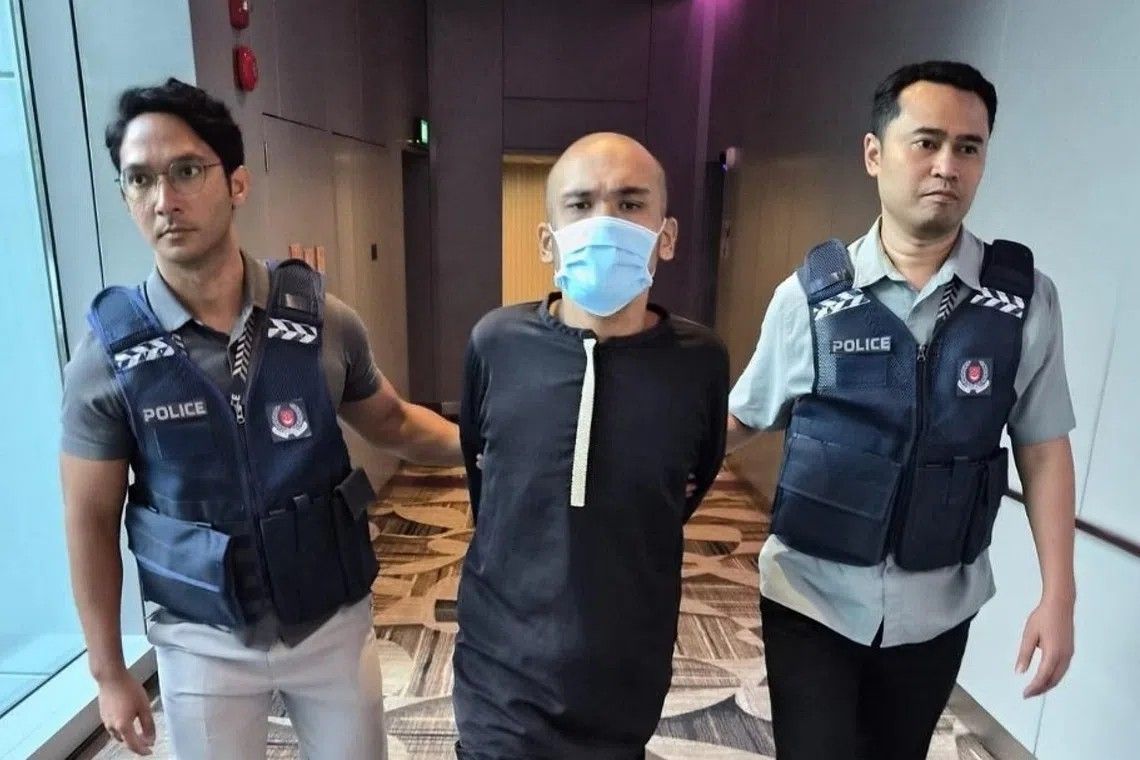
A 27-year-old Singaporean has appeared in court facing charges stemming from a series of inflammatory social media posts directed at the Muslim community. Elvin John Baptist was brought before the courts on August 7 following allegations that he created and distributed offensive content designed to demean Islam and provoke religious discord in the island nation.
The specific charge against Baptist invokes Singapore's Maintenance of Religious Harmony Act, a piece of legislation designed to protect religious groups from targeted insults and defamatory speech. The law reflects Singapore's historical commitment to maintaining interfaith harmony in a religiously diverse society where Muslims, Christians, Buddhists, Hindus and other faith communities coexist. Such charges carry significant weight in a city-state where religious sensitivity remains paramount to social stability.
According to court filings, the alleged offence centred on two videos uploaded to TikTok on March 1. The content reportedly featured Baptist using inflammatory Malay-language phrases specifically chosen to offend Muslims and potentially destabilise public peace. The calculated nature of the remarks—reportedly made in Malay to maximise impact within the Muslim-majority region—suggests premeditation rather than spontaneous expression.
Police received information about the videos on the same day they were posted, yet Baptist had already departed Singapore before authorities could respond. This rapid flight across the border underscores how easily individuals can exploit Singapore's porous maritime and land borders with Malaysia to evade immediate law enforcement action. The delay between the uploads and police notification created a critical window during which Baptist successfully left the country.
Cooperation between Singapore and Malaysia's police forces proved instrumental in apprehending Baptist. With assistance from the Royal Malaysia Police, Singapore authorities tracked down their suspect and coordinated his deportation on August 6. When Baptist arrived back in Singapore that same day, he was immediately arrested at the border, demonstrating the effectiveness of bilateral enforcement mechanisms in the region. Such cross-border cooperation has become increasingly vital as digital communications and physical mobility allow alleged offenders to operate across multiple jurisdictions.
Beyond the TikTok videos forming the primary charge, Baptist is now assisting investigators in a separate but thematically related matter. Police are probing another video circulating on social media that purports to show an individual desecrating the Quran aboard a public bus in Singapore. While authorities have not conclusively linked Baptist to this second incident, the investigation suggests a broader pattern of religiously inflammatory content targeting Islam within Singapore's digital ecosystem.
The Quran incident carries particular sensitivity given Islam's theological understanding of the holy book as sacred beyond merely symbolic terms. Footage of any perceived desecration generates acute distress within Muslim communities and threatens the delicate religious equilibrium Singapore has cultivated. The fact that this alleged offence occurred on public transport—a shared civic space—compounds concerns about public decorum and the safety of worshippers' sensibilities in multi-faith environments.
These developments arrive amid growing regional and global concern about online hate speech targeting religious minorities. Southeast Asia has experienced numerous incidents where social media platforms have amplified inflammatory rhetoric, occasionally sparking real-world communal violence. Singapore, despite its strict laws and effective enforcement mechanisms, is not immune to such dynamics. The Baptist case illustrates how technology enables rapid dissemination of divisive content while simultaneously creating digital footprints that law enforcement can trace and prosecute.
The religious harmony framework governing Singapore's response reflects the nation's foundational social contract. Since independence, Singapore's leadership has premised stability on explicit protections for minority religious rights and active suppression of communal provocation. Unlike democracies with broader free speech protections, Singapore prioritises religious coexistence over maximalist interpretations of expression rights. This approach remains contentious internationally but commands substantial domestic support among citizens who value the absence of religious violence that has plagued other multi-faith societies.
For Malaysian observers, the case carries particular significance given that Baptist fled to Malaysian territory before being apprehended. It demonstrates Malaysia's willingness to cooperate in enforcing another nation's religious laws, even when Malaysia's own constitutional framework differs substantially. This bilateral coordination suggests that despite Malaysia's own experiences with religious polarisation, authorities recognise the legitimacy of Singapore's enforcement priorities and the mutual interest in preventing cross-border religious agitation.
The prosecution's path forward will likely hinge on establishing Baptist's intent and the videos' precise content. Prosecutors must demonstrate that the Malay phrases used were deliberately chosen to insult Islam rather than constituting crude humour or misguided commentary. The threshold between offensive speech and prosecutable insults remains contested terrain even in Singapore's highly structured legal environment. Baptist's cooperation with investigations into the separate Quran incident may influence how prosecutors and courts calibrate their response, potentially affecting sentencing if conviction results.
Broad implications extend beyond Baptist's individual culpability. The case signals that Singapore will actively pursue individuals who weaponise social media to target religious communities, regardless of whether they flee the jurisdiction. It also illustrates how regional law enforcement cooperation can track down digital offenders across borders. For content creators throughout Southeast Asia, the message is unambiguous: platforms offer anonymity but not immunity, and deliberate religious provocation carries real legal consequences in jurisdictions that prioritise harmony over unfettered expression.

