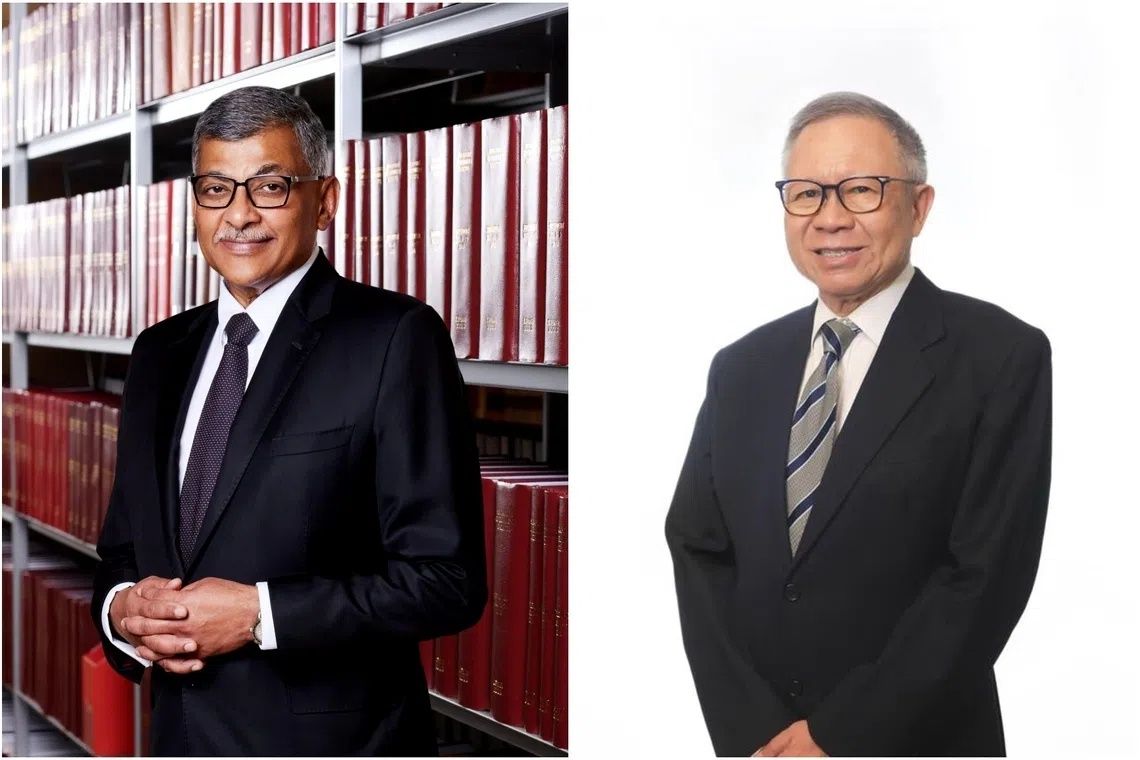
Singapore's apex judicial leader and one of its most influential public administrators have been conferred the Republic's highest civilian honour in recognition of their decades of institutional leadership. Chief Justice Sundaresh Menon, 62, and Eddie Teo, 79, will receive the Order of Temasek (With Distinction) at the 2026 National Day Awards, placing them among 7,491 individuals recognised in this year's National Day honours ceremony. Their selection represents a notable affirmation of the value Singapore places on judicial independence and the continuity of its civil service establishment.
Menon's judicial tenure has spanned 14 years since his appointment in November 2012, during which he will have served until his scheduled retirement on February 26, 2027. His stewardship coincided with a period of significant modernisation across Singapore's courts, transforming institutional practices and technological infrastructure. The judiciary under his leadership pursued digitalisation initiatives that reshaped how cases are processed and administered. Beyond technological advancement, Menon championed the establishment of the Appellate Division of the High Court and created the Singapore International Commercial Court, both of which have enhanced Singapore's standing as a global legal hub attracting international dispute resolution business.
Therapeutic justice represented another conceptual shift that Menon introduced to Singapore's legal system, particularly within the Family Justice Courts and Youth Courts. This approach prioritises rehabilitation and resolution over purely punitive outcomes, reflecting international best practices in contemporary jurisprudence. Complementing these practical reforms, Menon established the Singapore Judicial College to systematise judicial education and professional development, ensuring that the bench maintains world-class competence. The institutional foundations he strengthened have positioned the judiciary as an anchor for public confidence in Singapore's rule-of-law framework.
In his response to the honour, Menon emphasised the collective nature of judicial achievement, stressing that a world-class legal system depends on contributions from multiple stakeholders. He articulated how Singapore's historical commitment to the rule of law since independence has functioned as a cornerstone of governance, creating the conditions for economic and social progress that followed. The timing of his award carries symbolic weight, coinciding with the bicentennial of Singapore's legal and judicial system, thereby anchoring his personal recognition within a longer institutional narrative. Menon's framing positioned his leadership not as an individual accomplishment but as custodianship of a foundational national institution during a critical phase of its evolution.
Teo's career trajectory traversed multiple critical domains of Singapore's state apparatus across nearly 56 years, beginning in 1970 when he joined the Ministry of Defence's Security and Intelligence Division. His appointment as director of that agency at age 31 in 1979 demonstrated early recognition of his capabilities in managing sensitive security portfolios, a role he held until 1994. Teo subsequently transitioned into structural administrative positions, serving as permanent secretary for defence from 1994 to 2000 before moving to the Prime Minister's Office from 1998 to 2005. His appointment as chairman of the Public Service Commission in 2008 extended his influence over the selection and development of Singapore's civil service leadership, a position he occupied until his retirement in 2018.
Following his departure from the Public Service Commission, Teo accepted appointment to the Council of Presidential Advisers in 2018, subsequently becoming its chairman until June 2026. The CPA functions as an advisory body that scrutinises significant financial and policy decisions, particularly those involving Singapore's constitutional reserves. During Teo's chairmanship, the CPA confronted an extraordinary test of Singapore's economic resilience when the Government sought to withdraw approximately S$40 billion (US$31.3 billion) from past reserves to respond to the Covid-19 pandemic—representing the largest reserve drawdown in national history. Teo and then-President Halimah Yacob conducted extensive deliberations before approving this extraordinary fiscal measure, which enabled Singapore to stabilise its economy, shield businesses from collapse, and maintain employment without accumulating substantial public debt.
Teo's reflection on his career distinguished his early years mentoring under Singapore's pioneer leadership as particularly formative. Learning directly from Lee Kuan Yew, Goh Keng Swee, and former president S. R. Nathan during Singapore's foundational decades, Teo absorbed the philosophical and practical approaches that defined the nation's developmental trajectory. He credited these mentors with instilling the commitment to national service that animated his subsequent career. In his remarks upon receiving the honour, Teo sought to communicate to prospective public servants that government work represents a genuinely fulfilling vocation despite offering less financial remuneration than elite private sector careers. This messaging carries particular resonance in a city-state where financial incentives have historically lured talented individuals toward commercial sectors, potentially depleting the civil service of capable administrators.
Teo's tenure at the Public Service Commission demonstrated commitment to institutional diversification, as he deliberately broadened the commission's composition by recruiting members from academia, law, and social work rather than restricting appointments to career civil servants. This expansion of perspective reflected evolving understanding that robust institutional governance benefits from intellectual pluralism and diverse professional expertise. The organisational philosophy he advanced—prioritising integrity, meritocracy, incorruptibility, and excellence—functioned as counterbalance to potent commercial forces reshaping Singapore's society during the period of rapid wealth accumulation.
Beyond Menon and Teo, the 2026 National Day Awards recognised other institutional leaders through the Distinguished Service Order, the awards ceremony's second-highest honour. Alan Chan, 73, chairman of the Land Transport Authority since 2016, received recognition for advancing Singapore's land transport infrastructure. Under his leadership, rail reliability metrics improved markedly, with mean kilometres between failures escalating from 393,000 in 2017 to two million by 2026—a five-fold improvement reflecting enhanced operational standards and maintenance protocols. Chan's tenure oversaw delivery of major infrastructure projects including the Thomson-East Coast Line and the Singapore Rail Test Centre, whilst his tenure also accelerated the transition toward electric vehicle adoption across Singapore's transport ecosystem. His simultaneous service on the Public Service Commission since 2010 demonstrates the interconnected nature of Singapore's institutional leadership networks.
Edmund Cheng, 73, former chairman of the Civil Aviation Authority of Singapore, similarly received the Distinguished Service Order for his contributions spanning aviation sector development, rehabilitation of formerly incarcerated individuals, and artistic endeavours. His multi-domain recognition reflects how Singapore's institutional leaders increasingly operate across distinct societal spheres, contributing expertise to public health, cultural, and justice-related initiatives alongside primary professional responsibilities. For Malaysian observers, the pattern of these honours illustrates Singapore's methodical institutionalisation of succession planning and recognition systems that reinforce continuity of governance quality.
The awards announced across 2026 comprised 7,491 recipients at various honour levels, indicating the systematic nature through which Singapore recognises contributions to national development. The concentration of awards among institutional figures—judges, civil servants, transport and aviation leaders—demonstrates how Singapore's honours system prioritises those who have shaped the state apparatus itself rather than celebrities or business figures. This reflects a deliberate governmental philosophy emphasising that institutional integrity and professional excellence represent the primary drivers of national success. For Southeast Asian governance contexts struggling with institutional capacity and leadership transitions, Singapore's approach to recognising and retaining capable administrators offers an instructive model of how formal recognition systems can reinforce cultural values around public service.
Menon's impending retirement in 2027 signals the commencement of a significant leadership transition within Singapore's judiciary at a time when the legal system confronts novel challenges from technological disruption, transnational commercial disputes, and evolving social demands on family and youth justice systems. His institutionalisation of practices and structures—the Singapore International Commercial Court, the Judicial College, therapeutic justice approaches—suggests that his successor will inherit a modernised institution with established frameworks for continuing innovation. Similarly, Teo's progression through Singapore's highest administrative roles over decades demonstrates how institutional knowledge and relationships accumulate within compact governmental structures. For regional observers monitoring Singapore's trajectory, these honours confirm that the city-state's continued competitive advantage rests fundamentally on the calibre of institutional leaders groomed through its civil service and judiciary.

