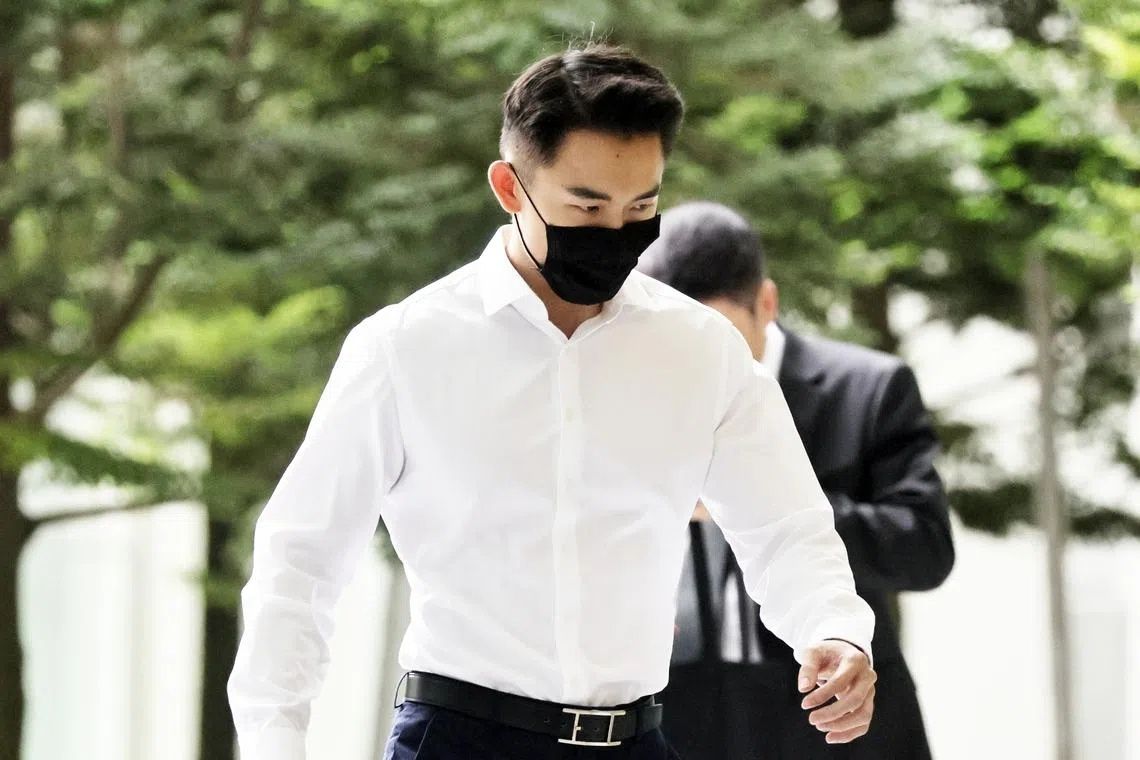
A 36-year-old Singapore doctor has been found guilty of consuming MDMA following his involvement in a large-scale drug operation uncovered at a luxury Sentosa hotel. Rayson Lee Rui Sheng was among 49 men arrested during an early-morning police raid at a villa within the Sofitel Singapore Sentosa in August 2023, an operation that revealed the scale of recreational drug use among affluent circles in the city-state and raises questions about security oversight at high-end hospitality venues.
Lee and his acquaintance, 29-year-old Tan Li Ming, were convicted on a single count of drug consumption each on Tuesday, June 30, following a trial in which both men maintained their drinks had been spiked without their knowledge or consent. However, District Judge A Sangeetha delivered a scathing assessment of their credibility, finding their testimonies inconsistent with the physical evidence and rejecting their narrative as implausible. The judge's reasoning centred on the defendants' own behaviour at the party: despite claiming to be victims of drink tampering, both men continued consuming beverages throughout the evening, a pattern the court found fundamentally at odds with their assertions of unknowing ingestion.
Laboratory analysis proved decisive in securing convictions. The Health Sciences Authority discovered MDMA traces in both men's urine samples, while hair testing revealed prior consumption of both ecstasy and ketamine. This forensic evidence proved particularly damaging to the defence case, as hair samples provide a historical record of drug use spanning weeks or months, undermining claims of first-time or accidental exposure. The judge explicitly noted that neither defendant could claim unfamiliarity with controlled substances, a finding that weakened arguments about unknowing consumption and suggested a pattern of deliberate recreational use.
The August 2023 operation itself unveiled a significant gathering of drug users within Singapore's affluent communities. Police, acting on intelligence, conducted checks at the hotel shortly after 5.30am on August 9 and quickly identified substances believed to be controlled drugs. The Central Narcotics Bureau was summoned to the scene, where officers discovered multiple controlled drug types including ecstasy and ketamine, along with associated paraphernalia. The coordinated nature of the raid and the number of arrests suggest this was no casual gathering but rather an organised event where drugs circulated relatively openly among participants.
Lee's account of his evening painted a picture of a man who moved between social venues with increasing exposure to drug use. He attended a birthday party at the villa beginning around 8pm on August 8, 2023, subsequently travelled to a nightclub at Clarke Quay where he was introduced to Tan, and then returned to the villa in the early morning hours. Upon arrival, he discovered additional guests had assembled, many of whom were strangers to him. Despite this unfamiliar environment, Lee claimed he accepted three drinks from people he did not know, a decision that prosecutors found difficult to reconcile with any genuine concern about his personal safety or substance consumption.
Tan's narrative about the alleged spiking was more detailed but ultimately equally unconvincing to the court. He claimed to have witnessed a group of four or five unidentified men in a pantry area drawing liquid from a bottle using a syringe and injecting the contents into plastic cups. Notably, Tan stated that after consuming from one cup, he observed white residue at the bottom—yet he did neither examine this residue nor report it to authorities or seek assistance. When he allegedly questioned an unknown person about the syringed substance, he was told it was "G-water" intended to produce a "drunk feeling," a response Tan claimed left him uncertain about what he was consuming. The prosecutors highlighted the fundamental absurdity of this scenario: if Tan genuinely suspected his drink had been deliberately adulterated with drugs and was warned of its intoxicating effects, his failure to take immediate action or provide any identifying details about the perpetrators strained credibility.
The prosecution's cross-examination proved damaging on multiple fronts. Deputy public prosecutors Jocelyn Teo and Dhiraj G Chainani systematically dismantled the defence by noting that neither man produced any credible evidence identifying specific individuals allegedly responsible for spiking their drinks. The defence strategy, as characterised by prosecutors, relied on "hypothetical scenarios and unexplored possibilities," including vague references to unidentified foreign nationals. Most critically, the DPPs argued that even if the plastic cups referenced by the defence had been seized and tested positive for drugs, this would merely confirm consumption of drug-laced beverages rather than prove unknowing ingestion—a logical argument that highlighted the weakness of the defence position.
Lee's prior drug exposure further undermined his credibility. During trial testimony, he revealed that in June 2023, just two months before the Sentosa incident, he had "popped a pill" on two occasions while in Thailand, given to him by strangers. This admission painted a pattern of casual engagement with recreational drugs in unfamiliar environments, making his sudden claimed concern about unknowingly consuming controlled substances appear contradictory. The judge's finding that both men were not strangers to drug use reflected the court's assessment that these were not naive individuals who had unwittingly become victims of malicious drink tampering, but rather experienced drug users attempting to evade responsibility for their choices.
The Sentosa operation carries broader implications for Singapore's drug enforcement strategy and the monitoring of upmarket venues. The raid's success in apprehending 49 individuals suggests that recreational drug use among Singapore's wealthier demographics remains a persistent challenge despite the city-state's famously strict narcotics laws. The fact that such a gathering could occur at a five-star international hotel raises questions about security protocols and staff vigilance. For regional observers, the case demonstrates how even jurisdictions with severe penalties for drug offences continue to grapple with demand-side drug consumption, particularly among affluent populations who perceive lower personal risk.
The convictions of Lee and Tan signal the judiciary's intolerance for what it viewed as transparent attempts to exploit the spiked-drink narrative as a legal defence. This narrative has gained traction globally, and while legitimate incidents of drink tampering do occur, prosecutors and courts have become increasingly sceptical of claims lacking corroborating evidence or witness testimony. In Singapore's context, where drug offences carry severe penalties including potential capital punishment for trafficking, the court's rigorous examination of defence claims reflects the seriousness with which the system treats drug-related charges.
For Malaysian readers, the Singapore case offers a cautionary reminder about the legal consequences of recreational drug use in neighbouring jurisdictions. Malaysia's own drug laws are similarly strict, with possession and consumption carrying substantial prison sentences and fines. The case also illustrates how forensic evidence, particularly hair and urine testing, can definitively establish prior and current drug use regardless of defendants' testimony, making legal defences based on denying consumption extremely difficult to sustain. The broader regional context shows that recreational drug use persists across Southeast Asia despite harsh legal frameworks, suggesting that supply-reduction and law enforcement strategies alone have not eliminated demand.

