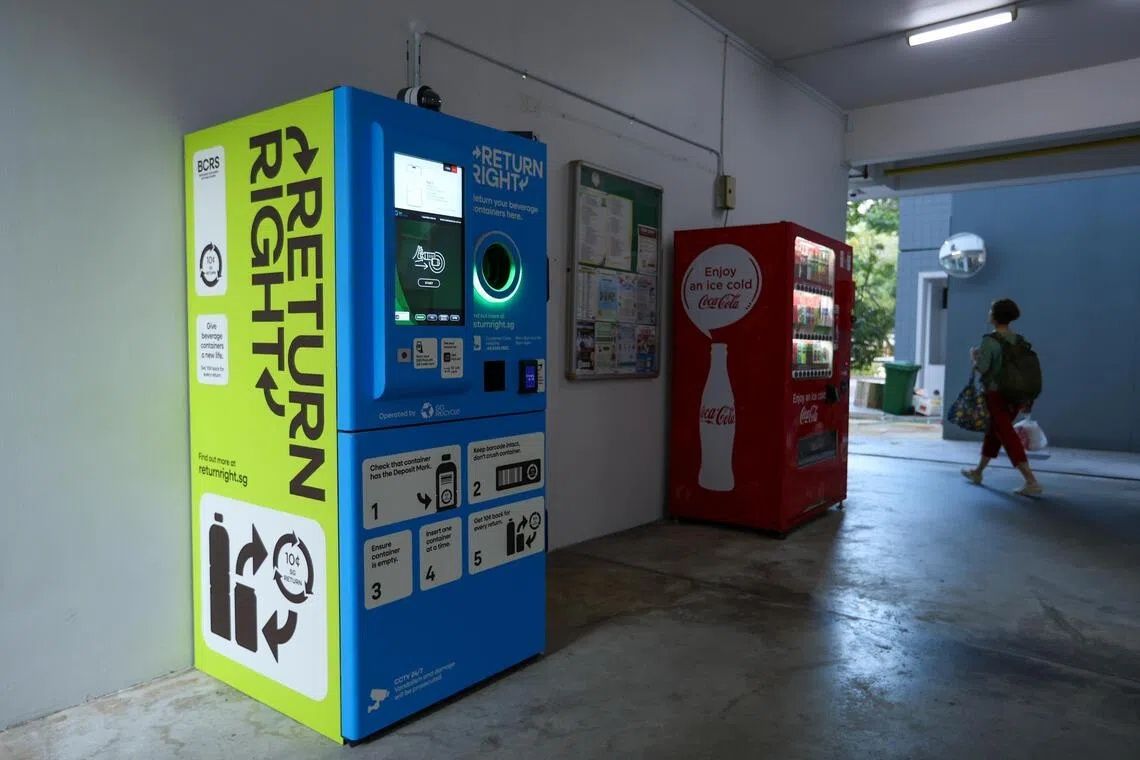
Singapore's environmental authority has pushed back against public allegations of financial impropriety regarding its newly implemented beverage container recycling programme, characterising the accusations as stemming from a fundamental misreading of official statements about how the scheme operates. The National Environment Agency took to social media on August 15 to systematically address concerns that had proliferated online, emphasizing that the controversy appears rooted in confusion rather than any actual wrongdoing in how deposits and refunds are being managed.
The controversy emerged after parliamentary remarks made by Senior Minister of State for Sustainability and the Environment Janil Puthucheary became the subject of public scrutiny and reinterpretation. Speaking in Parliament on August 5, Puthucheary had outlined programme performance metrics from the scheme's first four months of operation, noting that more than one million successful refund transactions had been processed since the Beverage Container Return Scheme launched on April 1. He simultaneously reported that 5.5 million used beverage containers had been deposited into the reverse vending machines across the island.
Observers online appear to have seized upon these figures and constructed a narrative suggesting a significant discrepancy between the numbers, interpreting the data to mean that only deposits from one million containers out of the 5.5 million returned had been refunded to consumers. This interpretation implied that approximately 4.5 million containers' worth of deposits—roughly S$450,000 in total value—may have been improperly retained or misappropriated. The allegation, though not grounded in the actual mechanics of the scheme, gained traction in online forums and social media discussions, where concerns about governmental accountability resonated with some segments of the public.
The NEA's response clarified the arithmetic underlying the apparent contradiction by explaining how the scheme actually functions at the operational level. The agency emphasized that the transaction count and container count measure different things: a single transaction through a reverse vending machine can involve the return of multiple containers simultaneously, meaning that consumers are not limited to depositing one item per visit. This fundamental aspect of the machines' design is critical to understanding why the refund transaction numbers appear lower than the total container returns.
Data provided by the agency revealed that across the initial four-month operational period, consumers averaged approximately 5.5 beverage containers returned per transaction. This statistic directly reconciles the apparent discrepancy: multiplying 1.06 million transactions by an average of 5.5 containers per transaction yields approximately 5.8 million containers, closely matching the reported 5.5 million figure and accounting for normal variance in usage patterns. The mathematics of the scheme therefore become transparent once the transactional structure is understood.
Financially, the NEA calculations indicate that approximately S$550,000 in deposits has been refunded to consumers across the four-month pilot period. Given that each beverage container carries a 10-cent deposit—a figure deliberately calibrated to incentivize participation without creating excessive financial burden—the refund volume aligns logically with the number of containers processed. No funds appear unaccounted for based on these calculations, directly contradicting the online narrative of misappropriation.
The broader context of Singapore's environmental policy shows the scheme represents an attempt to reduce packaging waste and incentivize circular economy participation among consumers. The 10-cent deposit mechanism operates as a behavioural lever, making it financially worthwhile for people to return containers rather than disposing of them through normal waste streams. The relatively robust uptake demonstrated by the 5.5 million container returns in just four months suggests the programme is achieving its intended environmental objectives, even as it navigates early operational challenges.
The initial rollout phase has not been entirely frictionless, as Puthucheary himself acknowledged when addressing parliamentary questions about scheme implementation. Some early adopters reported frustrations with machine malfunctions that prevented them from receiving refunds immediately, requiring them to contact the scheme operator directly to resolve technical errors. Other users documented instances where machines incorrectly rejected valid containers, creating delays in refund processing and generating negative user experiences that inevitably fuelled broader skepticism about the programme's management.
The scheme operator, also designated as BCRS, has responsibility for maintaining the technical infrastructure and responding to operational glitches reported by users. According to Puthucheary's August 5 parliamentary remarks, the operator has generally responded promptly to isolated technical issues when they have been reported, working collaboratively with machine operators to implement fixes. However, the existence of these technical problems, even if resolved quickly, appears to have created an environment where public confidence in the scheme's administration was already somewhat fragile before the transaction-data confusion emerged online.
Governance structures around the scheme include requirements that BCRS submit annual financial reporting to the NEA, creating an accountability mechanism that should theoretically prevent undisclosed financial irregularities. The transparency framework, at least on paper, appears designed to catch any genuine misappropriation of collected deposits. The scheme operator's obligation to provide detailed financial accounting represents a safeguard against the type of corruption that online commentators had alleged, though such structural protections only function effectively if stakeholders are aware they exist and trust that enforcement mechanisms work as intended.
For regional observers and other countries considering deposit-return schemes as environmental policy tools, Singapore's experience offers several cautionary insights. The transparency of how such schemes operate—particularly the mechanics of transaction counting and refund processing—appears critical to maintaining public confidence. Technical problems in early implementation, while inevitable in any new large-scale programme, can erode trust more rapidly than the problems themselves warrant, particularly when political communication about the scheme's performance is potentially ambiguous or subject to varied interpretation.
The incident underscores broader challenges facing environmental policy implementation in an era of rapid online information sharing and public interpretation of official data. Policymakers must anticipate not only technical obstacles to scheme success but also communication challenges that arise when performance metrics are presented without sufficient contextual explanation of how they interconnect. Singapore's environmental authority has now provided the clarification needed to dispel the online controversy, though questions remain about whether such proactive communication should have accompanied the original parliamentary statements to prevent misinterpretation from taking root in public discourse.

