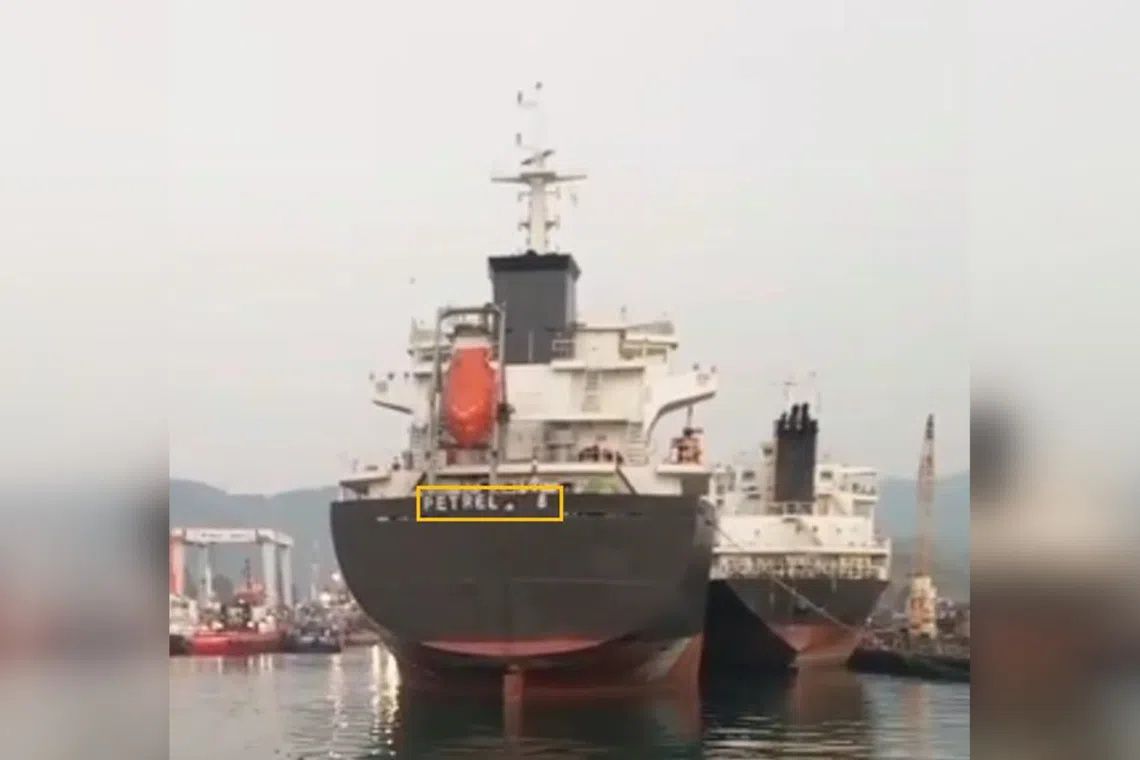
Singapore's authorities are moving forward with prosecution of a maritime services company and its director over their role in registering a vessel that had been formally blacklisted by the United Nations Security Council for involvement in illicit North Korean trade. The charges, to be brought in court on July 31, represent a significant enforcement action in Singapore's effort to comply with international sanctions regimes targeting weapons proliferation from Pyongyang.
The Commercial Affairs Department of Singapore's police force initiated investigations after discovering that the company provided flag registration services to PETREL 8 on May 18, 2022. This bulk carrier had already been formally designated by the UNSC in October 2017 as a vessel involved in transporting contraband North Korean exports, including coal and iron ore. The designation meant the ship was officially blacklisted under international law, and conducting maritime services for such vessels in violation of UN sanctions carries serious legal consequences across signatory nations.
The company director, a 49-year-old man, is accused of having reasonable grounds to know that PETREL 8 was a sanctioned vessel actively engaged in North Korean trade violations. This element of knowledge is critical in sanctions enforcement, as it distinguishes between inadvertent compliance failures and deliberate circumvention of international law. The police have determined that given the public nature of UNSC designations, the director should have been aware of the vessel's status before agreeing to provide services.
The charges reflect Singapore's strict interpretation of its obligations under the United Nations Act and the United Nations (Sanctions – DPRK) Regulations 2010. The company faces prosecution under Regulation 8D(d)(ii), which explicitly prohibits any person or entity operating in Singapore or abroad on behalf of Singapore from providing classification, certification, or related maritime services to vessels flagged under North Korean colours or which are known to be operating in violation of sanctions. This regulatory framework creates broad liability to catch various intermediaries in the sanctions circumvention chain.
The director's involvement opens him to separate charges of abetting the company's violation. Singapore's Penal Code treats aiding and abetting as equally culpable to the primary offence, meaning individuals who knowingly facilitate corporate breaches face individual criminal liability. If convicted, the director could face a maximum prison sentence of ten years, a fine reaching SGD500,000, or both penalties simultaneously. Such severe individual consequences are designed to deter corporate officers from turning a blind eye to sanctions compliance failures.
The company itself faces a maximum fine of SGD1 million if found guilty, a level of corporate liability intended to make sanctions evasion economically irrational for businesses. These penalties reflect Singapore's hardline approach to sanctions enforcement, positioning the city-state as a trusted partner in the international effort to restrict North Korea's access to trade networks and financial systems. For regional shipping companies, the case serves as a stark warning about the reputational and legal costs of engaging with blacklisted vessels or their operators.
The legal framework underlying these charges derives from UN Security Council resolutions targeting North Korea's continued development and proliferation of weapons of mass destruction. The UNSC sanctions regime imposes restrictions on financial transactions, weapons trade, and dual-use technology sales, but it also extends to maritime services that effectively allow sanctioned vessels to continue operating. By blacklisting specific ships, the UN creates a mechanism to physically impede North Korean trade networks and force Pyongyang to either comply with international demands or face increasing isolation.
PETREL 8's history exemplifies how vessels become tools of sanctions evasion. The bulk carrier has been flagged successively by Comoros, an East African island nation, and Niue, a Pacific island with a separate maritime registry. These flag registrations are obtained from countries with weaker regulatory oversight, allowing vessels to maintain plausible deniability about their ownership and operational history. The ship's use for transporting North Korean coal and iron ore represents a direct breach of export controls that should have been understood by any maritime professional familiar with sanctions regulations.
For Malaysia and other Southeast Asian states, this prosecution carries particular significance. The region remains vulnerable to sanctions evasion schemes, and maritime companies in Malaysia, Singapore, Thailand, and Indonesia must ensure comprehensive compliance systems are in place. The enforcement action demonstrates that Singapore, as a major global shipping hub and financial centre, is willing to prosecute even sophisticated actors who facilitate sanctions violations. This sets a regional precedent and raises the baseline for due diligence across Southeast Asian maritime industries.
The broader context involves rising concern among Western and allied governments about North Korea's ability to circumvent sanctions through shell companies, transshipment schemes, and maritime deception. Recent years have seen increased detection of North Korean coal shipments disguised as other origins, sales of banned missile and weapons technology to Middle Eastern clients, and crypto-currency transactions designed to evade financial monitoring. Each enforcement action like Singapore's prosecution contributes to making such evasion riskier and more costly, though experts debate whether sanctions have fundamentally degraded North Korea's weapons programmes.
Singapore's public commitment to implementing UNSC resolutions fully reflects its strategic position as a global financial and logistics hub with significant interests in maintaining the international rule-based order. By aggressively prosecuting sanctions violations, Singapore aims to preserve its reputation as a trustworthy jurisdiction for legitimate international commerce. Malaysian policymakers may observe this case as a model for strengthening maritime compliance in Malaysia's own ports and shipping registries, particularly given the country's role in regional trade.
The prosecution also signals to the international community that Singapore remains attentive to proliferation risks and sanctions obligations, reinforcing its standing within Western security frameworks and international law enforcement partnerships. As investigations into North Korean sanctions evasion continue globally, more similar cases are likely to emerge across the region, with Southeast Asian jurisdictions increasingly called upon to demonstrate enforcement commitment.

