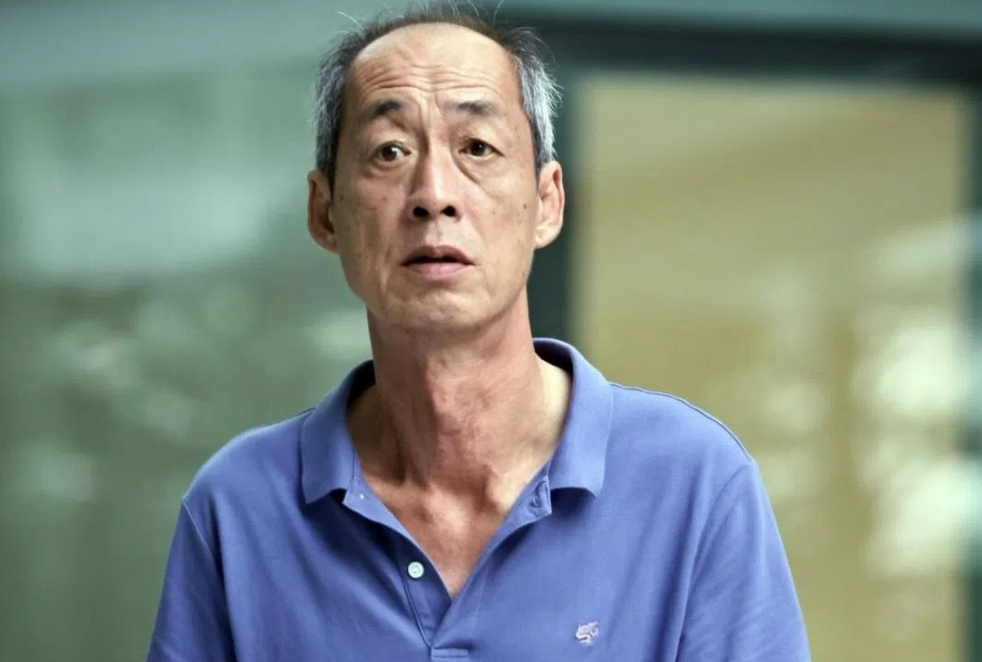
A 61-year-old bus driver in Singapore has been sent to prison for eight weeks following the tragic death of a 72-year-old passenger who fell from his vehicle while attempting to alight. Ang Oon Leng pleaded guilty to causing death through a negligent act in the incident that claimed the life of Lee Bee Lwee, highlighting serious lapses in basic safety procedures that could have been easily prevented with proper attention and care.
The collision between duty and vigilance occurred on the morning of March 5, 2025, when Ang was operating a private shuttle bus contracted to transport cleaning workers to and from their employment. His employer had engaged him specifically for this staff transportation service, a responsibility that demands heightened awareness given the regular movement of passengers throughout the day. On that fateful morning, he brought the vehicle to a halt at a taxi stand located at Hillion Mall on Petir Road, where multiple passengers, including Lee, began the process of exiting.
What followed was a sequence of oversights that proved catastrophic. According to Deputy Public Prosecutor Thaddeus Tan's account in court proceedings, Ang initiated movement of the bus without executing even the most elementary safety checks. He failed to visually inspect the rear doors to confirm whether anyone remained in the process of leaving the vehicle, and he neither waited for the passenger door to be fully closed nor verified that the exit area was clear. Instead, he proceeded to navigate the curved section of road immediately adjacent to the pickup point, creating a moving hazard for Lee, who was still descending the bus steps.
The consequences unfolded rapidly and inevitably. The forward motion of the bus, combined with Lee's position on the exit steps, caused her to lose her balance and topple onto the pavement. The impact of her head striking the ground generated enough force to produce an audible sound that penetrated the bus cabin, prompting Ang to stop the vehicle almost immediately. He emerged to assess the situation and, upon seeing Lee's condition, contacted emergency services without delay.
Lee was transported urgently to the National University Hospital, where medical teams attempted to address the severe head trauma she had sustained. However, the injuries proved unsurvivable. She succumbed to her wounds at approximately four o'clock that afternoon, transforming what should have been a routine commute into a fatal tragedy. The prosecutor later described Lee as a cherished member of her community, someone whose life was marked by simple pleasures and active participation in neighbourhood activities organised through her local residents' centre.
The legal proceedings moved with deliberate speed following the incident. Ang was apprehended on March 12, 2025, just a week after the collision, and formal charges were filed the next year. During sentencing on July 7, the court imposed multiple consequences extending beyond the immediate custodial term. In addition to the eight-week imprisonment, Ang received a five-year prohibition from holding or obtaining driving licences of any category, a substantial penalty that effectively ends his career in the transportation industry. He was also ordered to provide monetary compensation of approximately $2,200 to Lee's dependent family members, with an additional week of imprisonment as the consequence should he default on this payment.
The prosecution had advocated for a harsher sentence, requesting that the court impose up to twelve weeks' confinement. Prosecutors emphasised that Lee's death represented an irreversible loss, highlighting her valued role within her family and community. They underscored that no penalty imposed by the courts could restore what had been taken, and that the severity of the sentence should reflect the finality and preventability of her demise.
The case exposes vulnerabilities in safety culture within the private transport sector across Singapore and, by extension, throughout Southeast Asia. The fundamental negligence demonstrated—failing to check blind spots before moving a vehicle carrying passengers—represents a gap between theoretical safety standards and their practical implementation. For operators and passengers alike, the incident serves as a grim reminder that transport safety depends entirely upon the discipline and attentiveness of those in control of vehicles.
In the wider regional context, this incident resonates particularly in Malaysia and other Southeast Asian nations where informal or semi-formal transport arrangements operate with varying levels of regulatory oversight. The prosecution's case emphasised that causing death through negligence carries statutory maximum penalties of two years imprisonment, fines, or both, yet such provisions remain effective only insofar as drivers internalise the gravity of their responsibility. The sentence imposed on Ang represents a calibrated response reflecting culpability while attempting to serve deterrent functions for other transport operators.
For passengers and their families, the tragedy underscores an uncomfortable reality: safety ultimately depends upon the competence and conscientiousness of individual operators in moments when their attention can mean the difference between life and death. Lee's family faced the compounding pain of knowing her death resulted not from mechanical failure or unpredictable circumstance, but from preventable human inattention during what should have been an ordinary morning journey. The monetary compensation ordered by the court, however modest relative to the loss, represents society's formal acknowledgement of the harm inflicted.

