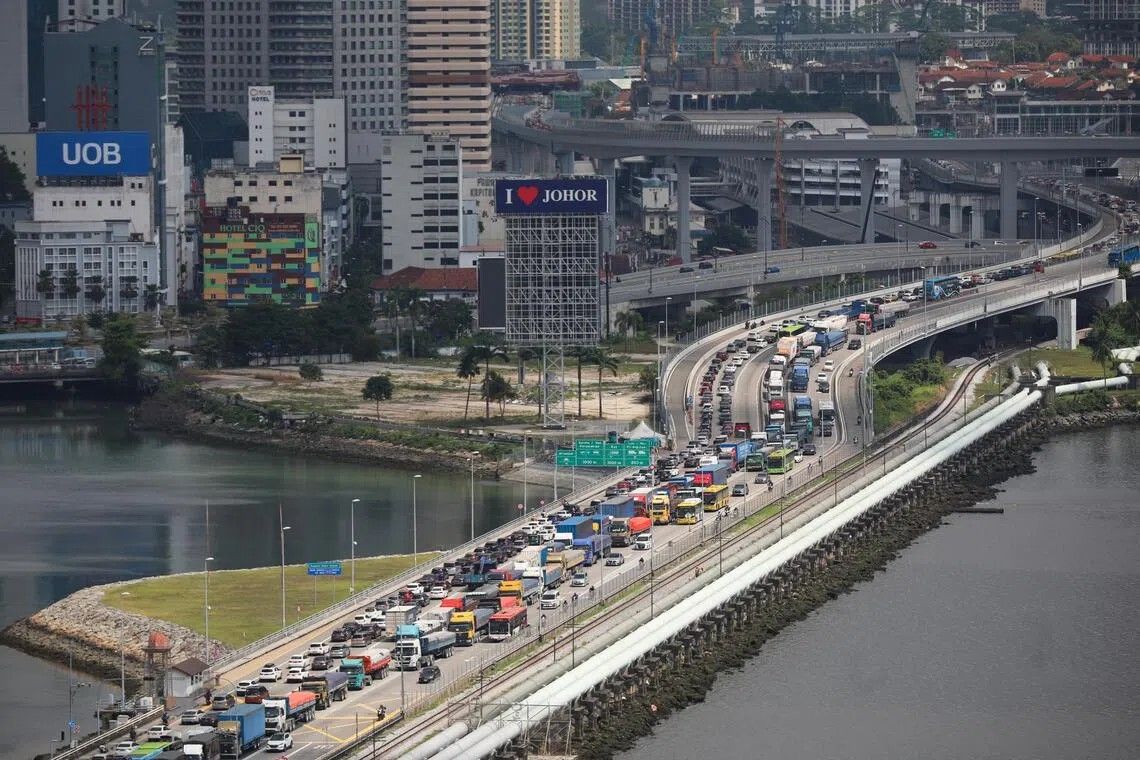
Motorists heading to Malaysia or returning from across the Causeway and Second Link should prepare for significant delays at Singapore's main land border crossings during the National Day long weekend from August 7 to 10. The Immigration and Checkpoints Authority (ICA) has cautioned commuters and holidaymakers to anticipate "very heavy traffic" conditions that could severely disrupt travel schedules, marking a familiar pattern as peak travel periods converge with extended public holidays.
The advisory, issued on August 3, underscores the recurring challenge Singapore faces during school holidays and festive periods when both local and cross-border travel surge simultaneously. ICA's recommendation to stagger journeys by avoiding traditional peak hours—suggesting instead that travellers depart in early mornings or late evenings—reflects a pragmatic approach rooted in recent experience. The checkpoint authority has built its guidance on concrete data from preceding holiday periods, providing a sobering glimpse into what awaits unprepared motorists during the upcoming long weekend.
Recent traffic patterns offer compelling evidence of the scale of movement across these checkpoints. Between May 26 and June 28, coinciding with Hari Raya Haji, Vesak Day, and school holidays, more than 18 million travellers traversed the Woodlands and Tuas crossings. The volume reached a historic peak on June 19, when 598,000 individuals cleared immigration at both checkpoints in a single day, shattering the previous record of 589,000 set on December 19, 2025. During the heaviest periods, private vehicle users faced waiting times stretching to three hours purely for immigration processing, compounded by traffic congestion backing up from Malaysian roads.
The congestion reflects not merely an inconvenience but a constraint on the borderlands' capacity during exceptional demand. Malaysian traffic conditions contribute meaningfully to delays on the Singapore side, as bottlenecks originating in Johor directly impede clearance efficiency at Woodlands. This cross-border dynamic means Singapore's checkpoint management cannot fully mitigate congestion without coordination with Malaysian authorities, illustrating the interdependence of regional infrastructure during high-volume periods.
Security protocols have intensified the pressure on throughput since late February, when ICA implemented enhanced screening measures in response to heightened global security concerns, particularly developments emanating from the Middle East. These fortified procedures, while essential for safeguarding border integrity, necessarily reduce the number of travellers cleared per unit time. Enforcement actions during recent holiday periods underscore the stakes: 52 motorists faced sanctions for traffic violations and dangerous driving, including queue-cutting, mandatory re-queuing from the back of the line, and in certain cases, temporary bans from entering Singapore. These penalties, though stringent, reflect the disruption caused when individual drivers circumvent orderly procedures.
To ease congestion, ICA has promoted digital tools that streamline processing. The MyICA mobile app enables travellers to generate QR codes for expedited immigration clearance, reducing paperwork and physical interactions at counters. Motorcyclists benefit from the New Clearance Concept, which employs facial recognition technology and has boosted departure-peak clearance rates by over 35 per cent—equivalent to an additional 7,600 travellers hourly compared with pre-pandemic 2019 levels. These technological gains demonstrate how innovation can partially offset security-driven processing delays, though adoption rates depend on traveller awareness and willingness to engage with digital platforms.
For Malaysian readers and those regularly traversing the causeway, the August 7-10 period demands strategic planning. Leaving well before typical departure windows or after evening rush hours could yield savings of one to two hours compared with midday or early afternoon travel. Checking real-time traffic information at both checkpoints before departing—advice ICA specifically emphasizes—allows travellers to adjust routes or timing dynamically, though Singapore's two main crossings offer limited alternative pathways.
The broader context reveals chronic infrastructure stress. The region's explosive growth, Malaysia's population expansion, and Singapore's role as a commercial hub mean that peak travel periods will continue straining checkpoint capacity. While technological improvements and enhanced security protocols represent important adjustments, the fundamental mismatch between peak demand and available lanes remains. Regional planners have long discussed capacity augmentation, yet implementations proceed slowly, leaving commuters to navigate existing constraints.
For those with flexibility, the ICA's counsel to travel outside traditional peak windows represents the most practical mitigation. Employers offering flexible working arrangements during extended holidays could alleviate morning congestion; similarly, evening travellers departing after 8pm typically encounter fewer delays. However, not all travellers possess such flexibility, particularly schoolchildren, families with fixed holiday windows, or those returning to work on specific dates.
Cooperation at the checkpoints remains essential. ICA explicitly appeals to motorists to maintain lane discipline, comply with traffic regulations, and refrain from queue-cutting. These individual behavioural choices aggregate into measurable outcomes: orderly queuing accelerates overall throughput, while violations cascade through the system, compounding delays for thousands. The enforcement actions against 52 recent violators signal that authorities will maintain discipline through sanctions.
As the National Day long weekend approaches, motorists should treat border crossing as a logistical exercise requiring preparation rather than spontaneity. Checking the MyICA app, departing during non-peak slots, monitoring real-time conditions, and maintaining queue discipline collectively offer the best prospect of minimizing delays. While ICA's infrastructure and personnel will operate at full capacity, managing demand through traveller behaviour remains the most controllable variable in an increasingly congested borderland.

