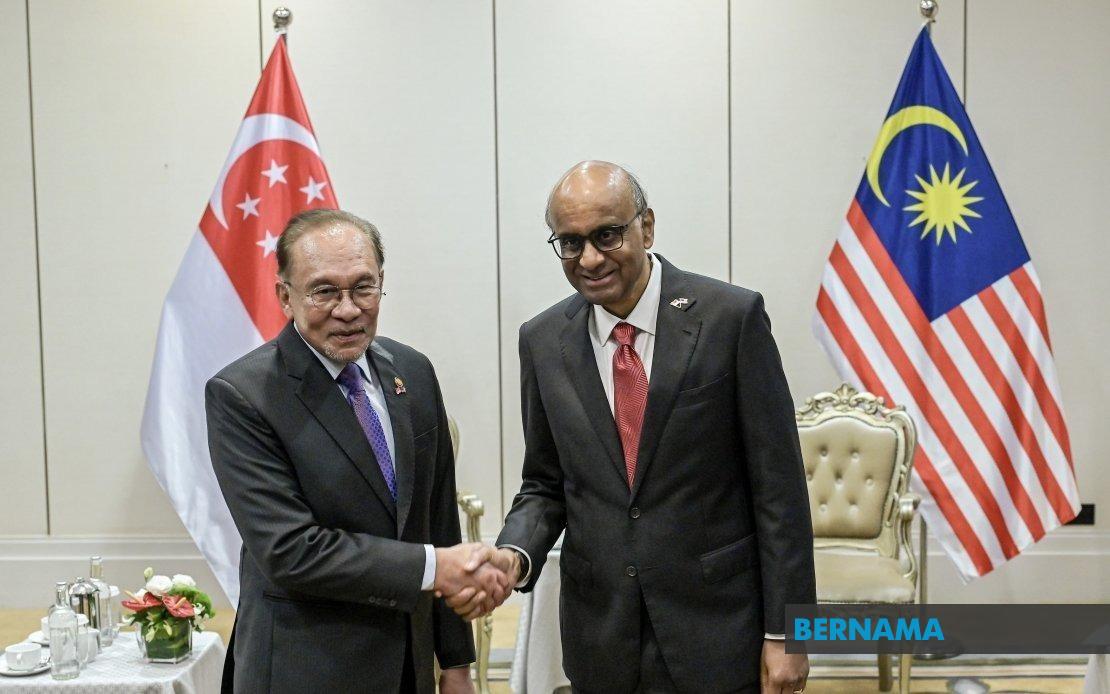
Singapore and Malaysia are moving to strengthen bilateral ties across multiple strategic domains, with both nations publicly committing to expanded cooperation in areas ranging from food security to energy resilience. The pledge emerged during the high-profile courtesy call between Malaysia's Prime Minister Datuk Seri Anwar Ibrahim and Singapore's President Tharman Shanmugaratnam on Monday, marking a significant diplomatic moment as Tharman undertook his inaugural state visit to Malaysia from July 12 to 15.
The timing of the engagement carries particular weight given the regional complexities facing Southeast Asia. Both leaders used the occasion to reinforce their shared commitment to upholding international law, specifically referencing the United Nations Convention on the Law of the Sea (UNCLOS) and the critical principle of freedom of navigation. These statements appear calibrated against the backdrop of escalating geopolitical tensions in West Asia and broader concerns about maritime security in the region, issues that directly affect Singapore and Malaysia's strategic interests and economic lifelines.
Food security represents one of the most pressing cooperation areas between the two nations. Both Singapore and Malaysia face distinct vulnerabilities in their food supply chains—Singapore, as a city-state with minimal agricultural capacity, relies heavily on imports, while Malaysia, despite greater agricultural potential, seeks to optimize production and distribution systems. Deepening collaboration in this sector could yield concrete benefits for both populations, potentially including knowledge transfers in urban farming technologies, supply chain optimization, and emergency food reserves management.
Energy cooperation also stands as a natural focus, particularly as both nations navigate the transition toward renewable and cleaner energy sources. Malaysia's substantial natural resources and Singapore's advanced technological infrastructure and market mechanisms create complementary advantages. Discussions in this domain likely encompassed liquefied natural gas (LNG) trading arrangements, grid stability measures, and coordinated approaches to regional energy security in an era of shifting global supply dynamics.
President Tharman's visit included formal state protocols befitting his office, with the President and his wife Jane Ittogi Shanmugaratnam receiving a state welcoming ceremony at Istana Negara. They were received by His Majesty Sultan Ibrahim, King of Malaysia, and Her Majesty Raja Zarith Sofiah, Queen of Malaysia, underscoring the ceremonial importance both nations attached to the engagement. Such high-level protocol signals mutual respect and the desire to elevate bilateral relations beyond routine diplomatic channels.
The visit extended beyond the federal capital, with President Tharman subsequently meeting with the Sultan of Selangor, Sultan Sharafuddin Idris Shah, and Selangor Menteri Besar Datuk Seri Amirudin Shari. This sub-national engagement diversifies the cooperation framework and acknowledges Selangor's economic significance within Malaysia. During these interactions, both sides identified additional collaborative opportunities spanning technical and vocational education, climate adaptation and flood mitigation measures, and the nurturing of startup ecosystems.
The inclusion of climate adaptation and flood mitigation in partnership discussions reflects the urgent reality of environmental challenges facing both nations. Malaysia has experienced increasingly severe flooding in recent years, while Singapore, as a low-lying island city, faces distinct vulnerabilities to rising sea levels and extreme weather events. Joint initiatives in these areas could leverage Malaysia's land-based flood management experience alongside Singapore's advanced technological solutions and early warning systems.
The emphasis on technical and vocational education cooperation addresses a shared priority in human capital development. Both nations recognize that middle-skill workers trained in specialized vocations represent critical economic assets. Enhanced exchange programs, curriculum alignment, and instructor training initiatives could benefit both labor markets and strengthen the region's competitiveness in emerging sectors.
Startup ecosystem growth emerged as another collaboration theme, reflecting the innovation-focused trajectories of both economies. Singapore's mature fintech and technology sectors, combined with Malaysia's growing entrepreneurial ecosystem and lower cost structures, present opportunities for venture capital flows, knowledge transfer, and cross-border business formation. President Tharman's explicit welcome of expanded exchanges between Singapore and Selangor suggests interest in deepening these connections at the sub-national level as well.
The public articulation of these cooperative commitments carries significance beyond their immediate substance. In an era marked by competing regional interests and occasional bilateral tensions, the visible reaffirmation of shared values—particularly regarding international law and maritime freedom—helps stabilize the relationship and provides reassurance to neighboring countries about the commitment of both Singapore and Malaysia to rules-based regional architecture. For Malaysian and Southeast Asian observers, such statements counter narratives of fragmentation and underscore the region's capacity for constructive engagement on substantive issues.
The breadth of cooperation areas identified suggests both nations view their relationship as multidimensional and forward-looking rather than transactional. By anchoring discussions in food security, energy, education, climate adaptation, and innovation, Singapore and Malaysia are positioning their partnership as relevant to long-term development challenges rather than limited to narrow diplomatic or commercial interests. This framing enhances the durability and resilience of bilateral ties even as individual issues evolve.
For Malaysia specifically, deepening ties with Singapore carries practical implications. Singapore remains a crucial trade partner and source of foreign direct investment, while also serving as a gateway to global markets. Stronger cooperation frameworks facilitate smoother business operations, reduce transaction costs, and create predictability for Malaysian companies operating in or through Singapore. Simultaneously, such cooperation strengthens Malaysia's ability to address domestic challenges like food security and climate resilience through external partnerships and technology access.
Moving forward, the substance of these partnerships will depend on implementation mechanisms. The identification of cooperation areas during high-level visits represents an important first step, but translating commitments into concrete programs, funding allocations, and institutional arrangements requires sustained political will and bureaucratic coordination. Malaysian observers should watch for follow-up announcements regarding specific joint projects, timelines, and responsible agencies, which will indicate the seriousness with which both governments pursue these declared priorities.

