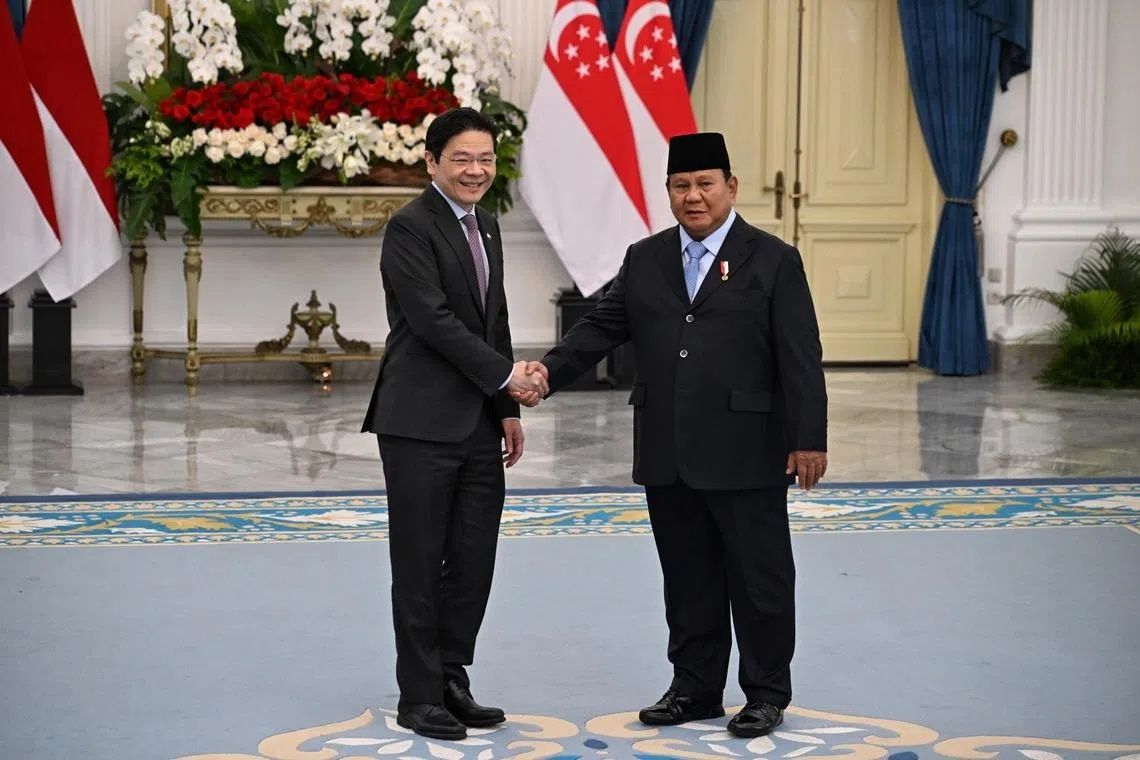
Singapore and Indonesia have reaffirmed their commitment to maintaining the Strait of Malacca as an open, safe and accessible waterway for international shipping, signalling a significant elevation of maritime security within their bilateral relationship. The pledge emerged following high-level talks between Prime Minister Lawrence Wong and President Prabowo Subianto on July 6 at the annual Leaders' Retreat, where both leaders stressed that safeguarding this critical sea lane remains essential to regional stability and economic vitality amid mounting geopolitical tensions.
The Strait of Malacca, which links the Indian Ocean to the South China Sea, represents one of the world's most vital maritime corridors, handling a substantial proportion of global trade and energy supplies annually. Its strategic importance has only intensified as regional powers grapple with broader security challenges and trade route vulnerabilities. At the retreat, both leaders underscored that protecting this passage from piracy, pollution and accidents demands sustained coordination among littoral states, particularly Malaysia and Thailand, in accordance with international maritime law.
President Prabowo emphasised that Indonesia and Singapore, as countries with direct borders along the strait, share a fundamental interest in preserving its accessibility. He articulated a vision of the waterway functioning as a corridor free from restrictions or blockades, accessible to all legitimate users regardless of their origin or destination. This stance reflects Indonesia's commitment to the principles enshrined in the United Nations Convention on the Law of the Sea, which Indonesia views as the cornerstone of predictable and rules-based maritime governance across Southeast Asia.
Prime Minister Wong linked the imperatives of maintaining open sea lanes in the Malacca region to recent disruptions in global trade patterns elsewhere. He cited the ongoing instability in the Middle East and the consequent choking of traffic through the Strait of Hormuz as a cautionary example of how geopolitical conflicts can devastate international commerce. Such disruptions, he noted, have cascading effects on oil supplies and overall economic stability, underscoring why Singapore and Indonesia must work proactively to prevent similar vulnerabilities in Southeast Asia's maritime domain.
For Malaysian and Southeast Asian readers, this bilateral alignment carries profound implications. The two countries' joint commitment to navigational freedom and maritime security creates a stabilising force that extends beyond their bilateral relationship. With Indonesia wielding significant influence over the strait's eastern approaches and Singapore occupying a critical chokepoint, their strategic alignment reduces the risk of unilateral actions that could jeopardise the region's commercial interests. Malaysia, as a fellow littoral state, benefits from this coordinated approach, as it reinforces the multilateral framework for strait management.
Beyond maritime security, both leaders signalled a deliberate broadening of their economic and strategic partnership into domains that will shape regional development in coming years. Cross-border electricity trade emerged as a flagship initiative, with Indonesia's sovereign investment fund Danantara designated to spearhead implementation. This cooperation involves major Singapore firms including Keppel Electric, Sembcorp Industries and Singapore Energy Interconnections, all working towards developing sustainable electricity export capabilities between the two nations. Prime Minister Wong characterised this endeavour as a foundational component of a wider ASEAN Power Grid, a vision aimed at strengthening collective energy security across Southeast Asia.
The shift towards renewable energy cooperation reflects both countries' recognition that traditional energy models must evolve to meet climate commitments and rising demand. For Indonesia, home to vast renewable resources and a growing population requiring increased electricity supply, such partnerships offer pathways to monetise green energy assets while attracting foreign expertise and investment. For Singapore, a resource-constrained city-state heavily dependent on energy imports, securing reliable access to clean power from neighbouring Indonesia provides long-term energy security and supports its sustainability objectives. The ramifications extend throughout the region, as successful cross-border electricity infrastructure could serve as a template for similar arrangements across ASEAN.
Digital infrastructure, cybersecurity and supply chain resilience also figured prominently in the discussions, reflecting the two countries' understanding that economic competition and strategic advantage increasingly hinge on technological capabilities and secure supply networks. President Prabowo reported that concrete outcomes had emerged from discussions on digital ecosystem development and cybersecurity cooperation. These initiatives address vulnerabilities that have become more acute in recent years, particularly given geopolitical tensions and the strategic importance of digital infrastructure to modern economies. Both nations recognise that building indigenous capacity in these domains while maintaining open, secure digital corridors enhances their competitive positioning.
Prime Minister Wong's repeated emphasis on Singapore's confidence in Indonesia's economic prospects signals a broader regional realignment. Singapore, traditionally viewed as a developed financial hub, is repositioning itself as an active partner in Indonesia's development trajectory rather than merely a conduit for foreign capital. Wong highlighted Singapore's role in facilitating downstream industrial development, digital infrastructure creation and employment generation across Indonesia, pointing to specific success stories in the Batam, Bintan and Karimun region and the Kendal Industrial Park in Central Java. The Kendal facility's achievement of full capacity and planned expansion by 1,000 hectares demonstrates the depth of bilateral commercial integration and investor confidence in Indonesia's industrial future.
The two countries' joint emphasis on supply chain resilience speaks to a geopolitical reality that has preoccupied policymakers across the region. The COVID-19 pandemic exposed vulnerabilities in global supply chains, while rising US-China tensions have prompted companies to diversify manufacturing bases and sourcing strategies. Singapore and Indonesia are positioning themselves as reliable partners within this reconfigured landscape, with Singapore providing financial services, advanced logistics and technology expertise, while Indonesia supplies manufacturing capacity, natural resources and a vast consumer market. For Malaysian businesses and policymakers, this bilateral deepening underscores the necessity of strengthening their own supply chain partnerships and industrial ecosystems to remain competitive.
As Singapore and Indonesia prepare to commemorate 60 years of diplomatic relations in 2027, the trajectory outlined during the July retreat demonstrates a relationship increasingly characterised by strategic alignment on global issues rather than mere transactional cooperation. The elevation of maritime security, combined with ambitious initiatives in energy, digital infrastructure and industrial development, reflects a shared vision of regional stability and prosperity. Both nations appear determined to position themselves as architects of regional order rather than merely participants responding to external pressures, a posture that carries implications for the entire Southeast Asian community. The success of their initiatives, particularly in cross-border electricity trade and supply chain integration, will likely establish benchmarks that other ASEAN members aspire to replicate, potentially reshaping the region's economic architecture in the years ahead.

