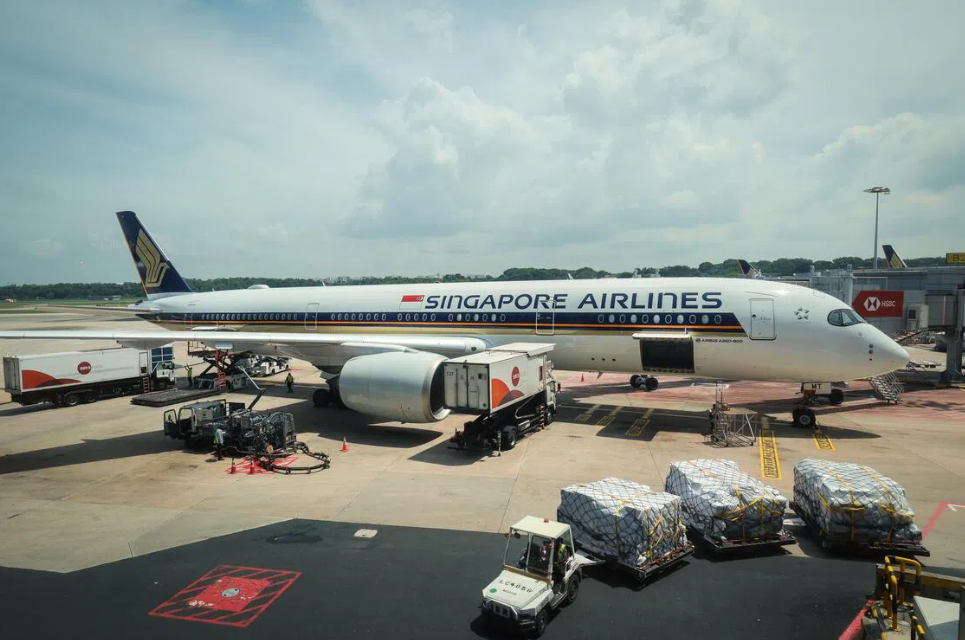
Singapore Airlines experienced an operational disruption on one of its flagship ultra-long-range services when flight SQ22 to New York turned back to Changi Airport just hours after departing on the evening of August 12. The incident underscores the operational complexities involved in maintaining one of the world's longest commercial air routes, which typically takes more than 18 hours to cover approximately 16,700 kilometres. The Airbus A350-900 aircraft, one of the airline's most advanced long-range jets, returned to the terminal at 3.06am on August 13 after developing an unspecified technical issue that prompted the crew to reverse course.
The exact nature of the mechanical problem remains undisclosed by the Singapore-based carrier, a decision that has drawn some passenger criticism despite generally positive feedback about how the airline managed the disruption. An airline spokesperson confirmed the incident to The Straits Times but refrained from elaborating on the specific technical fault that necessitated the turnaround. This opacity reflects standard airline practice in such situations, where carriers typically withhold technical details pending full investigation and safety assessment. However, the lack of transparency left passengers curious about the severity of the malfunction and whether it posed any safety risks during the flight's brief time in the air.
The logistical challenge of accommodating 133 passengers and 17 crew members required a well-coordinated response from Changi Airport's ground operations teams. Because the aircraft needed to be towed to a remote maintenance bay rather than docking at a passenger gate, all occupants were transported via shuttle buses to the terminal building. This procedure, though necessary for safety and maintenance access, created an additional layer of inconvenience for travellers already facing a significant delay in reaching their destination. The airline subsequently arranged food vouchers for passengers as they waited for arrangements to be finalised, acknowledging the extended period they would spend in the airport.
A critical factor in the delay was the regulatory limitation governing flight crew work hours, which prevented the original pilots and cabin staff from continuing on the replacement service. Crew fatigue regulations, mandated internationally and adopted by Singapore Airlines, restrict the consecutive duty periods that aviation personnel can work to ensure safety and prevent fatigue-related errors. Because the aircraft had already been in use for several hours before the turnaround decision, the crew members had exhausted a significant portion of their allowable flight time under these regulatory frameworks. As a result, the airline needed to assemble an entirely fresh crew complement to operate the replacement flight, a process that contributed substantially to the overall delay experienced by passengers.
The replacement Airbus A350-900 eventually pushed back from Singapore at 5.41am on August 13, approximately six hours after the original departure time. Despite this significant delay, the aircraft ultimately achieved a relatively swift trans-Pacific crossing, touching down in New York's Newark airport at 12.15pm local time the same day. The flight's success on the second attempt demonstrated that the issue affecting the initial aircraft was likely isolated and that the replacement aircraft posed no complications for the gruelling journey across the Indian and Atlantic Oceans. The relatively quick turnaround and uneventful subsequent flight suggested that whatever technical glitch prompted the initial return had been adequately resolved or that the replacement aircraft had no similar defects.
Passenger feedback regarding the airline's crisis management was broadly commendatory, with one traveller posting on Reddit that Singapore Airlines had handled the situation "incredibly well" despite the frustration of the delay itself. This individual, along with other affected passengers, received continuous updates throughout the process and were offered rebooking assistance for any connecting flights that may have been disrupted by the late arrival. The airline's proactive communication strategy and provision of ground services helped mitigate what could have been a significantly more negative passenger experience. However, even satisfied customers expressed a desire for greater transparency about the technical specifics, with one passenger noting that additional detail about the aircraft fault and baggage handling procedures would have enhanced understanding of the situation.
For Malaysian travellers and regional aviation observers, this incident highlights both the robustness of modern aircraft maintenance protocols and the complexity of managing ultra-long-haul operations. Singapore Airlines' decision to prioritise safety over schedule by returning to base rather than attempting to continue with a malfunctioning aircraft reflects the rigorous standards maintained across Southeast Asian carriers. The route between Singapore and Newark represents one of the most challenging commercial aviation undertakings globally, and even minor technical issues can necessitate decisive action given the aircraft's distance from adequate emergency landing facilities and the duration of the flight. This event reinforces that safety-first decision-making, though operationally burdensome, remains the non-negotiable standard across the region's premium carriers.
The incident also illustrates the significant operational infrastructure required to support ultra-long-haul services from Southeast Asian hubs. Changi Airport's capacity to accommodate aircraft repositioning, assemble replacement crews on short notice, and manage passenger care demonstrates the substantial investment required to maintain competitive long-distance routes. As regional airlines continue expanding their ultra-long-haul networks to compete with Gulf and European carriers, such operational resilience becomes increasingly important. The ability to recover swiftly from technical disruptions without compromising safety or severely damaging the passenger experience provides a competitive advantage in the premium long-haul market that Malaysian and regional operators are keen to access.
Singapore Airlines' public apology to affected customers and reiteration of its safety-first operational philosophy represent standard industry practice in such circumstances, yet they remain important affirmations of corporate values in an era of heightened passenger scrutiny. The airline's explicit commitment that "the safety of our customers and crew is always our top priority" serves both as a genuine operational principle and as a necessary public reassurance. For an airline operating some of the world's longest routes, maintaining passenger confidence in safety standards is essential to commercial success, and decisive action such as the SQ22 turnaround actually strengthens rather than undermines this confidence when handled transparently and competently.

