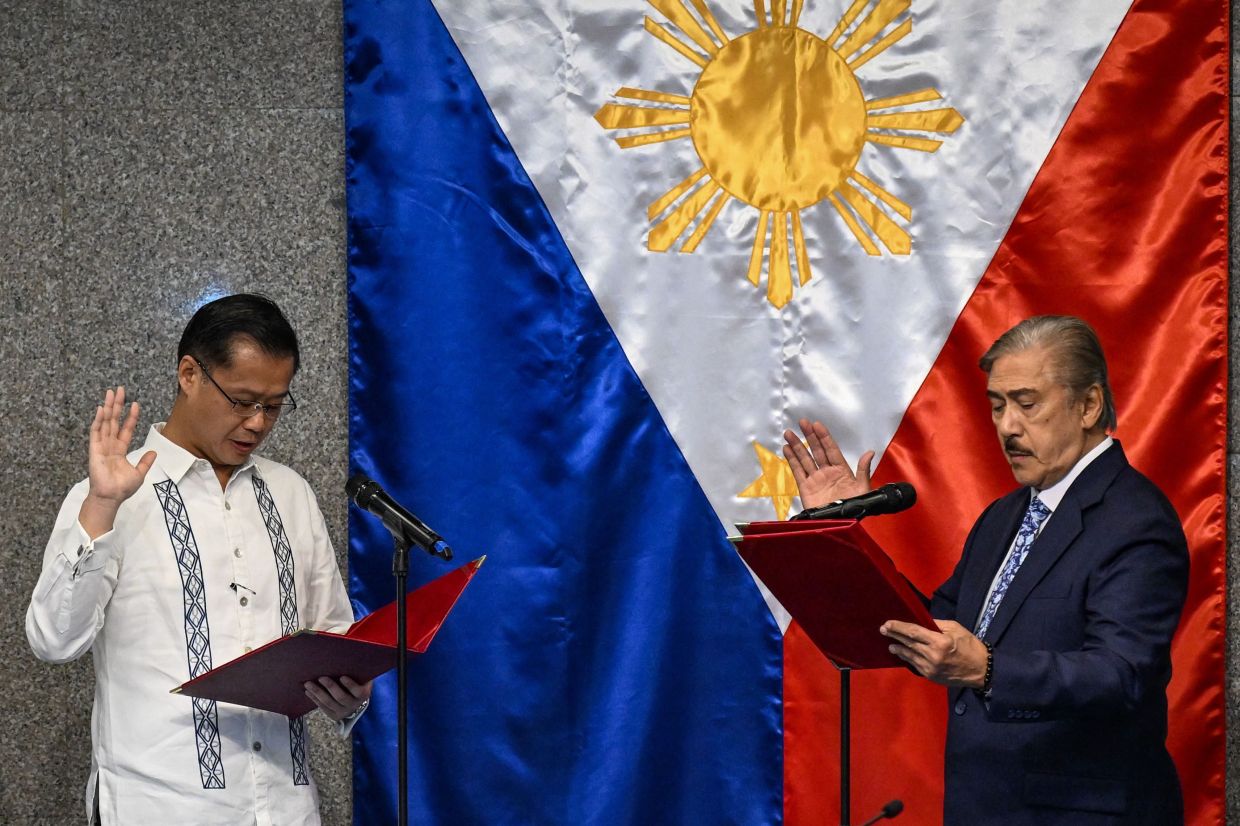
Senator Sherwin Gatchalian has secured election as president of the Philippine Senate following a special session held on Wednesday, ending weeks of institutional turbulence within the 24-member chamber. The voting procedure required precisely thirteen senators to meet the constitutional threshold for such appointments, a quorum that proved decisively difficult to assemble given the chamber's depleted roster and the fractious political maneuvers surrounding the succession.
Gatchalian, who previously served as Mayor of Valenzuela City in the northern reaches of Metro Manila before representing his district in the House of Representatives, brings considerable legislative experience to the role. His elevation to the Senate presidency marks another significant milestone in a career that has spanned local and national electoral politics across the Philippines' sprawling urban and provincial landscape.
The pathway to Gatchalian's appointment proved convoluted and revealed deep fissures within the Senate's internal power structure. Two weeks earlier, on June 3, a coalition of twelve senators had moved to install Gatchalian as Senate president pro tempore, a position carrying substantial procedural authority, while simultaneously declaring that Alan Peter Cayetano had vacated the Senate presidency that he had assumed less than a month prior on May 11. This earlier maneuver reflected growing dissatisfaction among certain senators regarding Cayetano's leadership direction.
Cayetano's response demonstrated his determination to retain control. He contested the legitimacy of the June 3 action, asserting that he remained the validly sitting Senate president and that the chamber required no fewer than thirteen senators to conduct elections or removals involving senior officers. This constitutional interpretation, while debatable, highlighted the ambiguity surrounding quorum requirements and presidential succession within Philippine legislative practice. The dispute threatened to deepen if the arithmetic remained unfavorable to the Gatchalian faction.
The decisive factor emerged when Senator Joel Villanueva, who had previously aligned himself with Cayetano's position, abruptly switched his allegiance to the Gatchalian bloc. This defection proved mathematically critical, transforming what had appeared as a deadlocked stalemate into a winning coalition. Villanueva's about-face represented the kind of pivotal senatorial realignment that periodically reshapes Philippine legislative dynamics, where personal and factional considerations often supersede strict party discipline.
Recognizing the changed political arithmetic, Cayetano signaled his acceptance of the new reality following a conversation with Villanueva on Tuesday. Rather than attempt a desperate rear-guard action that would likely prove futile and further damage institutional cohesion, he acknowledged that circumstances no longer favored his retention of the presidency. This decision, while prompted by mathematical necessity, nonetheless allowed Cayetano to depart the position with less overt confrontation than an extended struggle might have generated.
The Senate's institutional capacity to conduct this transition has been substantially constrained by extraordinary absences from the chamber. The body theoretically comprises twenty-four members, yet only twenty-two senators currently maintain active status. This dramatic reduction reflects two significant developments affecting the chamber's composition. Senator Jinggoy Estrada surrendered to police authorities earlier this month and subsequently faced orders from the Sandiganbayan, the Philippines' specialized anti-corruption court, imposing a ninety-day suspension from office on Tuesday relating to graft charges against him. This suspension temporarily removes him from legislative participation during the critical period when Senate investigations and votes may require his presence.
Additionally, Senator Ronald Dela Rosa remains at large as a fugitive wanted by the International Criminal Court, with his current whereabouts unknown to Philippine authorities. Dela Rosa's absence fundamentally alters the Senate's operational dynamics, as the body cannot easily summon him for legislative business. These extraordinary circumstances have created a Senate operating significantly below its designed capacity, making quorum calculations perpetually tense and rendering coalition-building exercises more precarious than under normal circumstances.
For Malaysian and broader Southeast Asian observers, the Philippine Senate's leadership transition illustrates the fluid nature of legislative politics within established democratic institutions across the region. While Malaysia's Parliament operates under different constitutional and procedural frameworks, the underlying dynamics of factional realignment, individual senatorial defections, and leadership contests periodically manifest across ASEAN legislatures. Gatchalian's assumption of the presidency represents a democratic succession, regardless of the political maneuvering involved, and potentially signals shifts in priorities or policy directions within the Philippine upper chamber.
The incoming Senate president now faces the challenge of governing a substantially diminished chamber while navigating the complex political landscape that his election revealed. Gatchalian must balance the competing interests of various senatorial blocs while managing legislation and oversight responsibilities. His background in local executive governance, combined with legislative experience, provides some foundation for managing these competing demands, though the chamber's operational difficulties and the political divisions evident during his election suggest that institutional consensus on major issues will remain difficult to achieve during his tenure.
The broader implications extend to Philippine governance more generally, as Senate leadership shapes the legislative agenda and determines which issues receive priority attention. With Gatchalian now positioned to influence this agenda, observers will watch closely to determine whether his administration pursues different priorities than his predecessor or maintains continuity on critical matters before Congress. The transition period ahead will test whether the coalition that secured his election can maintain sufficient coherence to advance shared legislative objectives or whether renewed factional conflicts will emerge.