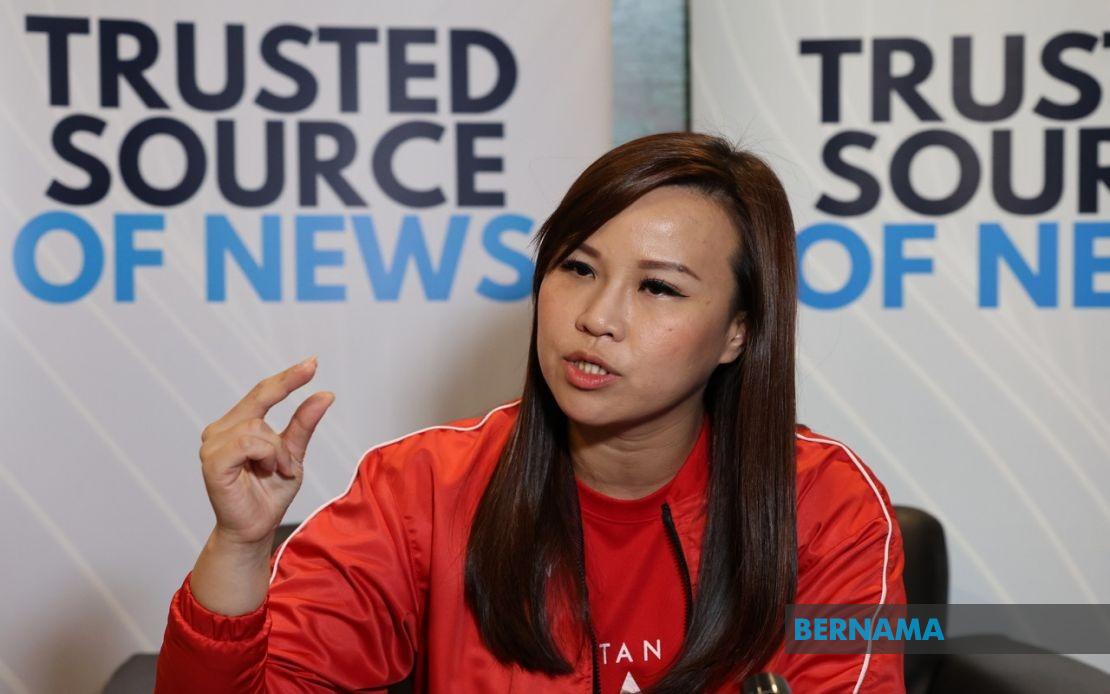
The Johor state election campaign in Permas has crystallized around a clear contrast in governing philosophy, with Pakatan Harapan candidate Sharon Teo Siew Hui positioning herself as the custodian of late Minister Salahuddin Ayub's distinctive brand of responsive, constituent-centred politics. The 36-year-old former special officer to Salahuddin, who passed away in 2022, has sought to distinguish her candidacy by emphasizing the deep leadership formation she underwent working alongside the figure popularly known as "Bapa Rahmah Malaysia"—the architect of the government's cost-of-living relief programmes that resonated strongly across Malaysia's lower-income households.
Teo's political trajectory reveals how proximity to revered leadership shapes electoral strategy in Malaysian politics. She joined Parti Amanah Negara in 2018, initially as a voluntary supporter before formalizing her membership and moving through party structures to eventually chair Amanah Johor Wanita Muda, the party's young women's wing in the state. Rather than treating her Permas candidacy as a sudden parachute deployment, Teo has constructed a narrative of incremental integration into both party and constituency, underscoring her six years of continuous involvement and the hundreds of campaign sorties she undertook alongside Salahuddin during elections across multiple cycles. This historical embeddedness matters significantly in Malaysian electoral mathematics, where long-standing community presence often outweighs external endorsements.
The philosophical foundation Teo has adopted from Salahuddin's example centres on what might be termed obsessive resolution-orientation—the principle that receiving a constituent complaint represents merely the beginning of a representative's obligation, not its conclusion. She recalls Salahuddin personally monitoring the status of complaints late into evenings, dispatching WhatsApp messages near midnight to verify whether ordinary residents' issues had been genuinely addressed. This hands-on accountability model contrasts implicitly with the more distant bureaucratic approach that critics associate with some elected representatives, for whom addressing a grievance might end at the level of noting it and passing it to a department. Teo's emphasis on this granular follow-through suggests her campaign believes Permas voters have experienced sufficient frustration with unresolved issues to reward a candidate promising deeper engagement.
The infrastructure concerns that have emerged during Teo's initial five days of campaigning paint a picture of neglect in a constituency that, while urbanizing, has not benefited from proportionate public investment in its expanding residential and commercial areas. Potholes, deteriorating lanes behind shophouses, traffic congestion and inadequate public facilities represent the mundane but consequential frustrations that often determine voting behaviour. These are not dramatic issues suitable for national headlines, yet they accumulate into voter dissatisfaction with incumbent governance. The incumbent Baharudin Mohamed Taib of Barisan Nasional held the seat with a majority of 7,926 votes in 2022—a considerable but not insurmountable margin in electoral terms. If Teo can consolidate support on a platform of meticulous issue resolution, she might chip away at that advantage, particularly among younger voters frustrated by neglect in their neighbourhoods.
Teo's strategy for engaging younger constituents reveals awareness that Permas's demographic profile includes expanding numbers of first-time voters and school leavers whose political socialization has unfolded in an era of greater digital connectivity and transparency expectations. Rather than relying on traditional grassroots canvassing alone, she intends to deploy social media outreach and esports initiatives—platforms where young Malaysians increasingly congregate and form political opinions. This digital-first approach acknowledges that governance legitimacy among younger voters is increasingly earned through demonstrable responsiveness and visibility on their preferred platforms, not through presence at community halls. The commitment reflects a generational recalibration in how Malaysian politicians must court electoral support.
Teo's proposed first 100 days framework establishes a measurable governance agenda that, if implemented, would create institutional mechanisms for sustained constituent engagement. The proposed PermasKu centre envisioned as a one-stop grievance management facility would institutionalize the informal monitoring approach Salahuddin modeled, creating accountability infrastructure that outlasts individual effort. The comprehensive infrastructure audit represents similarly practical governance, moving from anecdotal awareness of problems toward systematic mapping of resource gaps. These commitments function partly as campaign messaging but also as commitments that a victorious Teo would face pressure to implement, given their specificity and the ease with which constituents could verify their completion. This represents a calculated trade-off whereby specificity invites scrutiny but also builds credibility.
The four-way contest in Permas introduces complexity that could either benefit or disadvantage Teo, depending on vote distribution. Beyond Teo and incumbent Baharudin Mohamed Taib of Barisan Nasional stands Dr Zamil Najwah representing the nascent Parti Bersama Malaysia and T. Vela for Perikatan Nasional. The presence of a PN candidate indicates that Islamist sentiment may fragment the Malay-Muslim vote, potentially benefiting a Pakatan candidate if Malay support distributes across multiple parties rather than consolidating behind BN or PN. Conversely, if non-Muslim and urban voters regard Teo's Amanah candidacy as insufficiently rooted in constituency-specific problem-solving, they might fragment toward independent candidates or smaller party options. The election result will likely hinge on whether Teo's narrative of inherited governance philosophy and constituency familiarity outweighs the incumbent advantage of administrative incumbency and the PN candidate's appeal to Islamist-oriented voters.
The invocation of Salahuddin's legacy carries both considerable electoral utility and inherent fragility. Salahuddin's "Rahmah" programmes achieved genuine resonance among Malaysian households because they combined genuine fiscal relief with accessibility and absence of bureaucratic gatekeeping. The initiatives succeeded not because they were fiscally extravagant but because they reached people efficiently and were perceived as genuinely motivated by concern for economic distress rather than electoral calculation. Teo's positioning of herself as the inheritor of this approach implicitly challenges the incumbent BN administration's commitment to similar principles, suggesting that constituent-centric governance has been deprioritized in favor of other administrative concerns. Whether voters accept this framing will substantially determine her prospects.
Pakatan Harapan's selection of Teo for Permas reflects party calculations that a candidate with documented proximity to a beloved late leader and a six-year history of party involvement offers stronger electoral positioning than a pure external newcomer. It also signals that Amanah specifically aims to recover ground in Johor, where the party has struggled since the 2023 federal election. The Permas contest thus represents not merely a local election but a test case of whether PH's inclusive coalition framework and appeal to values-driven governance can overcome BN's structural advantages in state administration and PN's appeal to voters prioritizing Islamic governance frameworks. The result will carry significance extending well beyond Johor, informing national parties about the continued viability of different electoral appeals in Malaysia's fragmented political landscape.

