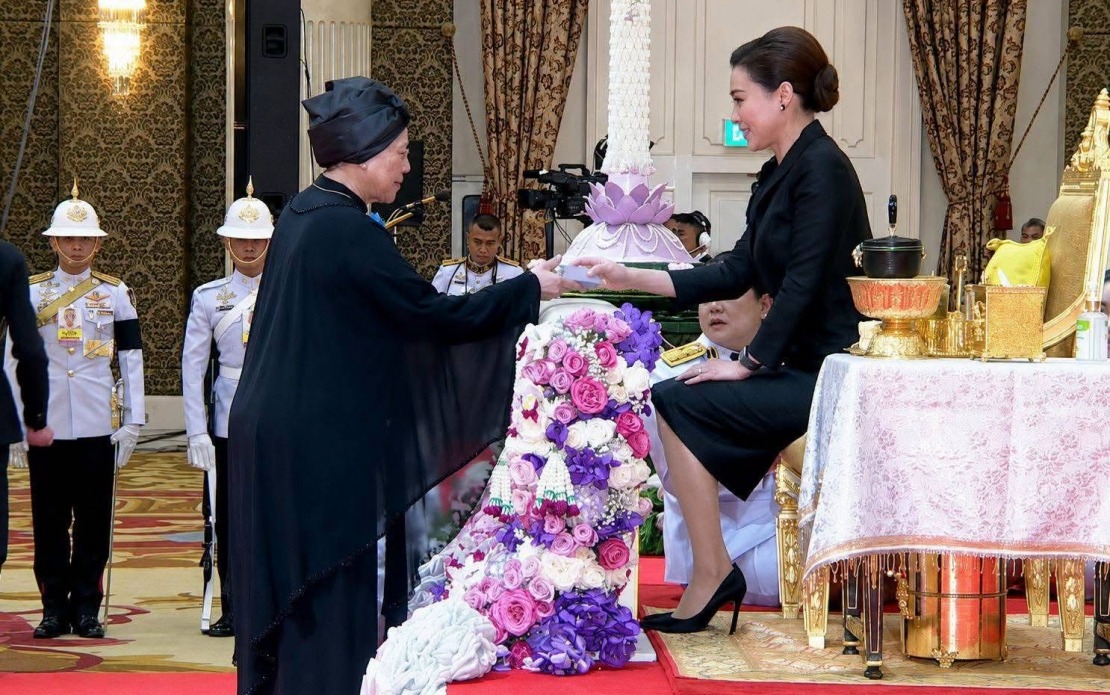
Prime Minister Datuk Seri Anwar Ibrahim has commended Prof Emerita Tan Sri Datuk Seri Dr Sharifah Hapsah Syed Hasan Shahabudin for receiving the Outstanding Woman Award for Social Development, presented by Queen Suthida Bajrasudhabimalalakshana of Thailand. Alongside his wife Datuk Seri Dr Wan Azizah Wan Ismail, Anwar extended his congratulations to the distinguished academic and development expert, emphasising the broader significance of the honour for Malaysia on the international stage.
The recognition carries symbolic weight beyond the individual achievement, serving as a marker of how Malaysian professionals and thought leaders are gaining traction and respect in regional and global forums. The award comes at a time when Southeast Asian nations are increasingly spotlighting women's roles in shaping social policy and developmental frameworks, making this accolade particularly relevant to the region's evolving landscape. Queen Suthida's presentation of the award also reflects strengthening bilateral ties and mutual respect between Malaysia and Thailand in acknowledging excellence in social development work.
Anwar's response to the honour highlighted what he characterised as the calibre and capability embedded within Malaysia's female workforce and leadership cadre. His statement underscored that such international recognition validates the country's pool of talent and reinforces Malaysia's standing as a source of expertise in areas spanning social development, academic research, and policy innovation. This framing positions individual achievement within a broader national narrative about competitive advantage and human capital development.
The Prime Minister further contextualised the award within the government's Malaysia MADANI agenda, positioning women's contributions as integral to this development paradigm. MADANI, which stands for Mencemar Aspirasi Didik Negara Amalan Integriti (Nurturing Aspirations Educating the Nation Practising Integrity), represents the administration's overarching vision for inclusive and sustainable growth. By linking Sharifah Hapsah's recognition to this framework, Anwar suggested that women's participation across all sectors remains fundamental to achieving the government's long-term objectives and societal goals.
Anwar called for the award to serve as an inspiration for additional women to step forward and leverage their knowledge, leadership abilities, and compassionate outlook in contributing to societal advancement. This appeal reflects a deliberate strategy to normalise female participation in traditionally male-dominated or male-visible leadership roles, from government boards to corporate decision-making structures. The framing acknowledges that while progress has been made, further momentum is needed to ensure equitable representation across all domains of influence and authority.
The government has committed to expanding opportunities for women's involvement across diverse economic and social sectors, moving beyond symbolic gestures toward substantive policy implementation. This includes expanding access to professional development, mentorship programmes, and pathways to senior positions in both public and private institutions. The statement suggests renewed focus on removing structural barriers that historically constrained women's advancement, whether through childcare support, workplace flexibility measures, or targeted skills training initiatives.
Sharifah Hapsah's background in social development research and academia makes her a particularly apt representative of how intellectual expertise translates into practical impact on communities and vulnerable populations. Her work has likely influenced policy formulation in areas including poverty alleviation, educational equity, and social safety nets—domains where rigorous scholarship directly shapes government action and resource allocation. The international recognition thus validates not merely individual excellence but also the policy frameworks and research methodologies that have emerged from Malaysian institutions.
The award's presentation by Thailand's Queen carries diplomatic undertones, signalling regional acknowledgement of Malaysian expertise in social development domains. Southeast Asia's shared developmental challenges—from managing rapid urbanisation to addressing inequality—create natural platforms for expert exchange and knowledge transfer. When neighbouring nations recognise Malaysian professionals, it enhances the country's soft power and positions it as a contributor to regional solutions rather than merely a recipient of external expertise.
For Malaysian women navigating professional advancement, such high-profile recognition provides tangible evidence that excellence receives acknowledgement at international levels. Role models matter considerably in shaping aspirational pathways, particularly for younger generations of women considering careers in research, governance, or social policy. The visibility of figures like Sharifah Hapsah achieving distinction helps normalise female expertise and leadership in sectors where women remain underrepresented.
The government's emphasis on women's talent and potential as foundational pillars of national development reflects a pragmatic understanding that sustainable growth requires mobilising the full spectrum of human capital. Malaysia's demographic profile and economic structure increasingly depend on sophisticated knowledge work, innovation, and social cohesion—domains where evidence suggests diverse perspectives and inclusive decision-making produce superior outcomes. By explicitly positioning women's advancement as central to the MADANI agenda rather than peripheral, the government signals a structural commitment extending beyond rhetoric.

