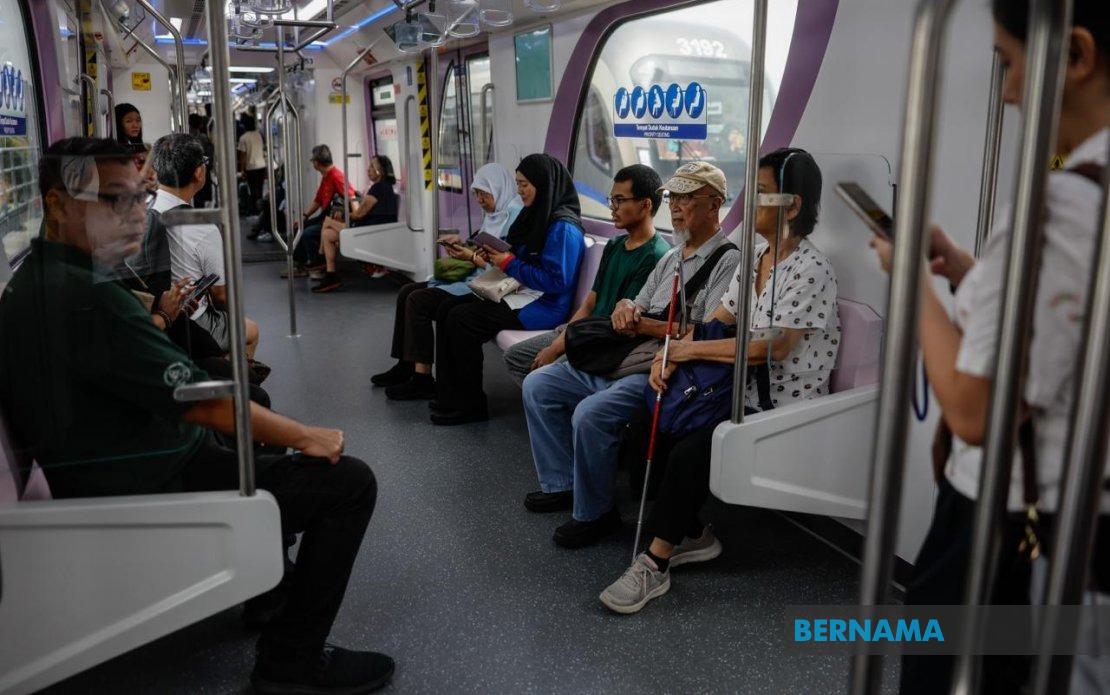
Malaysia's newest rapid transit corridor, the Light Rail Transit 3 Shah Alam Line, commenced operations on June 29 to largely positive reception from its first wave of passengers, who lauded the service's comfort, speed, and potential to reshape commuting patterns across the Klang Valley. The RM16.63 billion infrastructure investment represents a significant government commitment to expanding public transport capacity, yet its opening also exposed opportunities to refine disability accessibility features that will shape how inclusive the broader transit ecosystem becomes.
During the line's inaugural day, commuters consistently reported that the new 41-kilometre route between Kajang and Glenmarie 2 delivered tangible benefits over existing alternatives. The direct connectivity eliminated the need for transfers that previously fragmented journeys, compressing travel times and reducing passenger fatigue. This efficiency gains particular salience for the Klang Valley's sprawling geography, where commuters often navigate multiple townships and employment centres in a single working day. The seamless routing addresses a long-standing infrastructure constraint that has persisted despite decades of planning documents.
Yet beneath the surface satisfaction lay critical feedback regarding accessibility provisions for persons with disabilities. Razlan Ibrahim, a visually impaired commuter who explored multiple stations on opening day, commended the tactile pathway systems installed throughout the network. These guiding pathways, particularly visible at Bandar Utama Station, provide essential directional assistance by connecting users directly to facilities including accessible toilets, prayer rooms, and lift access. Such infrastructure represents genuine progress in universal design principles, moving beyond minimum compliance toward practical usability. However, Ibrahim identified a significant gap: the absence of comprehensive Braille signage at key facilities undermines the effectiveness of physical accessibility measures. Information access—not merely physical movement—remains a critical enabler for visually impaired users navigating unfamiliar environments.
The disparity between Ibrahim's experience highlights a common pattern in Malaysian transport development: infrastructure frequently emphasises structural accessibility while neglecting informational inclusivity. Adding Braille signage at facilities including accessible restrooms, gender-segregated prayer spaces, and lift locations would represent a modest but meaningful enhancement. Such additions signal institutional commitment to inclusive design rather than box-ticking compliance. For transit authorities, the distinction carries operational weight: passengers who can independently navigate stations require less staff intervention and develop greater confidence in the system, ultimately expanding the user base and justifying service investments.
Commercial sector commuters, meanwhile, highlighted different satisfaction drivers. Samantha Fong, 26, emphasised the time-efficiency gains and simplified routing, yet flagged an emerging concern: the absence of women-only coaches. This feature, increasingly standard on congested urban transit systems across Asia, addresses documented safety and comfort concerns that disproportionately affect female commuters during peak periods. The request reflects not merely preference but recognition that gender-differentiated service provisions can expand ridership among segments that might otherwise avoid crowded conditions. Prasarana's planning deliberations should engage seriously with such feedback, particularly as the network matures beyond its current free-ride promotional period.
The government's decision to subsidise fares entirely through July 31 serves multiple strategic objectives beyond immediate accessibility. The one-month trial period allows genuine assessment rather than speculation about ridership patterns, route suitability, and integration with existing feeder bus networks operated by Prasarana. Students and workers gain opportunity to evaluate whether the LRT3 genuinely improves their commute quality compared to existing alternatives, generating organic adoption rather than forced transition. For transit planners, this extended evaluation window provides invaluable data regarding peak-hour pressures, station bottlenecks, and passenger flow patterns that shape future operational refinements.
The initiative also carries political significance within Malaysia's ongoing infrastructure development narrative. Prime Minister Datuk Seri Anwar Ibrahim's announcement positioned the LRT3 Shah Alam Line within broader government messaging regarding strategic public investment and transport modernisation. Demonstrable success during this critical early phase builds momentum for continued rapid transit expansion, particularly crucial given historical delays and budget pressures that have constrained Malaysian transit development. Positive opening-week impressions generate political capital necessary for sustaining long-term infrastructure commitments against competing budgetary pressures.
However, the line's success ultimately depends on performance metrics extending beyond initial enthusiasm. Integration quality with feeder bus services, frequency reliability during peak periods, and staff training regarding accessibility support all require careful monitoring. The Klang Valley's notorious traffic congestion means the LRT3 operates within a highly competitive environment where a single week of service disruptions can fundamentally alter user expectations and ridership patterns. Prasarana's operational readiness, therefore, carries consequences extending far beyond this line itself, influencing public confidence in larger transit expansion plans.
Looking forward, the Shah Alam line experience offers Malaysia's transport sector a modest but important lesson regarding accessibility implementation. Commuting infrastructure succeeds not merely through engineering achievement but through thoughtful integration of physical design, information accessibility, and responsive management. The gap between Ibrahim's praise for tactile pathways and his concern about Braille signage illustrates how incomplete accessibility measures can undermine otherwise ambitious public transport investments. Future projects should embed accessibility considerations throughout planning and construction phases rather than treating them as post-hoc adjustments, ultimately creating systems that serve all users with equal competence and dignity.
As the LRT3 Shah Alam Line settles into regular operations beyond its promotional period, the real measure of success will emerge from ridership data, user retention, and iterative improvements responsive to commuter feedback. The enthusiastic opening-day reception provides encouraging foundation, yet sustainability depends on operators demonstrating commitment to continuous enhancement. For Malaysian commuters accustomed to infrastructure projects that often disappoint relative to initial promises, the opening week represents opportunity rather than conclusion, and that distinction carries profound significance.

