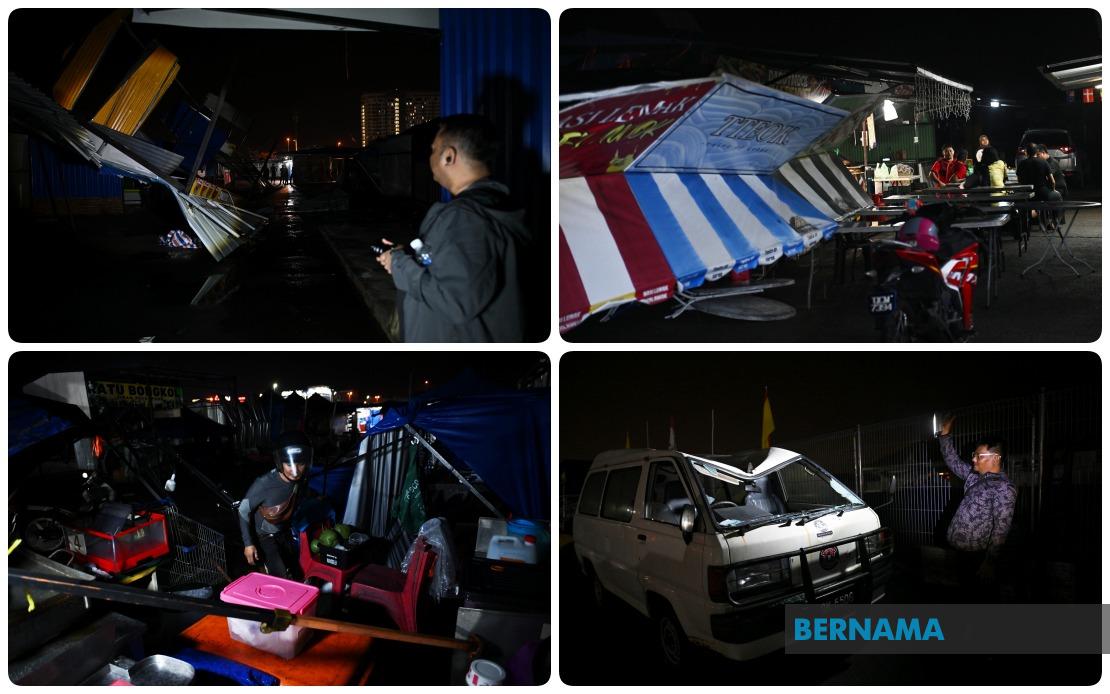
A severe weather event that swept through Kuching on the weekend has left the N6 Metrocity 2 Youth Night Market closed and dozens of traders counting significant losses. Heavy rain coupled with violent winds struck the area during peak trading hours, creating a hazardous situation that forced immediate evacuation of the premises. The meteorological department had issued thunderstorm warnings for the region from 5 pm to 9 pm, but the intensity of the conditions that materialised far exceeded typical weather patterns for the district.
The incident unfolded during what should have been one of the busiest trading sessions of the week. Vendor Mohamad Faisal, 42, described the chaotic moments when powerful gusts began dismantling the market's protective canopy structures. As winds reached dangerous velocities, large sections of canvas and metal frameworks became airborne, transforming ordinary market infrastructure into projectiles that threatened traders and customers alike. The situation deteriorated rapidly enough that vendors abandoned their stalls and merchandise to seek shelter, prioritising personal safety over protecting their goods and equipment.
The scale of structural damage quickly became apparent once conditions stabilised. Over 40 trader lots out of approximately 300 operating spaces suffered severe damage to their canopies and equipment, according to N6 Metrocity 2 Youth Night Market deputy chairman Hamzah Hassan. This represents roughly 13 per cent of the market's total vendor base facing immediate financial hardship. Beyond individual trader losses, the market's communal infrastructure experienced considerable harm, including damage to the main stage, management office, and electrical supply cables that serve the entire operation.
Financial assessments conducted in the aftermath reveal the depth of the crisis facing affected vendors. Individual traders estimate losses ranging from RM2,000 to RM5,000 per stall, with this figure accounting solely for canopy replacement and repair costs. Many traders have operated continuously at this market for a decade or longer, making the financial blow particularly severe for established small businesses. When accounting for damaged cooking equipment, water containers, refrigeration units, and destroyed merchandise inventory, total losses per trader likely exceed initial estimates significantly. For a cohort of 40 affected vendors, cumulative losses approach RM200,000.
Hamzah Hassan characterised this incident as the most severe natural disaster event to strike the market in recent memory, distinguishing it from previous weather-related disruptions. The unprecedented nature of the damage suggests that existing safety protocols and infrastructure standards may require reassessment. The market operates as a vital economic hub for Kuching's informal sector, providing livelihoods for hawkers and food vendors who depend on consistent weekend trading. Extended closure periods compound financial pressures on traders already operating on thin profit margins.
The broader context of this disaster carries implications for Sarawak's meteorological patterns and climate resilience. The Malaysian Meteorological Department's thunderstorm warning system, while operational, issued predictions for a four-hour window that proved insufficient for the severity ultimately experienced. Kuching joins Serian, Siburan, Samarahan, Simunjan, Kapit and Song as areas affected by the same weather system, suggesting a significant regional disturbance rather than a localised event. Climate change patterns have increased the frequency and intensity of tropical storms across Southeast Asia in recent years, necessitating enhanced preparedness measures.
Market leadership has actively sought external support to address the financial crisis facing its vendor community. Hamzah Hassan issued appeals to relevant government ministries, elected representatives, and cooperative organisations for contributions and assistance to alleviate trader burdens. This represents an important acknowledgment that individual vendors cannot realistically absorb such substantial losses independently. Government relief mechanisms, whether through direct financial assistance, rapid rebuilding support, or tax concessions, typically emerge in response to such disasters affecting informal sector workers.
The closure of N6 Metrocity 2 Youth Night Market during recovery operations disrupts not only vendor income streams but also impacts consumer access to affordable dining and shopping options across Kuching. Night markets function as critical retail and food service infrastructure in Malaysian cities, serving price-conscious customers and providing entertainment venues for weekend leisure activities. The market's temporary unavailability creates ripple effects throughout the local economy, as consumers redirect spending elsewhere and vendors lose critical weekend revenue periods.
Reconstruction timelines remain uncertain, with damage assessments still ongoing. Market management must coordinate with multiple stakeholders—individual traders, municipal authorities, utility providers, and potentially insurance companies—to restore operations safely and comprehensively. Vendors face a challenging decision regarding whether to undertake repairs independently, pool resources collectively, or await external assistance before resuming operations. The uncertainty surrounding recovery prospects adds psychological stress to financial hardship already experienced by affected traders.
This incident underscores the vulnerability of informal sector infrastructure to extreme weather events in tropical regions. Most Malaysian night markets operate with relatively basic structural protections, relying on temporary canopy systems that provide shade and weather shelter under normal conditions but offer minimal resilience against violent storms. Policy discussions should consider whether upgrading night market infrastructure standards represents a viable investment in protecting this crucial component of Malaysia's informal economy. Enhanced building codes, reinforced anchoring systems, and improved drainage could reduce future damage and provide traders with greater security.

