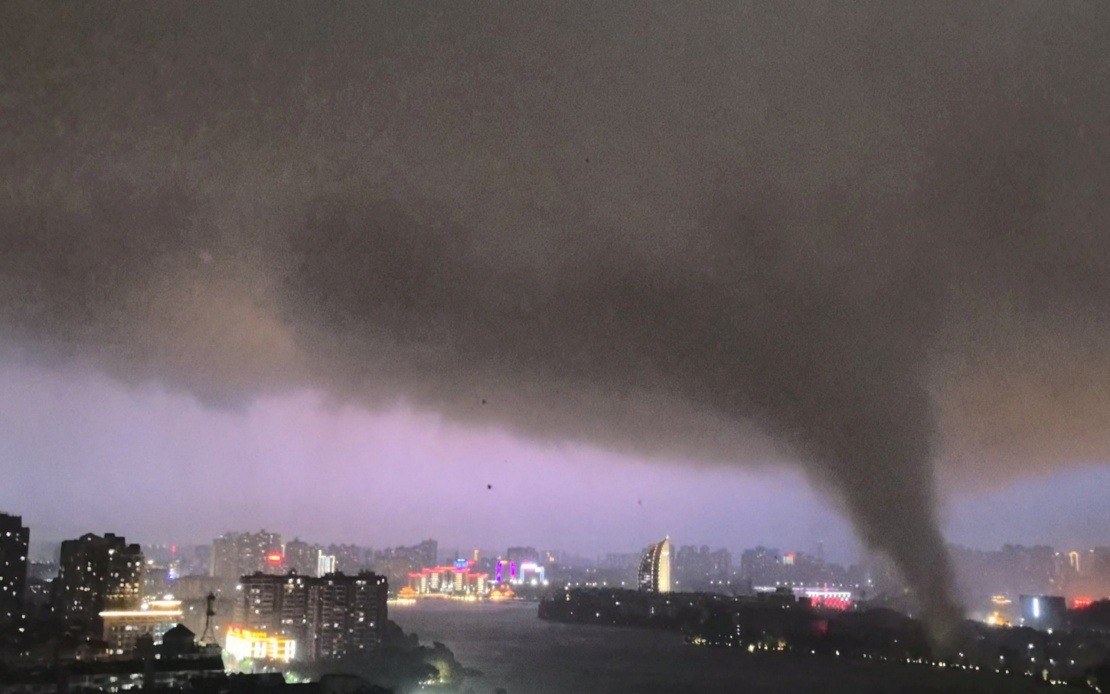
Eleven people have lost their lives and one remains unaccounted for following a severe weather system that battered the eastern sections of Hubei Province in central China on Monday evening, provincial officials confirmed. The catastrophic event unfolded between 7 pm and 11 pm as thunderstorms and gales of extraordinary intensity descended upon multiple urban centres, fundamentally disrupting ordinary life across a sprawling region.
The affected areas encompassed four major cities: Huangshi, Huanggang, Ezhou, and Xianning. In the most heavily impacted townships, wind speeds reached the equivalent of level 13 on the gale scale, a classification that indicates winds capable of causing severe structural damage and widespread destruction. Authorities also documented the formation of tornadoes in certain localities, compounding the hazards faced by residents already struggling with the primary storm system.
The material devastation proved staggering in scope. Emergency management officials reported that 22 buildings were completely demolished by the violent atmospheric conditions, while a further 4,855 structures sustained damage ranging from moderate to severe. This tally encompasses residential dwellings, commercial establishments, and public infrastructure across the affected municipalities. The scale of property damage suggests that reconstruction efforts will require sustained attention and substantial resource allocation over coming weeks.
Beyond the immediate toll of fatalities, the weather event also inflicted injuries across the affected population. Local authorities documented 331 residents injured as a result of the storms and associated hazards, including debris strikes, falls, and exposure to dangerous conditions during evacuation. Medical facilities in the region have been mobilised to treat the injured, many of whom sustained trauma requiring emergency intervention.
The Hubei provincial administration has mobilised comprehensive response mechanisms to address the crisis. Rescue operations commenced immediately after the storms subsided, with teams deployed to search for the missing person and to provide emergency assistance to affected communities. Relief efforts have been coordinated across multiple agencies to deliver food, water, medical supplies, and temporary shelter to displaced residents.
For Malaysian and Southeast Asian observers, this event underscores the increasing frequency and intensity of severe convective weather systems affecting East Asia. Similar meteorological phenomena have impacted parts of the region in recent years, raising questions about climate adaptation and disaster preparedness infrastructure. China's experience managing large-scale weather disasters provides comparative lessons for regional governments considering investment in early warning systems, evacuation protocols, and building code standards designed to withstand extreme wind events.
The provincial authorities have also initiated preventive measures against secondary disasters, a critical consideration following major weather events. Heavy rainfall associated with thunderstorms can trigger flooding, landslides, and infrastructure failures in subsequent days. By implementing monitoring protocols and pre-positioning resources, officials aim to prevent compounding losses that could emerge as ground becomes saturated and accumulated debris destabilises slopes or drainage systems.
This incident reflects the vulnerability of densely populated urban and semi-urban areas to extreme weather. Hubei Province, home to major industrial and commercial centres, represents a strategically important region within China's economic geography. Disruption to infrastructure and productive capacity carries ripple effects throughout broader supply chains and regional commerce, with potential international implications given China's role in global manufacturing and trade networks.
The immediate priority for provincial administrators involves completing search and rescue operations, stabilising injured persons, and providing emergency humanitarian assistance. Simultaneously, damage assessment teams have begun cataloguing destruction to inform reconstruction planning and resource allocation decisions. The coordination required across multiple administrative levels—from township officials to provincial authorities—demonstrates the complexity of managing large-scale disaster response in a system spanning diverse geographic and demographic contexts.
Looking forward, this episode will likely prompt renewed examination of building standards, urban planning practices, and early warning system effectiveness throughout central China. Regional governments elsewhere in East Asia and Southeast Asia may examine Hubei's response protocols as they evaluate their own preparedness for similar meteorological events. Climate change projections suggesting intensification of extreme weather phenomena make such analysis increasingly relevant for disaster risk reduction planning across the broader region.

