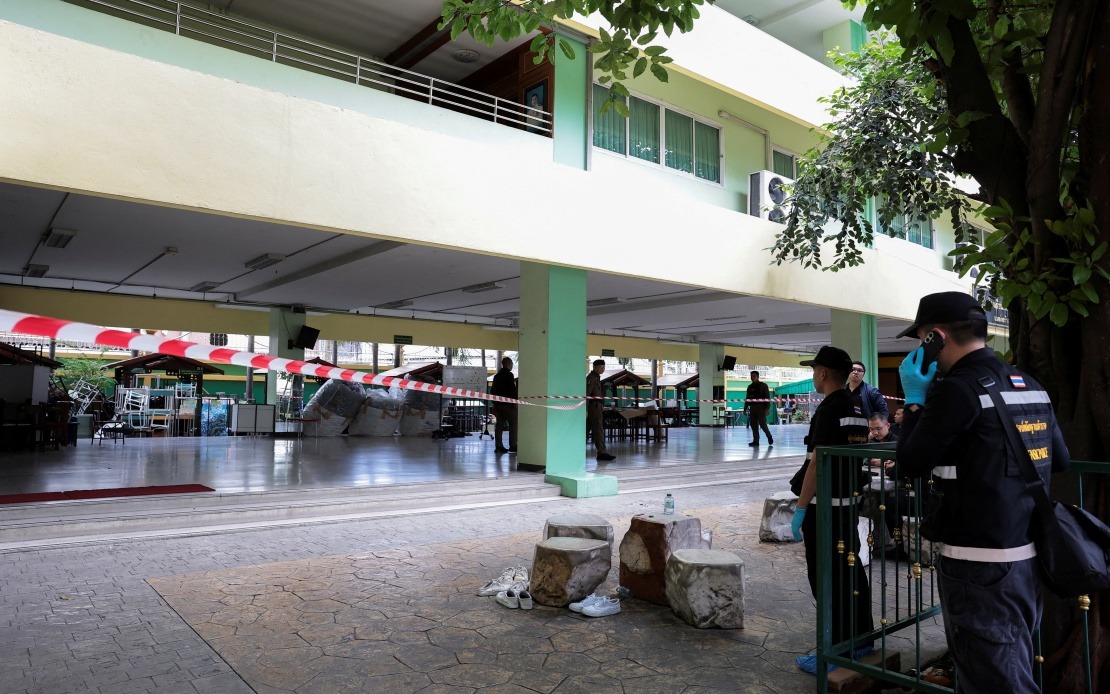
A tragic incident unfolded at a school northwest of Bangkok on Friday morning when a student opened fire, leaving seven dead and at least 15 wounded in what marks another deadly shooting rampage at an educational institution in Thailand. The attack occurred at Debsirin Nonthaburi School in Bang Kruai district at approximately 10 am, prompting an immediate emergency response and evacuation of the campus. The deceased included three staff members, three students, and the shooter himself, according to statements from Lieutenant General Trairong Piwpan, the deputy inspector-general and spokesperson for the Royal Thai Police who addressed media at the scene.
Among the injured taken to hospitals following the incident were two individuals in critical condition requiring urgent medical intervention. The swift evacuation procedures at the school meant that teachers and students were moved to the nearby Chanrat Wittaya School, while authorities called upon parents and guardians to collect their children promptly. The rapid response to secure and move survivors from the immediate danger zone appeared to have prevented casualties from rising further, though the psychological impact on the school community remains significant.
Investigations into the background of the shooting revealed that the weapon used was a 9mm handgun with 34 rounds of ammunition found outside its magazine at the scene. Police determined that the firearm belonged to the suspect's grandfather, raising questions about how a young student gained access to a family member's weapon. This detail underscores broader concerns about gun storage practices and the responsibility of gun owners to secure their weapons properly, particularly in households where minors are present. The discovery adds another layer to ongoing debates about firearm safety measures in Thailand.
Prime Minister Anutin Charnvirakul, who also serves as interior minister, responded to the tragedy by expressing his deep sadness and extending condolences to the families of those killed. He instructed relevant authorities to provide immediate assistance to the injured and deploy officials to support recovery efforts at the scene. The national police chief subsequently ordered the Police General Hospital to mobilize psychologists and mental health professionals to provide counselling and emotional support to survivors, teachers, students, and others affected by the trauma of witnessing such violence.
The prime minister used the incident to reinforce the government's stance on firearms regulation, linking the tragedy directly to policy decisions regarding gun permits. Anutin emphasised that the administration's choice not to renew permits for carrying and possessing firearms directly addresses the risks demonstrated by such incidents. His statement reflects a hardening position within the Thai government on gun control measures, viewing permit restrictions as a necessary preventative measure against the recurrence of armed violence in public spaces and educational settings.
This shooting represents a disturbing pattern of gun violence affecting Thai schools in recent months. Less than six months prior, in February, another school shooting took place in Hat Yai within Songkhla province when an 18-year-old man opened fire at an educational facility, killing the school director and injuring additional individuals before police apprehended him. The proximity of these two major incidents highlights systemic vulnerabilities in school safety and gun access regulation that persist despite previous tragic events. Both incidents share common elements including the youth of perpetrators and their access to firearms, suggesting that addressing root causes requires comprehensive approaches beyond permit restrictions alone.
For Malaysian observers and officials, the recurring nature of school shootings in Thailand serves as a cautionary reminder about the importance of maintaining stringent firearm regulations and school security protocols. Malaysia's own approach to gun licensing and control differs significantly from Thailand's, reflecting different historical contexts and regulatory frameworks. However, the Thai incidents prompt reflection on whether current measures in the region adequately protect students and educators from the escalating threat of armed violence in educational environments.
The psychological toll on survivors and the school community extends far beyond the immediate casualties and injuries. Trauma counselling and long-term mental health support become essential following such incidents, as students and staff process the shock and loss of life in what should be a safe environment for learning. The deployment of psychologists by police authorities acknowledges this critical need, though the adequacy of such services in supporting an entire affected school community remains a concern requiring sustained attention and resources.
Thailand's firearm landscape reflects broader Southeast Asian challenges with gun regulation, where enforcement of existing laws sometimes proves inconsistent and illegal weapons continue to circulate. The prevalence of firearms in civilian hands, often inherited or held for purposes ranging from personal protection to sport, creates environments where access may be easier than policymakers intend. The case of the grandfather's weapon illustrates how family-held firearms can become instruments of tragedy when secured inadequately against unauthorised access by younger household members.
Looking forward, the Thai government faces mounting pressure to strengthen both preventative measures and responses to school shooting incidents. Beyond permit renewal policies, comprehensive strategies addressing youth mental health, early intervention for troubled students, school security infrastructure, and community awareness programmes appear necessary to reduce the likelihood of future tragedies. Regional cooperation on best practices and data sharing regarding patterns of school violence could also benefit Thailand and its neighbouring countries, including Malaysia, in developing more effective prevention strategies.
The incident also underscores the importance of public communication and transparency from government officials in the aftermath of such tragedies, as seen in the prompt media briefings provided by police and ministerial responses. Maintaining public confidence in authorities' capacity to investigate thoroughly and implement meaningful policy responses becomes crucial for social stability and institutional trust following mass casualty events. Thailand's response trajectory in the coming weeks will likely shape both public perception of government effectiveness and the direction of future gun control legislation.

