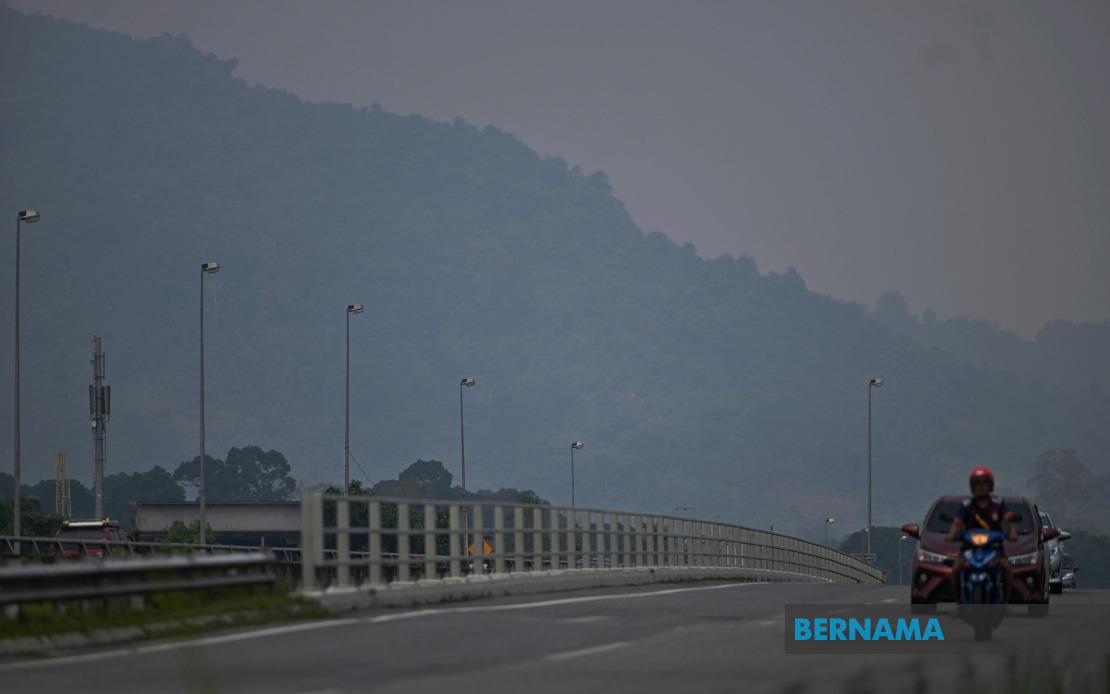
Sarawak's air quality has deteriorated significantly, with Serian registering a very unhealthy Air Pollution Index reading of 227 as of 2 pm on August 21, according to the Department of Environment. The troubling development marks an escalation in the state's haze situation, with nine other monitoring stations across Sarawak simultaneously reporting unhealthy pollution levels that demand immediate attention from residents and authorities alike.
The geographic spread of poor air quality across Sarawak reflects the scale of the current crisis. Sri Aman recorded the second-highest reading at 187, trailed by Kuching at 176 and Samarahan at 175. The western coastal cluster continues to face significant challenges, with Sarikei reaching 174. Moving further inland and north, Sibu registered 157, whilst Bintulu and Samalaju both reached 154. The less populated areas of Kapit and Mukah, despite their more remote locations, were not spared, with both recording 130. These readings paint a picture of widespread air quality degradation affecting both urban centres and rural communities across the state.
Department of Environment deputy director-general (development) Azuri Azizah Saedon attributed the sharp deterioration to haze advancing from multiple directions into Sarawak. The worsening conditions nationwide stem from transboundary pollution sources, with meteorological data revealing the source of the problem. The ASEAN Specialised Meteorological Centre reported on August 20 that 288 hotspots were detected in Kalimantan, representing the overwhelming majority of fire sources affecting the region. Sumatra contributed a smaller but still significant figure of 53 hotspots, whilst Malaysia itself accounted for only two detected sources—one each in Sarawak and Terengganu—indicating that Malaysia's own contribution to the current crisis is minimal.
Weather patterns have played a crucial role in the progression of the haze. The Regional Haze Map from ASMC documented that much of the southern ASEAN region continues to experience dry weather conditions that facilitate fire spread and smoke persistence. The notable exception of northeastern Borneo and northern Sumatra, both receiving rainfall, offers a glimmer of respite for those areas. However, the majority of Sarawak falls outside these precipitation zones, leaving the state vulnerable to sustained haze impact. The extensive detection of hotspots in Kalimantan, particularly in West Kalimantan, has created a particularly concerning situation, as moderate to dense smoke plumes originating from these fires are moving northwards directly into western Sarawak, where the worst readings are being recorded.
The transboundary nature of the pollution presents a vexing challenge for Malaysia's environmental authorities. Unlike domestic pollution sources that fall squarely under national jurisdiction, smoke crossing international borders from Indonesia requires regional coordination and cooperation to address effectively. The movement of smoke plumes from West Kalimantan into Sarawak demonstrates how air pollution transcends geographical and political boundaries, making unilateral action insufficient. This reality underscores the importance of bilateral environmental agreements and coordinated haze management strategies between Malaysia and Indonesia, a dynamic that has long been contentious in regional relations.
In response to the crisis, Malaysia has mobilized its regulatory apparatus. The Department of Environment has intensified enforcement operations and daily patrol activities in regions where open burning risks remain elevated. These preventive measures reflect an acknowledgment that whilst the primary source of current pollution lies across the border, Indonesia's activity directly determines the severity of haze episodes in Malaysian territories. The activation of the National Open Burning Action Plan and the National Haze Action Plan signals a whole-of-government approach to the problem, coordinating efforts across multiple government agencies to address both the immediate air quality emergency and the underlying causes of transboundary smoke.
For Malaysian residents, particularly those in Sarawak, the health implications of sustained unhealthy and very unhealthy air quality readings demand urgent attention. Exposure to such pollution levels carries documented risks for respiratory and cardiovascular systems, with vulnerable populations including the elderly, children, and those with pre-existing health conditions facing elevated danger. The persistently high readings across multiple monitoring stations suggest that residents cannot simply relocate to avoid poor air quality, as the problem affects virtually the entire state simultaneously. This widespread nature distinguishes the current episode from localized pollution incidents and necessitates behavioural adjustments across the entire population.
The public has been advised to refrain from all forms of open burning, a directive aimed at preventing domestic contribution to the haze problem. Beyond this negative injunction, the Department of Environment has established reporting mechanisms for citizens to alert authorities to any observed open burning or fire incidents. The Fire and Rescue Department of Malaysia maintains a dedicated line at 999 for emergency fire reports, whilst the DOE itself operates a dedicated hotline at 1-800-88-2727 for pollution and environmental concerns. These channels reflect an implicit recognition that citizen vigilance and reporting constitute an important early warning system in fire and haze management.
The current episode carries significant implications for Southeast Asian environmental governance and Malaysia's bilateral relations with Indonesia. The frequency and intensity of transboundary haze episodes have intensified over recent decades, correlating with expanded agricultural and industrial development in Indonesia's border regions. For Malaysia, particularly Sarawak, the seeming inevitability of annual haze seasons has become an accepted reality, yet one that carries substantial economic, health, and social costs. The concentration of hotspots in Kalimantan and the dominant contribution of Indonesian sources underscore that Malaysia's own pollution management efforts, whilst necessary and commendable, cannot unilaterally solve what is fundamentally a regional problem requiring coordinated mitigation at the source.

