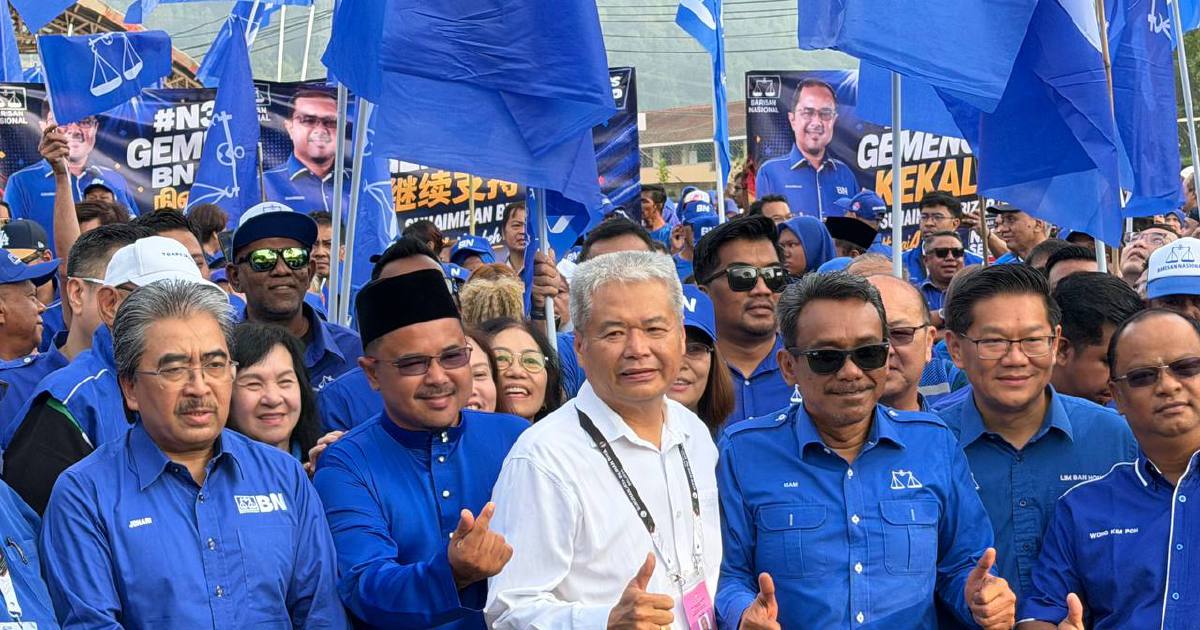
The presence of Umno vice-president Datuk Seri Johari Abdul Ghani and party treasurer Datuk Seri Tengku Adnan Tengku Mansor at the Dewan Perdana Tampin on nomination day underscores the coalition's determination to maintain momentum in the Negri Sembilan state election. Their appearance alongside Barisan Nasional candidates signals unified leadership backing at a critical juncture when candidates formally register their nominations, a symbolic moment that carries weight in Malaysian electoral politics.
For Umno, the participation of both the vice-president and treasurer represents more than ceremonial support. These two positions sit at the apex of party administration and financial management respectively, making their joint appearance a statement of institutional commitment. The treasurer's presence particularly carries significance, as it suggests the party machinery's preparedness to channel resources and logistical support toward the campaign effort across Negri Sembilan constituencies.
Negri Sembilan has traditionally been an Umno stronghold, though recent electoral dynamics across Malaysian states have seen varying fortunes for the coalition. The state's significance in Barisan's broader peninsular strategy cannot be understated, as it sits strategically positioned in the central region linking northern and southern Malaysian political landscapes. Any loss or substantial weakening of support in the state would reverberate through coalition calculations for future federal or regional contests.
The nomination centre gathering at Tampin, which serves as a hub for processing candidate registrations across the Negri Sembilan electoral process, becomes a focal point for demonstrating party unity during this phase. Malaysian electoral procedures require candidates to formally lodge their nominations by specific deadlines, transforming these centres into gathering points where party hierarchies typically converge to offer visible encouragement and organisational coordination.
Barisan Nasional's coalition structure means that multiple component parties beyond Umno contest various constituencies, with internal seat allocations negotiated well before nomination day. The presence of Umno's top officials therefore carries implications for how the coalition manages its internal dynamics and whether tension exists between partners over seat distributions or campaign resource allocation. In Negri Sembilan's context, such harmonious displays suggest the coalition negotiated its nomination arrangements without major disruption.
Johari Abdul Ghani's role as vice-president places him within the party's highest executive council, positioning him to influence strategic decisions and messaging during the campaign period. His attendance reflects how Umno senior management intends to directly engage with candidacy processes rather than delegating such activities entirely to state-level structures. This hands-on approach from the centre suggests confidence in the party's readiness for electoral competition in the state.
Tengku Adnan Tengku Mansor's participation as treasurer connects financial muscle to political messaging. In contemporary Malaysian elections, campaign financing increasingly determines resource deployment, candidate visibility, and voter outreach sophistication. The treasurer's presence at nomination ceremonies indicates that party financing for the campaign has been cleared and that candidates can proceed with confidence regarding financial support for their individual and collective efforts.
From a regional perspective, Negri Sembilan elections attract attention from observers monitoring Umno's post-2023 trajectory following the general election. The state provides a testing ground for assessing whether the coalition has stabilised its narrative and rebuilt voter confidence after periods of political turbulence. Results here inform analyses of coalition viability heading toward potential future federal contests.
The media documentation of this nomination centre appearance—suggested by the original report's emphasis on the visual record—reflects how modern Malaysian elections involve constant imagery dissemination as party machines project control and organisational readiness through carefully staged public events. Photographs and video footage from such gatherings circulate across social media and news platforms, becoming part of the broader campaign narrative each side constructs.
For Malaysian voters in Negri Sembilan, the presence of high-ranking national party officials carries mixed implications. Supporters may interpret it as validation of local candidates' standing within the coalition hierarchy, while critics might view top-level involvement as reflective of insufficient confidence in state-level leadership autonomy. Such interpretation differences highlight how identical political activities communicate differently across the electorate depending on existing partisan perspectives.
The Barisan coalition's ability to present unified frontage during this nomination phase contrasts with internal dynamics that typically emerge during campaign periods, when individual candidates compete for media attention and resources, potentially creating friction within coalition arrangements. The harmonious appearance at Tampin therefore captures a moment of manufactured unity before such typical competitive pressures reassert themselves.
Looking forward, the campaign intensity will escalate significantly beyond nomination day, with candidates mobilising grassroots networks and testing messaging that resonates with Negri Sembilan's diverse constituencies. The state encompasses both urban areas and rural segments, each with distinct voter concerns ranging from economic livelihood to development priorities and service delivery effectiveness. How Barisan's nominated candidates address these varied concerns will ultimately determine whether the coalition's show of unity translates into sustained voter support.

