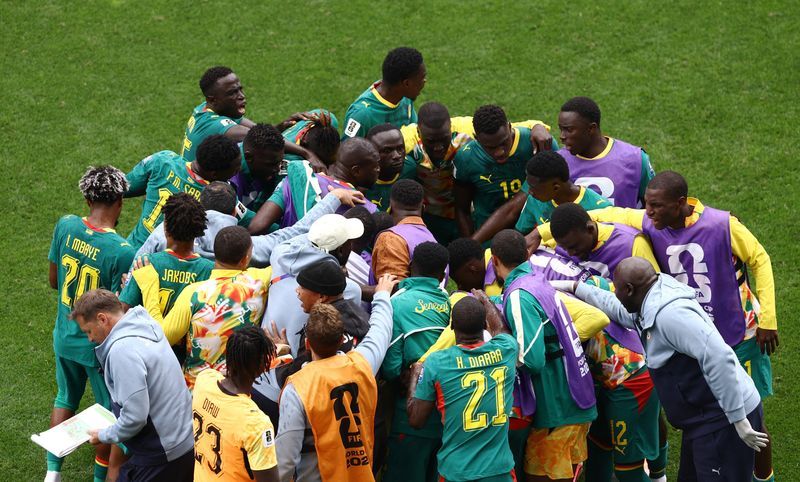
Senegal's football federation has found itself embroiled in an uncomfortable dispute over the medical credentials of its World Cup team doctor, with federation president Abdoulaye Fall claiming the physician lacked appropriate specialist training to support the squad throughout their tournament in North America. The revelation emerged as the federation conducted a post-mortem analysis of what became a deeply frustrating campaign, one that fell far short of expectations despite the team's impressive Africa Cup of Nations victory earlier in the year. Fall disclosed during a press conference that the medical professional in question had been trained as a gynaecologist rather than holding specialised qualifications in sports medicine, a discovery that apparently came too late to prevent widespread unease spreading through the playing squad.
The lack of confidence in medical support appears to have weighed on player morale during the tournament. According to Fall's account, conversations with squad members revealed they harboured reservations about the calibre of medical care available to them, with the federation subsequently scrambling to arrange supplementary medical expertise to reassure the players. The federation chief emphasised that obtaining reliable and credible medical support became imperative, framing healthcare as paramount to competitive performance. This scramble to provide alternative medical resources underscores the logistical challenges facing African football associations when competing at major tournaments, where the quality of support infrastructure can often determine outcomes as much as playing talent.
The allegations have provoked a forceful rebuttal from Senegal's sports medicine community. The Senegalese Association of Sports Medicine issued a statement dismissing the federation president's claims as "unfounded and defamatory", defending the credentials and track record of the doctor in question, Abderahmane Fediore. According to the association, Fediore holds a specialist diploma in sports medicine and sports biology from Cheikh Anta Diop University's faculty of medicine, suggesting he possesses precisely the qualifications the federation president questioned. The statement also highlighted Fediore's extensive background in elite sports management, noting his previous leadership of the physiotherapy department at Fann Hospital and his extended tenure as Senegal's team doctor since 2017.
Fediore's experience at the highest levels of international competition appears substantial. The disputed team doctor has worked with Senegal across three FIFA World Cup campaigns and five Africa Cup of Nations tournaments, giving him considerable exposure to managing the medical demands of top-tier football. This track record would seemingly contradict suggestions that he lacked the necessary expertise, raising questions about whether the federation's criticism reflects genuine concerns or represents scapegoating during a moment of institutional frustration. For Malaysian and Southeast Asian observers, the dispute illustrates how easily tensions emerge within national football associations when results disappoint, with various stakeholders seeking to assign blame rather than engage in constructive analysis.
The deteriorating relationship between the federation and coaching staff had already manifested before the medical controversy erupted. Senegal dismissed head coach Pape Bouna Thiaw on Saturday, attributing the sacking to substandard World Cup performance. This move signalled the federation's determination to demonstrate accountability, yet the subsequent claims regarding medical support suggest internal dysfunction extended beyond the technical staff. The timing of the revelations raises questions about whether the federation had prior knowledge of the doctor's background or whether the medical credentialing issue emerged as a convenient additional explanation for the team's struggles.
Senegal's tournament proved genuinely disappointing given the optimism surrounding their participation. The team had demonstrated genuine quality by clinching the Africa Cup of Nations in January, defeating Morocco in a competitive final. That success positioned them as legitimate contenders for World Cup progression, yet the North American tournament exposed significant vulnerabilities. The squad suffered early setbacks, losing their opening two group matches to France and Norway respectively, results that essentially ended their knockout aspirations before the competition had truly developed momentum. A subsequent match against Belgium offered a glimmer of hope when Senegal built a commanding two-goal advantage, but they catastrophically surrendered that advantage with merely five minutes remaining in regular time, ultimately succumbing 3-2 in extra time to exit at the last-32 stage.
This pattern of collapse mirrors wider challenges facing African nations at the World Cup, where inconsistent performance at critical moments has become regrettably familiar. The medical support infrastructure represents merely one component within a broader ecosystem determining tournament success, yet the federation's public criticism suggests officials may have utilised it as a deflection from fundamental tactical, strategic, or personnel issues. The dispute also reflects broader governance questions within African football, where administrative transparency and professional standards sometimes remain underdeveloped compared to European and South American establishments.
For Malaysia and the broader Southeast Asian region, Senegal's experience offers instructive lessons about tournament preparation and institutional credibility. Developing football nations typically compete with considerably fewer resources than African powerhouses, making optimal utilisation of available expertise absolutely essential. The capacity to identify, retain, and effectively deploy specialised medical personnel directly influences player availability and performance sustainability throughout demanding international campaigns. When uncertainty emerges regarding support staff credentials, player confidence deteriorates precisely when cohesion becomes most critical.
The unresolved nature of the medical credentials dispute reflects poorly on Senegal's institutional management during a sensitive period. Whether Fediore possessed appropriate qualifications or not, the public airing of accusations and counter-accusations damages institutional credibility and distracts from meaningful analysis of tactical failings. The federation's apparent late discovery of concerns about the doctor's background suggests inadequate vetting procedures before tournament participation, itself a governance failure requiring scrutiny beyond scapegoating individual appointments.

