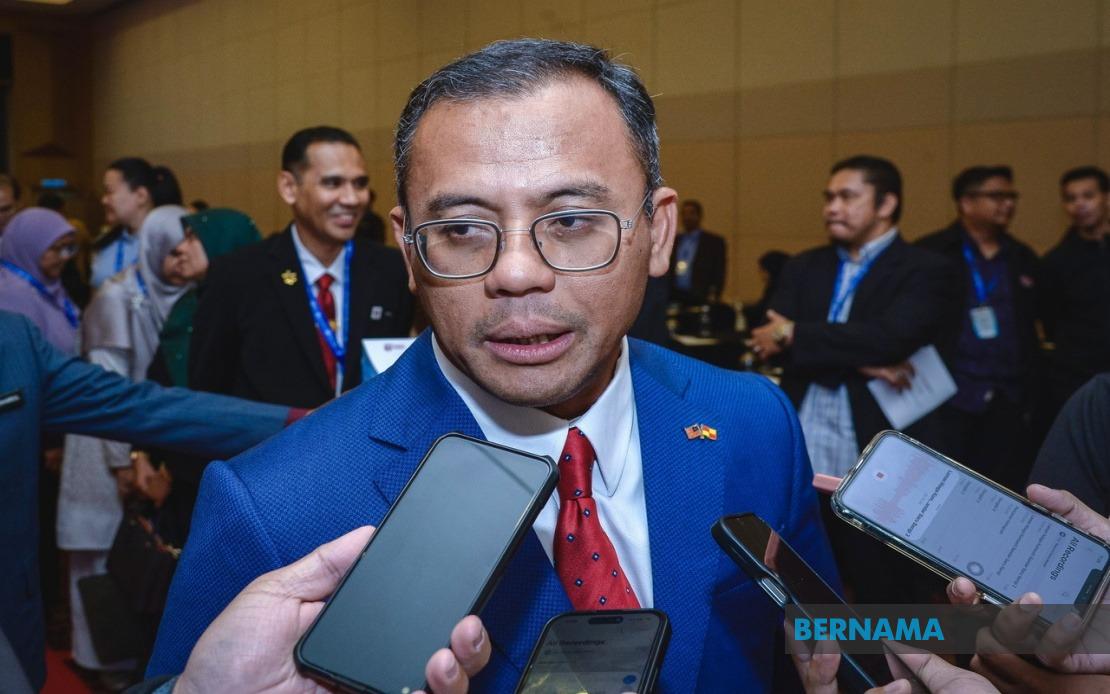
Selangor Menteri Besar Datuk Seri Amirudin Shari has called for a fundamental shift in how governments design and implement policies, arguing that disconnected interventions fail to reflect how citizens actually experience their lives. Speaking at the Human Ecology International Conference II 2026 in Bangi on August 10, Amirudin stressed that effective governance requires moving away from treating each societal challenge as a separate policy domain toward creating coherent environments that support genuine human flourishing.
The menteri besar's remarks highlight a critical blind spot in conventional policymaking: the assumption that healthcare, childcare, transport, employment and living costs can be tackled in isolation. In reality, families do not compartmentalise these challenges—they navigate them simultaneously as an interlocking web of pressures that shape daily existence. A mother deciding whether to re-enter the workforce must simultaneously consider childcare availability, proximity to her workplace, affordable housing options and local transportation networks. When policies fail to account for these connections, interventions often prove ineffective or even counterproductive.
Amirudin identified the structural forces bearing down on contemporary households, recognising that modern families are navigating unprecedented complexity. Rising costs of living squeeze household budgets while employment patterns become increasingly unpredictable. Long commutes drain time and resources that might otherwise support family cohesion or parental involvement in children's education. Caregiving demands—for young children, elderly relatives and others requiring support—fall unevenly across household members, typically intensifying pressure on women. Housing costs in Malaysia's major urban centres have outpaced wage growth substantially, forcing families into impossible trade-offs between proximity to employment and financial sustainability. Simultaneously, rapid technological change creates both opportunities and disruptions, reshaping skills requirements and workplace expectations.
The philosophical reorientation Amirudin advocates carries significant implications for Malaysia's policy framework. Rather than asking whether families are merely surviving—the narrow question underlying most welfare assessments—governments should examine whether their surrounding environment genuinely enables families to develop, contribute and thrive. This distinction matters enormously. A family surviving on government assistance while facing impossible transport costs, inadequate childcare and housing insecurity will not thrive regardless of welfare payments. Conversely, policy design that genuinely integrates transport planning, employment accessibility, childcare infrastructure and housing policy creates conditions where families can build secure lives.
The involvement of universities throughout the policy cycle represents another crucial dimension of Amirudin's argument. Academic institutions bring research capacity, longitudinal data collection capabilities and rigorous evaluation frameworks that can genuinely test which interventions work and why. Too often, governments implement policies based on assumptions rather than evidence, then fail to conduct meaningful post-implementation evaluation. Universities positioned as genuine partners—not merely external evaluators imposed after fact—can help policymakers define problems accurately in the first place, design evidence-informed interventions and assess real-world impacts.
Simultaneously, Amirudin witnessed the signing of a Memorandum of Understanding between Universiti Putra Malaysia (UPM) and the University of the Philippines Los Baños, establishing groundwork for broader regional cooperation. This institutional gesture points toward creating systematic frameworks for addressing shared challenges across Southeast Asia. The announcement of the ASEAN Human Ecology Consortium reflects recognition that human well-being challenges transcend national borders. Comparable structural pressures—urbanisation, economic transitions, changing family structures, environmental pressures—affect communities throughout the region.
The consortium initiative promises to create platforms for joint research and knowledge exchange that could strengthen policy design across member states. Student and faculty mobility programmes allow academic experts to understand contextual variations while building relationships that facilitate genuine collaboration rather than parallel research efforts. Policy dialogue mechanisms enable policymakers from different countries to learn from each other's experiences—both successes and failures. Academic publications emerging from consortium work can disseminate evidence about effective integrated approaches throughout the region.
The conference itself, held under the theme "Sustaining Human Well-being," assembles diverse stakeholders addressing these interconnected challenges. By bringing together academics, researchers, practitioners, policymakers, institutional leaders, students and community representatives from Malaysia, Indonesia, the Philippines and elsewhere, the forum creates space for genuine interdisciplinary dialogue. Community representatives matter particularly; they bring lived experience of policy failures and gaps that institutional actors might overlook. Practitioners understand implementation realities that theorists may underestimate. This diversity of perspective creates conditions for more grounded, realistic policy discussion.
For Malaysia specifically, Amirudin's intervention during a major conference signals that integrated policy thinking is gaining traction among senior political leadership. Selangor's own development challenges—accommodating rapid urbanisation while maintaining quality of life, managing transport congestion affecting thousands of daily commuters, maintaining affordable housing in a booming real estate market—require precisely the kind of holistic thinking he advocates. A transport policy that ignores housing location patterns will fail. A childcare policy designed without reference to employment accessibility will create perverse outcomes.
The practical implementation challenge remains substantial. Government bureaucracies typically organise around ministerial portfolios rather than human life domains. Moving toward integrated policy requires structural reorganisation, new coordination mechanisms and genuine willingness to subordinate departmental interests to coherent outcomes. Performance metrics would need to shift from measuring individual policy outputs to assessing integrated impacts on household well-being. Budget allocation would require reconfiguring to fund integrated programmes rather than maintaining rigid sectoral divisions.
Yet Amirudin's articulation reflects growing international recognition that conventional siloed policymaking has failed to deliver adequately for families facing genuine hardship. The World Economic Forum, OECD and various development organisations have similarly advocated for integrated approaches. Malaysia's positioning within this global conversation, particularly through regional frameworks like the ASEAN consortium, creates opportunity to learn from international best practice while contributing Malaysian and Southeast Asian insights based on local experience.
Ultimately, the menteri besar's call resonates beyond technical policy debate. It reflects a fundamental question about government's purpose: whether the state exists primarily to administer programmes and budgets within established categories, or whether governance should centre on enabling human beings to build meaningful, secure lives. Asking whether families merely cope differs fundamentally from asking whether policy environments enable them to genuinely flourish. For Malaysian policymakers grappling with persistent challenges around cost of living, housing accessibility and quality employment, Amirudin's integrated approach offers a genuinely different framework—one grounded in how people actually experience the intersecting realities of work, family, mobility and community.

