The Selangor state government has issued a fresh warning to residents about fraudulent text messages and phishing attempts targeting citizens with promises related to the KitaSelangor Voucher Programme. The alert from the State Secretary's Office comes as scammers increasingly exploit the name and credibility of legitimate government assistance schemes to deceive vulnerable populations seeking financial relief. Officials are urging the public to exercise extreme caution when receiving unsolicited communications purporting to come from state authorities, particularly those requesting personal information or directing recipients to click embedded links.
The timing of this alert is critical, as anticipation builds around the rollout of what is shaping up to be one of Selangor's most significant direct cash assistance initiatives in recent years. With widespread awareness of the programme among low-income families and job seekers, scammers have seized the opportunity to craft convincing fraudulent messages that prey on people's hopes of receiving much-needed financial support. The sophisticated nature of such schemes means that even cautious individuals may inadvertently fall victim to well-crafted impersonations of official government communications.
According to the State Secretary's Office statement, the actual application process for KitaSelangor Voucher has not yet commenced, despite considerable public interest and speculation. This distinction is crucial, as it means any SMS or message urging immediate action or claiming to offer registration opportunities is almost certainly fraudulent. Scammers rely on creating artificial urgency and exploiting the natural desire of eligible individuals to secure their entitlements before slots fill up or deadlines pass. The government's clarification that applications remain closed should serve as a clear benchmark against which residents can evaluate any messages they receive.
Official notifications from the Selangor government will begin only from June 23 onwards, with the state government scheduling a formal announcement for June 22 to provide comprehensive details about the programme and application procedures. Eligible recipients will be contacted in phases through authenticated government channels, allowing them sufficient time to verify personal details and prepare necessary documentation before submitting applications through the dedicated KitaSelangor Voucher Portal. This staggered approach aims to prevent the system from being overwhelmed while also providing clearer validation mechanisms for recipients to confirm the legitimacy of their notifications.
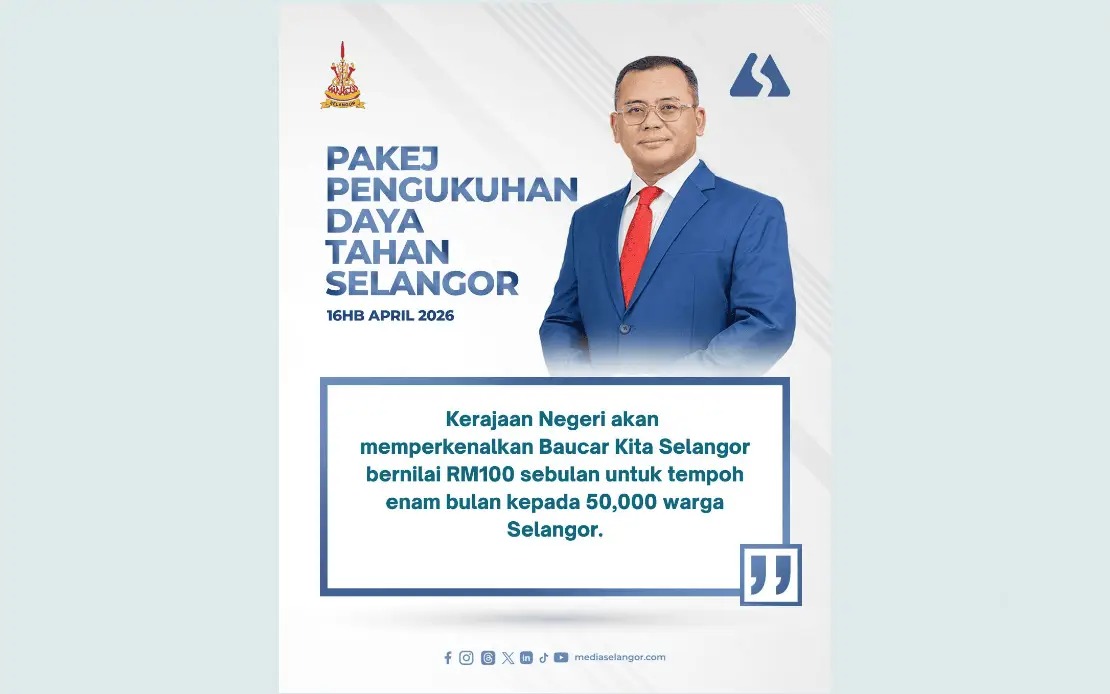
The KitaSelangor Voucher Programme represents a substantial commitment from the state government, with Menteri Besar Datuk Seri Amirudin Shari announcing that approximately 50,000 low-income families will receive monthly cash assistance of RM100 over a six-month period. The initiative, commencing June 30, forms part of the broader RM140 million Selangor Resilience Strengthening Package Phase 1, which was unveiled in April as a comprehensive response to mounting economic pressures facing ordinary households. As families across Selangor navigate persistent inflation, stagnant wages, and disrupted supply chains, such targeted assistance carries genuine significance for household budgets and financial stability.
The identification of eligible recipients reflects a carefully considered approach that prioritises those facing the greatest hardship. The beneficiary groups include families registered in the eKasih database, workers who have been laid off during recent economic contractions, individuals classified as vulnerable by the Social Welfare Department, and single mothers who satisfy the programme's specific eligibility criteria. This targeted methodology ensures resources reach those most in need rather than being distributed broadly across the population, maximising the programme's impact on reducing financial stress and improving basic living standards for marginalised communities.
For Malaysian and Southeast Asian readers, this fraud alert underscores a troubling global trend: as governments introduce innovative social protection mechanisms, criminal networks simultaneously develop tactics to exploit public awareness and trust in these programmes. The sophistication of contemporary phishing and impersonation schemes means that even digitally literate individuals require constant vigilance. The Selangor government's proactive warning demonstrates responsible communication practice, yet it also highlights how government announcements themselves can inadvertently create windows of vulnerability when fraudsters amplify public information to craft more convincing scams.
Residents should adopt several practical safeguards when assessing the authenticity of any communication claiming to relate to government assistance. The first principle involves independent verification: rather than clicking links or providing information in response to unsolicited messages, individuals should visit official government portals or contact state authorities directly using publicly known contact numbers to confirm whether they are eligible and when applications will open. Text messages requesting sensitive personal details, asking for upfront payments, or directing recipients to external websites should be treated with extreme suspicion, as legitimate government programmes do not solicit such information via SMS.
The State Secretary's Office has reinforced that all genuine information about KitaSelangor Voucher will be disseminated exclusively through official Selangor State Government channels. This includes the state's verified social media accounts, the KitaSelangor Voucher Portal itself, and official government announcements made by state leadership or authorised spokespersons. Residents should bookmark official government websites and follow verified official social media accounts to stay informed about programme developments without relying on third-party information sources that may prove unreliable or deliberately misleading.
Understanding the anatomy of such scams helps residents build resilience against fraud. Fraudsters typically leverage genuine programme details—accurate timelines, correct benefit amounts, and authentic eligibility criteria—to construct messages that pass initial credibility checks. They then introduce a sense of urgency or exclusivity to pressure recipients into acting quickly without thorough verification. The addition of official-looking logos, reference numbers, or formatting that mimics government communications further reinforces false legitimacy. Recognition of these manipulation tactics empowers residents to pause, step back, and independently verify before engaging with any unsolicited communication.
The broader implications of this warning extend beyond individual financial security to considerations of public trust in government institutions. When fraudsters successfully impersonate government schemes, they not only steal money from victims but also undermine confidence in legitimate state programmes and erode public faith in government communications. This cascading damage can discourage eligible individuals from participating in genuine assistance schemes due to heightened scepticism. The Selangor government's clear, timely warnings and transparent communication about programme timelines represent important steps toward maintaining institutional credibility and ensuring that residents feel confident engaging with state-provided services when they officially become available.
As June 23 approaches, residents should remain alert but not paranoid. The announcement scheduled for June 22 will provide authoritative details enabling citizens to distinguish genuine from fraudulent communications. Until that date, any SMS or message urging action should be treated with scepticism. The combination of government vigilance, public awareness, and individual caution offers the best defence against the exploitation of well-intentioned social protection initiatives. For Selangor residents anticipating assistance, patience and verification practices will ultimately prove more valuable than rushing to respond to any communication arriving before the official June 22 announcement.

