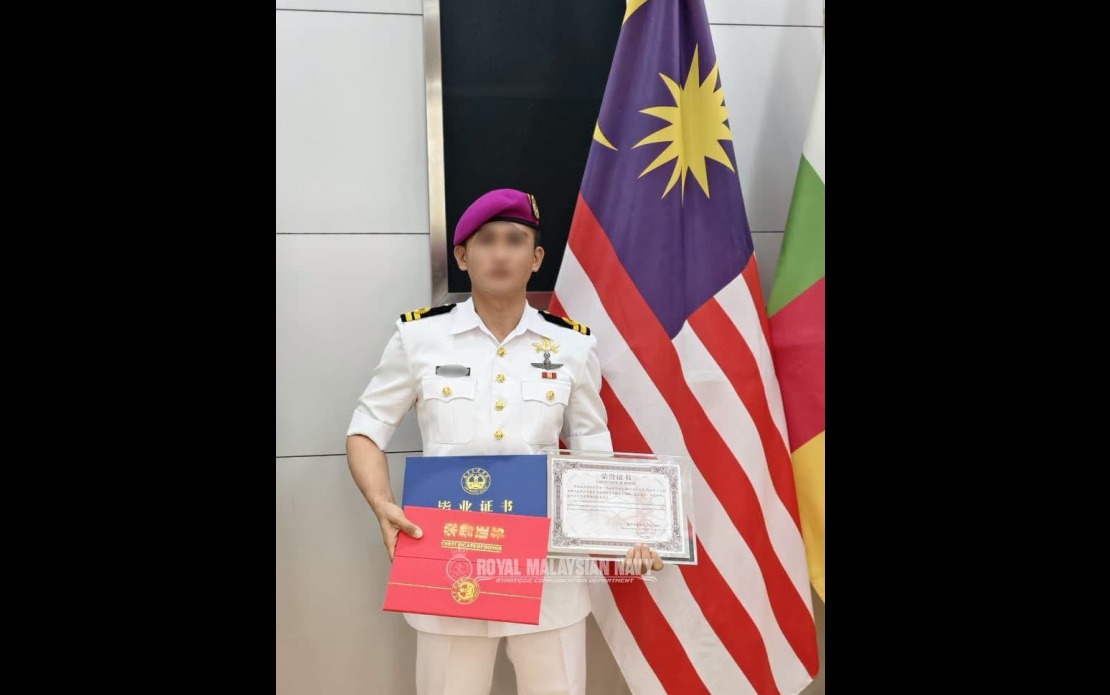
Sultan Sharafuddin Idris Shah, the reigning Selangor monarch and Captain-in-Chief of the Royal Malaysian Navy, has publicly recognised the exceptional accomplishment of a PASKAL officer who distinguished himself in a prestigious military sniper course conducted at the PLA Infantry Academy's Shijiazhuang Campus in Hebei, China. The royal endorsement underscores Malaysia's commitment to advancing military excellence through international defence partnerships and professional development opportunities available to elite naval units.
The PASKAL member's achievement represents a significant milestone for Malaysia's Special Naval Forces, having completed the intensive Sniper Infantry Course that ran from March 1 through July 31. The officer's outstanding performance across the programme's rigorous curriculum and evaluation framework earned him the coveted Excellent Student Award, a distinction that reflects both personal dedication and superior tactical proficiency in one of the military's most demanding specialisations. This recognition places him among the highest-performing military personnel in the region.
Beyond the primary award, the officer received additional honours acknowledging his exceptional contribution throughout the training cycle. The Certificate of Honours—Excellent Cadre and Silver Badge Medals represent comprehensive recognition of performance across multiple assessment dimensions, suggesting that his excellence extended beyond technical sniper competencies to encompass broader military bearing, discipline, and leadership qualities. Such multilayered recognition indicates that international military institutions view this Malaysian naval officer as a model trainee worthy of emulation.
The magnitude of the achievement becomes apparent when contextualised within the course's international composition. Competing against 130 fellow participants drawn from more than 24 countries positioned this PASKAL officer at the apex of a genuinely global cohort representing diverse military traditions, training methodologies, and operational experiences. The ability to excel in such a heterogeneous environment suggests not merely technical superiority but also adaptability and cross-cultural military proficiency—attributes increasingly vital in contemporary multinational defence operations and coalition-building exercises across the Indo-Pacific region.
Sultan Sharafuddin's formal statement emphasising that this achievement will serve as an exemplar for other PASKAL personnel reflects the broader institutional significance of individual accomplishments within elite military units. When ranking officers acknowledge top performers, they establish benchmarks and aspirational standards that influence organisational culture and motivate personnel across the force. This mechanism of professional recognition, endorsed at the highest levels of naval command and royal patronage, helps sustain the competitive excellence and continuous improvement ethos that distinguishes special forces from conventional military units.
The course's location at the PLA Infantry Academy in Shijiazhuang underscores Malaysia's pragmatic defence diplomacy and willingness to pursue advanced training opportunities within the Chinese military establishment. Such partnerships reflect the evolving security landscape in Southeast Asia, where technical cooperation with major powers enhances military capability development. For the RMN particularly, access to PLA training facilities and instructional expertise represents valuable knowledge transfer that strengthens PASKAL's operational readiness and professional standards in counterterrorism, maritime security, and unconventional warfare domains.
RMN Chief Admiral Tan Sri Dr Zulhelmy Ithnain received recognition alongside the course graduate and broader PASKAL personnel, acknowledging the institutional framework and leadership structures that enable individual officers to pursue and succeed in demanding international military education. Senior naval leadership's public backing of such achievements reinforces the importance of professional development pathways within the service hierarchy and demonstrates that advancement and prestige accrue to those who pursue excellence beyond minimum institutional requirements.
The emphasis on bringing honour to Malaysia within the Sultan's remarks connects individual military achievement to broader national interests and soft power considerations. When Malaysian military personnel excel in international forums, they enhance the country's military reputation, demonstrate the professionalism of the RMN, and contribute to Malaysia's standing in defence circles across Asia. For a maritime nation dependent on freedom of navigation and security cooperation throughout Southeast Asian waters, the cultivation of elite military units staffed by internationally recognised professionals serves strategic interests beyond immediate operational requirements.
This development also highlights PASKAL's status as one of Southeast Asia's premier special operations forces. International course selections by peer military institutions typically favour candidates from units with established reputations for professionalism and capability. The willingness of the PLA Infantry Academy to accept and showcase PASKAL personnel reflects mutual recognition of professional standards and suggests ongoing possibilities for deeper military-to-military engagement in training, doctrine development, and operational experience sharing.
For Malaysian defence observers and the broader Southeast Asian military community, this achievement illustrates how participation in international military education contributes to force modernisation and professional advancement. The sniper specialisation itself addresses contemporary security challenges—from counterterrorism to maritime protection against transnational threats—that define current regional security concerns. Officers with world-class training in such specialisations amplify the RMN's deterrent capabilities and crisis response options.
The ripple effects of individual excellence extend beyond formal military structures into diplomatic and strategic signalling domains. International military education achievements demonstrate Malaysia's capacity to produce personnel capable of competing with and surpassing international standards, a message relevant to allies, partners, and potential adversaries assessing Malaysian military capability credibility. Such visible demonstrations of professional military excellence contribute substantially to the confidence-building and deterrence mechanisms that underpin regional security architecture.

