The Sultan of Selangor, Sultan Sharafuddin Idris Shah, has declined to grant authorization for surau and musolla facilities within shopping malls across the state to conduct Friday prayers, according to a statement released by the Selangor Islamic Religious Council (MAIS) on Monday. The decision marks a firm stance on controlling where congregational worship takes place in Malaysia's most developed state, where rapid urbanization has prompted discussions about adapting religious infrastructure to modern lifestyles.
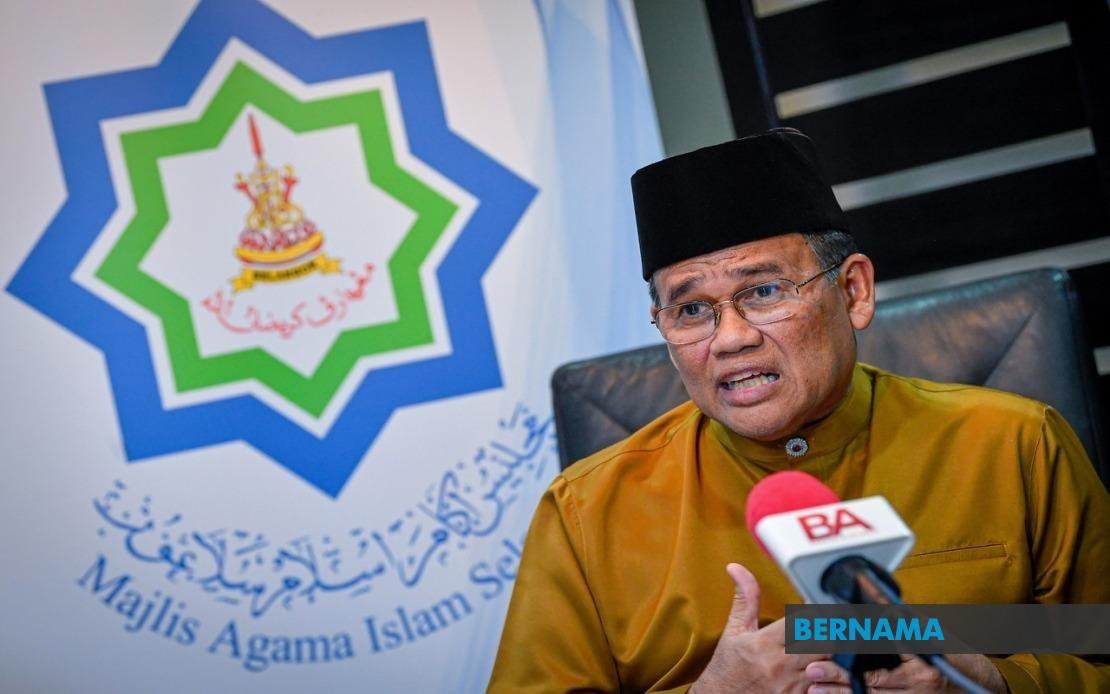
According to Datuk Salehuddin Saidin, chairman of MAIS, the withholding of royal consent reflects deep institutional concerns about the potential consequences of decentralizing Friday prayer services away from traditional religious spaces. The council argues that permitting shopping mall surau to host these prayers would fundamentally undermine decades of effort to position mosques as the spiritual and organizational backbone of Muslim communities across Selangor.
The sustainability of existing prayer facilities forms the crux of MAIS's position. With 448 authorized mosques and 379 surau already operational throughout Selangor, the council maintains that the state possesses adequate capacity to serve its Muslim population without resorting to commercial venues. This infrastructure assessment suggests that the issue is not one of shortage but rather of proper utilization and institutional management of resources already in place.
MAIS has also raised practical concerns about attendance patterns and community cohesion. If Muslims gained the convenience of performing Friday prayers at shopping malls, congregations at traditional mosques and surau could experience significant decline. This fragmentation would weaken the collective worship that has historically defined Islamic practice in Malaysian communities, potentially diminishing the social bonds that mosque attendance cultivates among believers.
Beyond numerical considerations, MAIS emphasizes that mosques and authorized surau serve purposes extending far beyond prayer facilities. These institutions function as educational hubs for Islamic knowledge, platforms for religious guidance and outreach, and gathering places that reinforce Muslim identity and unity. Shopping mall facilities, designed primarily for commercial purposes, cannot replicate these multifaceted roles or provide the appropriate spiritual atmosphere that traditional religious spaces offer.
Administrative oversight and standardization emerge as significant practical obstacles in the council's reasoning. If personnel working in shopping mall surau are not directly appointed and supervised by MAIS, the council would struggle to monitor operations, enforce compliance with regulations, and ensure consistency in Friday sermons that originate from centrally prepared religious content. This fragmentation of authority would create governance complications and potentially compromise the quality and uniformity of religious instruction across the state.
Acknowledging a single exception to its general policy, MAIS disclosed that one shopping mall surau has received temporary authorization to conduct Friday prayers, but only because no permanent mosque exists in proximity to serve the local Muslim community. This approval carries an expiration date: should a proper mosque be constructed nearby and gain capacity to accommodate worshippers, the temporary mall surau arrangement would be immediately revoked. The exception thus reinforces rather than contradicts the council's principle that traditional mosques represent the preferred and permanent solution.
The decision also reflects the constitutional framework governing religious administration in Malaysia. Matters concerning mosques, surau, and musolla explicitly fall within state jurisdiction under the Ninth Schedule of the Federal Constitution, granting the Sultan of Selangor and MAIS considerable autonomous authority over such decisions. This constitutional positioning has prompted MAIS to reaffirm Selangor's prerogatives while acknowledging that the federal government, through Minister in the Prime Minister's Department (Religious Affairs) Dr Zulkifli Hasan, has also engaged with proposals for similar arrangements nationwide.
The legal basis for MAIS's authority derives from Section 97 of the Administration of the Religion of Islam (State of Selangor) Enactment 2003, which requires that any establishment of mosques or surau, or conversion of buildings to religious use, must obtain prior written approval from the council. This legislative foundation empowers MAIS to evaluate proposals against established religious, administrative, and social criteria before granting permission.
For Malaysia's broader policy discussions, the Selangor decision carries significance beyond one state's boundaries. As the country's most economically advanced region with rapidly growing urban centres, Selangor's choices on religious infrastructure often serve as precedents or reference points for other states navigating similar tensions between modernization and tradition. The council's reasoning reflects a deliberate preference for maintaining institutional centrality of traditional worship spaces even as society transforms around them.
MAIS has appealed to Selangor Muslims to actively participate in and support existing mosques and surau, framing this engagement as essential to sustaining these institutions as genuine community focal points rather than allowing them to become peripheral to daily Muslim life. This call represents an implicit acknowledgment that the council recognizes some underlying demand or perception that existing facilities may not adequately serve modern lifestyle patterns, even if it disputes that shopping malls constitute an appropriate solution.
The decision ultimately reflects a conservative institutional stance prioritizing long-term structural stability and religious coherence over short-term convenience accommodations. Whether this approach will prove sustainable as urbanization intensifies and Muslims increasingly work and spend leisure time in commercial spaces remains an evolving question for Malaysia's religious authorities.

