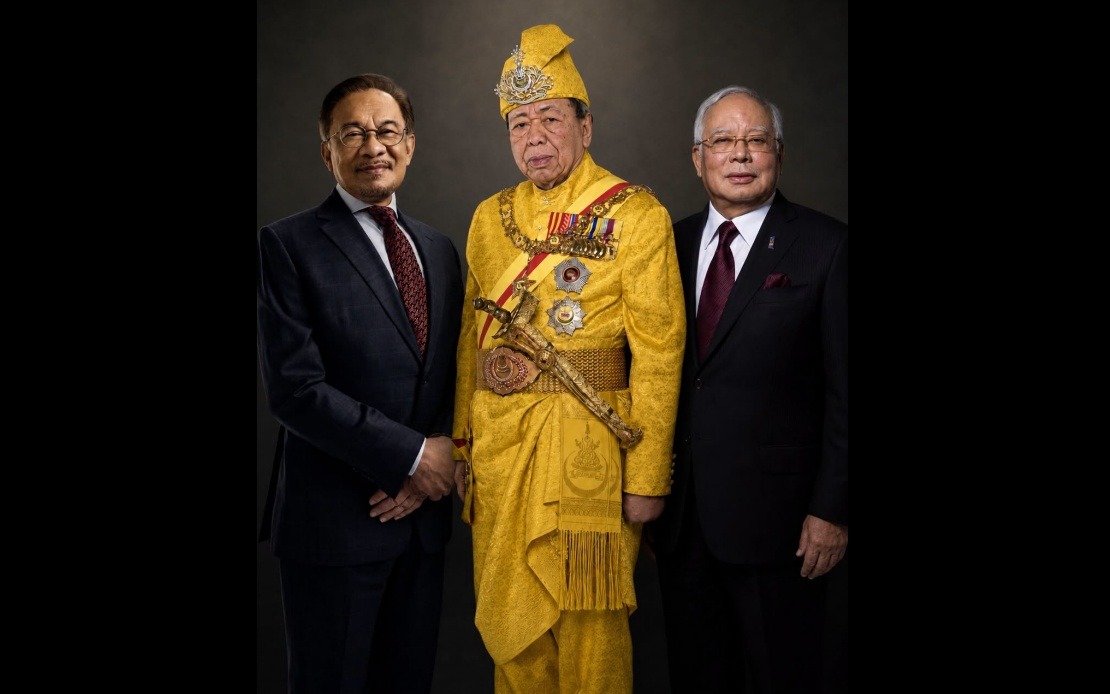
The Sultan of Selangor, Sultan Sharafuddin Idris Shah, has publicly acknowledged Prime Minister Datuk Seri Anwar Ibrahim's instrumental role in bringing the Shah Alam Line LRT3 to operational status following its inauguration on Monday. In a statement released in Shah Alam, the Sultan extended his appreciation for the administration's commitment to advancing the infrastructure initiative, which now represents a critical transportation artery for Selangor's western corridor. The royal endorsement carries particular significance given the Sultan's foundational involvement in championing the rail project since its inception, lending considerable weight to his commendation of the current government's stewardship.
Among the Sultan's key acknowledgements was Anwar's decision, made after assuming the Prime Minister and Finance Minister portfolios in 2022, to resurrect five railway stations that had been struck from the original plan during previous fiscal constraints. This reversal represented a substantial commitment to restoring comprehensive coverage across the corridor, reversing austerity measures that would have compromised accessibility for commuters in intermediate zones. The Sultan further noted the administration's proposal to develop affordable residential units in proximity to LRT3 stations, a measure designed to enhance the practical utility of the transport infrastructure by encouraging transit-oriented living patterns and reducing reliance on private vehicles.
The genesis of the LRT3 concept emerged from widespread public grievances, particularly articulated by housewives concerned about their husbands' lengthy commutes caused by chronic traffic congestion across the Klang Valley. The Sultan emphasised that this ground-level feedback, rather than grandiose planning objectives, shaped the project's fundamental purpose as a pragmatic solution to everyday mobility challenges facing ordinary Selangor residents. This orientation towards addressing citizen needs rather than pursuing prestige infrastructure underscores the Sultan's consistent messaging that the development prioritises functional benefit over symbolic achievement.
The transportation corridor required connection across Klang, Shah Alam and Kuala Lumpur—a challenge exacerbated at the time by only two bridges spanning the Klang River, which severely bottlenecked vehicular traffic during peak hours. The Sultan acknowledged former Prime Minister Datuk Seri Najib Tun Razak's responsiveness to the initial call for a rail link, noting that Najib's administration subsequently implemented immediate relief measures including the abolition of the Batu Tiga and Sungai Rasau toll plazas in 2018. This historical context illustrates the multi-administration continuity that the Sultan would later emphasise as critical to the project's ultimate success.
The LRT3's development trajectory, however, proved considerably more turbulent than initially envisioned. Following the 2018 change of government, the project suffered a 18-month delay before experiencing an additional 19-month postponement attributable to the COVID-19 pandemic extending into 2021. During these protracted setbacks, project specifications were substantially pared down—station dimensions were reduced, the number of train coaches per set was diminished, and five planned stations along the alignment were eliminated entirely. These reductions reflected fiscal realities and pandemic-related constraints that forced difficult prioritisation decisions regarding the scope of what could practically be delivered.
The Sultan notably refrained from attributing the LRT3's completion to any single political figure or party, instead framing the achievement as the cumulative result of sustained planning, organisational commitment and institutional cooperation spanning multiple electoral cycles and administrations. This measured stance suggests recognition that infrastructure projects of this magnitude transcend partisan cycles and require enduring political will across government transitions. The emphasis on continuity and collective effort, rather than personalised credit, reflects a sophisticated understanding of how substantial public works programmes depend upon institutional momentum rather than individual leadership dynamics.
The operational commencement of the LRT3 carries substantial implications for the Klang Valley's transportation ecosystem and housing market dynamics. The Sultan expressed confidence that the rail line would measurably diminish traffic congestion whilst simultaneously furnishing commuters with a faster, more comfortable and inherently safer transit alternative to private vehicles. The potential for reduced motor vehicle dependency extends environmental benefits beyond immediate congestion relief, addressing long-standing air quality concerns affecting the region's population.
Economic development represents another anticipated consequence of the LRT3's operational launch. The Sultan expressed optimism that the transit corridor would catalyse commercial and residential growth, enhance overall quality of life metrics and strengthen functional connectivity between four key metropolitan nodes—Kuala Lumpur, Petaling Jaya, Shah Alam and Klang. These centres collectively constitute important engines of national economic growth, and improved transit integration promises to amplify their complementary functions and facilitate labour market connectivity.
Operational sustainability emerged as a concern flagged by the Sultan, who called upon Prasarana Malaysia Bhd to maintain rigorous maintenance standards ensuring continued service reliability and efficiency. Long-term functionality depends critically upon preventive maintenance regimes and responsive management of wear-related degradation, making the Sultan's explicit emphasis on continuous stewardship strategically important for the infrastructure's enduring utility. This concern reflects a realistic acknowledgement that infrastructure projects succeed or fail not merely at inauguration, but through years of careful operational management.
The LRT3's significance extends beyond Selangor's borders to broader Southeast Asian precedents regarding transit-oriented urban development in middle-income economies. Malaysia's successful delivery of a comprehensive rail network connecting major metropolitan zones offers instructive lessons for the region regarding financing mechanisms, institutional coordination, and phased implementation approaches that accommodate economic and epidemiological disruptions. As other Southeast Asian cities grapple with escalating congestion and urban sprawl, the Shah Alam Line represents a tangible demonstration that sustainable transit solutions remain achievable despite substantial implementation obstacles.

