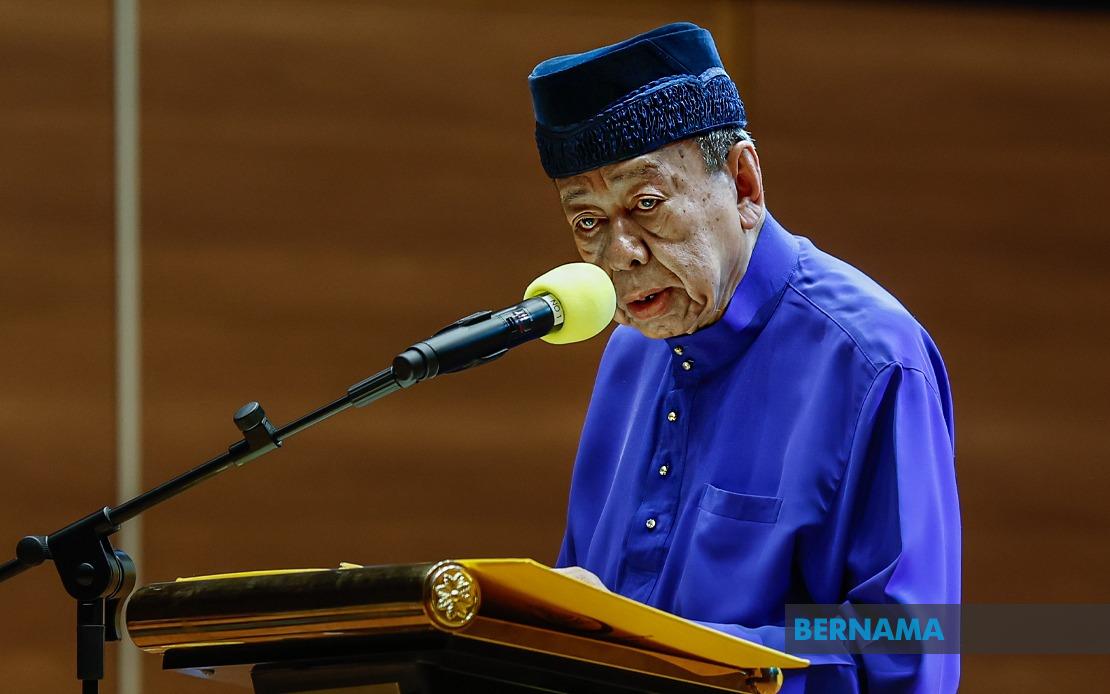
The Sultan of Selangor, Sultan Sharafuddin Idris Shah, has delivered a forceful message that Universiti Teknologi MARA must recalibrate its academic offerings to meet the demands of a rapidly shifting global economy, even as it maintains its foundational role in advancing Bumiputera education. Speaking at UiTM's Royal Address ceremony in Shah Alam, the Sultan articulated a vision that balances institutional heritage with the imperatives of modern labour markets, signalling that excellence and inclusivity are not mutually exclusive but rather mutually reinforcing.
The challenge facing Malaysia's premier indigenous university is profound and multifaceted. The job market that confronted previous generations—one where simply securing university admission represented a significant achievement—has transformed entirely. Today, Sultan Sharafuddin observed, the real competition lies in ensuring graduates possess skills that allow them to excel not merely locally but on regional and international stages. This shift demands urgent curriculum renewal, particularly in disciplines that will shape economic trajectories in coming decades: digital technologies, artificial intelligence, advanced engineering, biomedical sciences, fintech, and creative industries that increasingly drive value creation across developed and developing economies alike.
Critically, the Sultan's intervention reframes UiTM's foundational mission in contemporary terms. Rather than viewing the university's Bumiputera mandate and global competitiveness as opposing forces, he presented them as complementary objectives. UiTM's historical success in producing the Bumiputera professional class—a verifiable fact demonstrated through the institution's track record of grooming corporate executives, government leaders, and national figures—provides a foundation upon which to build more ambitious goals. The institution, he emphasized, must now evolve beyond its proven capacity to create qualified professionals and pivot toward producing entrepreneurs, innovators, and industry leaders capable of competing at the highest international levels.
The Sultan articulated a sophisticated understanding of what contemporary workforce preparation requires. Graduates emerging from UiTM cannot rely solely on academic credentials; they must embody a more holistic skill set that encompasses technical competence, professional confidence, multilingual capability, and the cognitive flexibility to navigate complex problem-solving. This diagnosis suggests systemic gaps in current graduate preparation, where qualifications may exist on paper without corresponding mastery of workplace-critical competencies. The Sultan specifically urged every UiTM student and graduate to achieve proficiency in at least two foreign languages, recognizing that in regional and global professional contexts, linguistic capability functions as genuine economic currency.
A particularly significant dimension of the Sultan's address concerns the relationship between academic institutions and industry. He warned against the danger of credential inflation—the production of degree-holding graduates who lack the practical skills, industry-specific knowledge, and professional dispositions that employers require. This observation carries particular resonance across Southeast Asia, where skills mismatches between university outputs and labour market demands represent a persistent constraint on productivity and innovation. Strengthening industry-academia linkages therefore emerges not as an optional enhancement but as an institutional imperative.
The Sultan's emphasis on job creation rather than job-seeking represents a significant reorientation of educational purpose. This distinction matters considerably: whereas job-seeking focuses graduate preparation on employability within existing organizational structures, job creation demands entrepreneurial orientation, business acumen, and the capacity to identify market opportunities and mobilize resources around them. For a region where small and medium enterprises remain engines of employment and economic dynamism, universities that cultivate this entrepreneurial capacity perform broader national development functions than those primarily oriented toward corporate employment pipelines.
Importantly, Sultan Sharafuddin also provided robust constitutional grounding for UiTM's Bumiputera-focused mission, situating it not as administrative convenience but as fundamental constitutional architecture. The Universiti Teknologi MARA Act 1976 and particularly Article 153 of the Federal Constitution establish the institutional framework through which reserved educational access for Malays and natives of Sabah and Sarawak operates. This exposition matters because it forestalls arguments that UiTM's indigenous focus represents arbitrary restriction; rather, it reflects considered constitutional design aimed at addressing documented historical educational and socioeconomic disparities. The Sultan's formulation—that defending UiTM's constitutional role does not entail denying educational opportunities to other communities, and that Malaysia's higher education ecosystem encompasses institutions serving all populations—provides a defensible intellectual position that acknowledges both particularity and plurality.
The Sultan further emphasized that UiTM's founding mandate remains incomplete so long as educational and socioeconomic gaps persist within Bumiputera communities. This temporal qualification is crucial: it neither promises indefinite preferential treatment nor implies immediate discontinuation, but rather anchors the institution's special role to the continued existence of measurable disparities. By this logic, demonstrable progress in narrowing gaps would gradually alter the rationale for institutional specialization, while persistent inequalities justify continued focus. This formulation invites empirical evaluation and guards against the institution becoming merely preservationist.
For Malaysian policymakers and educational strategists, the Sultan's intervention illuminates an apparent paradox: that UiTM can simultaneously honour its constitutional commitments and embrace global excellence standards. The path forward requires disciplined investment in curriculum modernization across priority sectors, particularly those involving emerging technologies where Malaysia seeks regional competitive advantage. Simultaneously, strengthening industry engagement ensures that academic innovation translates into workforce capability rather than remaining confined to campus environments.
The broader Southeast Asian context makes this university's trajectory particularly significant. As regional economies diversify away from commodity dependence and compete increasingly around high-value services, digital capabilities, and innovation, the quality and relevance of higher education systems directly shapes national competitiveness. UiTM's challenge—and opportunity—is to demonstrate that institutions with explicit social equity missions can simultaneously operate at sophisticated international standards, providing a model for other developing-world universities grappling with similar tensions between access and excellence.
The Sultan's royal address thus functions as both affirmation and directive. Affirmation of UiTM's achievements in building the Bumiputera professional class, recognition of the institution's constitutional legitimacy, and acknowledgment of its continued importance to national development objectives. Simultaneously, the address constitutes a pointed challenge: that institutional complacency represents betrayal of original purpose, that remaining globally competitive requires continuous renewal, and that true empowerment means equipping Bumiputera graduates not merely to join existing hierarchies but to create new wealth and opportunity. Whether UiTM can operationalize this vision while managing the inherent tensions between specialization and universalism will significantly influence Malaysian higher education trajectories in coming decades.

