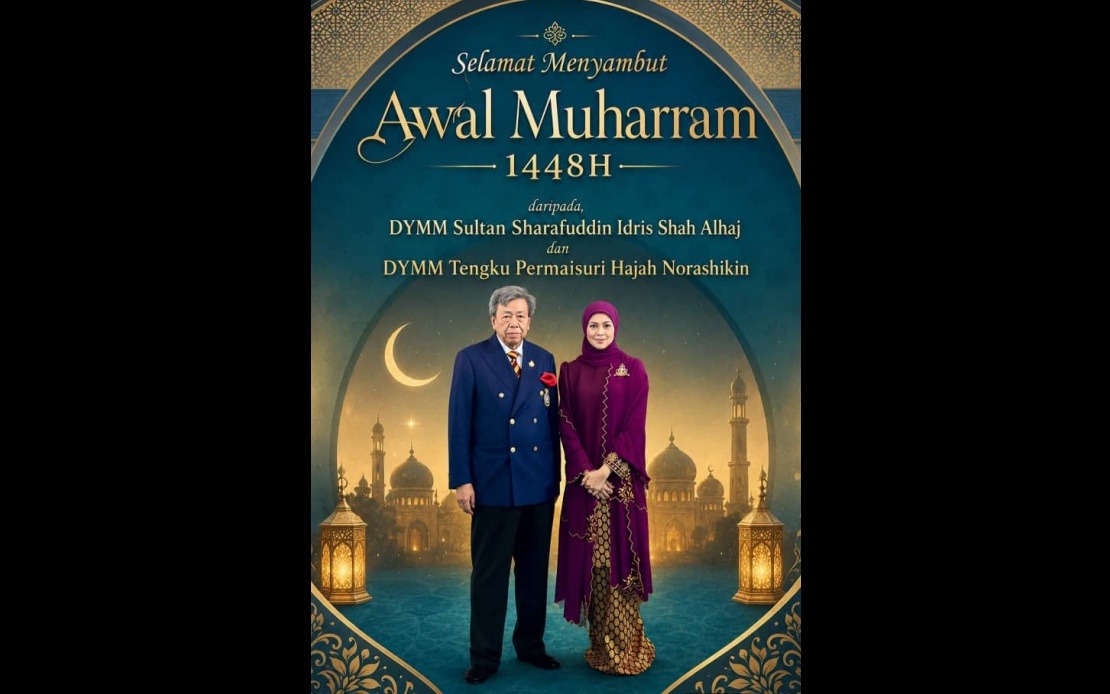
The Sultan of Selangor, Sultan Sharafuddin Idris Shah, has emphasised the critical importance of Muslim solidarity in navigating contemporary challenges, using the Maal Hijrah 1448H observance as a platform to renew calls for communal harmony. Speaking in Shah Alam on June 16, the ruler framed the Islamic new year not simply as a historical migration narrative but as a powerful reminder of the spiritual and social transformation necessary within the ummah today.
Central to the Sultan's message is a distinction between the literal hijrah—the Prophet Muhammad's journey from Mecca to Medina—and its deeper symbolic meaning. Rather than understanding the event merely as a physical relocation across geographical boundaries, the ruler positioned it as an emblem of profound internal change and collective advancement. This reinterpretation carries particular resonance in Malaysia's multicultural context, where unity among Muslims has become increasingly vital amidst competing political narratives and social pressures.
The Sultan drew upon paternal wisdom, recalling guidance from his late father, Sultan Salahuddin Abdul Aziz Shah, regarding the proper manner of addressing grievances within the Islamic community. This intergenerational transmission of values underscores how traditional monarchical authority in Malaysia continues to function as a moral compass, offering stability through remembered principles rather than merely contemporary pronouncements. The emphasis on remembering ancestral counsel suggests that solutions to modern discord lie partly in honouring established traditions of dignified discourse.
Crucially, the ruler outlined a framework for managing internal differences that prioritises discretion and decorum. When disagreements arise or corrections are needed, these matters should be handled through direct, private conversations grounded in mutual respect rather than aired publicly. This approach reflects classical Islamic jurisprudence, which emphasises admonishing others in private to preserve dignity and honour. The Sultan's articulation of this principle indicates awareness that unrestrained public criticism, regardless of its validity, can undermine collective strength and create vulnerabilities that external actors might exploit.
The risks of uncontrolled public dispute were explicitly outlined by the monarch. When Muslims quarrel openly, their internal fractures become visible to outside observers, potentially inviting intervention or manipulation by adversaries seeking to capitalise on division. The Sultan's warning that "no one will truly emerge as the winner" from persistent conflict speaks to a zero-sum understanding of religious and national cohesion—suggesting that even those who feel vindicated in public disputes ultimately lose when communal unity deteriorates. This logic resonates particularly in Malaysia, where political parties and external influences have periodically exploited religious divisions for electoral gain.
The Sultan's vision of Hijrah encompasses not merely spiritual renewal but a deliberate subordination of personal and factional interests to broader religious, ethnic, and national priorities. This call transcends typical religious observance and ventures into the territory of political and social philosophy, positioning the Islamic calendar's renewal as an opportunity for citizens to recalibrate their loyalties and commitments. In Malaysia's context, where balancing communal identities with national unity remains a persistent challenge, such guidance carries weight beyond ceremonial significance.
Tolerance emerges as another pillar of the Sultan's message, paired with strengthened unity. The ruler's emphasis on fostering mutual tolerance suggests recognition that disagreement will inevitably persist among Muslims across different schools of thought, cultures, and political affiliations. Rather than attempting to eradicate difference through enforced conformity, the approach championed by the Sultan accommodates pluralism within Islam while maintaining collective purpose. This nuanced position differs from more rigid interpretations that demand uniformity as a prerequisite for community strength.
The temporal dimension of the Sultan's appeal—framing the new Islamic year as an opportunity for renewed commitment—provides psychological and spiritual scaffolding for change. By anchoring calls for improved conduct and heightened solidarity to a major annual milestone, the ruler leverages existing religious observance patterns to motivate behavioural transformation. This calendrical approach has proven effective in Islamic societies historically, as major transitional moments offer natural inflection points for rededication to principles.
For Malaysian Muslims specifically, the Sultan's intervention carries implications extending beyond rhetorical exhortation. As a constitutional monarch with significant moral authority among the Muslim majority population, his public statements shape acceptable discourse and establish cultural norms regarding how disagreements should be managed. In a nation where religious leadership and political authority intersect, such royal pronouncements function partly as guidance and partly as gentle correction, signalling to both political leaders and ordinary citizens what behaviour aligns with Islamic principles as understood within Malaysia's institutional framework.
The Sultan's hope that the new Islamic year will usher in blessings and prosperity reflects traditional Islamic optimism about cyclical renewal, yet the statement carries contemporary application. With Malaysia facing economic pressures, social polarisation, and questions about national identity, the call for unity and harmony addresses underlying anxieties about societal cohesion. By positioning religious observance as integral to addressing these broader challenges, the Sultan connects spiritual commitment to practical governance outcomes.
The broader implication of this message extends across Southeast Asia, where Muslim-majority nations navigate similar tensions between plural societies and religious identity politics. The Sultan's emphasis on resolving disputes privately rather than through public mobilisation offers a model of Islamic leadership that prioritises stability and prevents the instrumentalisation of religious grievances for narrow political ends. This approach acknowledges that in diverse societies, how disagreements are managed matters as much as what is disagreed upon, and that protecting community dignity through restrained discourse serves both religious and national interests.

