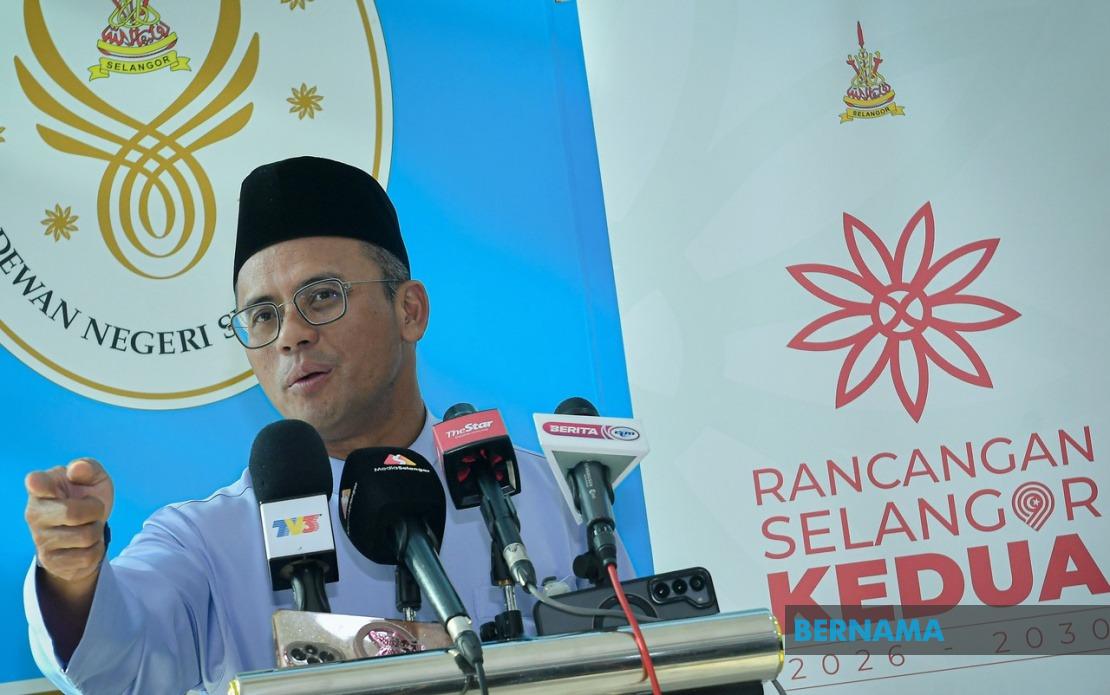
Selangor's housing ambitions have grown substantially as the state government unveiled plans to construct 200,000 affordable dwellings under its flagship RS-2 programme, a sweeping initiative designed to address the persistent shortage of reasonably priced residential stock across the densely populated state. Menteri Besar Datuk Seri Amirudin Shari disclosed the scale of this undertaking during proceedings at the Selangor State Legislative Assembly in Shah Alam, presenting concrete progress figures that demonstrate the initiative's momentum even as construction continues nationwide.
Progress on the ground reflects significant advancement toward the ambitious goal. The state government has already completed 64,188 residential units, while an additional 69,014 properties remain under active development, combining to reach 133,202 units realised or in progress. This places Selangor roughly two-thirds of the way toward achieving its 200,000-unit target, though substantial logistical and financial hurdles remain before completion. The trajectory, if sustained, suggests the state could fulfill its housing commitments within a reasonable timeframe, though actual delivery rates will depend on construction timelines, financing availability, and regulatory approvals.
A particularly innovative element of the scheme involves transforming rental obligations into pathway opportunities for eventual homeownership. Through this mechanism, the Selangor Housing and Property Board (LPHS) will retain 30 percent of monthly rental payments from tenants and accumulate these sums specifically for return as housing deposits when renters demonstrate readiness to transition into property ownership. This approach acknowledges a fundamental barrier facing lower-income Malaysians: the inability to accumulate sufficient capital for down payments despite maintaining stable rental histories. By treating rent payments as forced savings, the scheme creates a bridge between perpetual rental status and homeownership, potentially transforming housing trajectories for tens of thousands of families across the state.
Beyond construction targets and financial innovations, Amirudin outlined plans for a comprehensive evaluation framework to measure the initiative's real-world impact on households. The state intends to establish a statistical unit that will develop an index specifically calibrated to assess the effectiveness of housing assistance and household support programmes. Rather than relying on raw construction numbers, this assessment tool will examine whether recipients actually benefit from the initiatives through periodic reviews scheduled at 12-month and 24-month intervals. This emphasis on outcomes rather than outputs reflects recognition that building homes means little if they remain inaccessible or fail to materially improve residents' living standards and economic security.
Connectivity and urban planning form the other pillar of Selangor's housing vision. The state government recognises that affordable homes lose much of their value proposition if residents cannot feasibly reach employment centres, educational institutions, and commercial areas. Consequently, the administration intends to enhance public transport frequency to and from LRT and MRT stations, reducing wait times and travel unpredictability. Perhaps equally significantly, Selangor will prioritise the construction of covered walkways linking housing developments to transit nodes, addressing a persistent challenge in Malaysia's tropical climate where pedestrians face exposure to intense sun and sudden rainfall.
The integration of bus services into housing estate planning represents another pragmatic improvement. Every new Rumah Selangorku Harapan and Rumah Selangorku Idaman development will incorporate a bus stop, ensuring residents have immediate access to first-mile connectivity without lengthy walks to distant terminals. This may appear straightforward, yet reflects a departure from conventional Malaysian development patterns where housing estates often lack integrated transit facilities, leaving residents dependent on private vehicles regardless of affordability constraints. By mandating bus stop inclusion during the design phase rather than attempting retrofitting, Selangor embeds transit accessibility into the physical framework.
Technology deployment will underpin this connectivity revolution. Amirudin stressed that planning decisions would incorporate data analysis tools capable of identifying traffic concentration zones, public gathering points, and residential locations throughout Selangor. Rather than relying on intuitive judgment or historical precedent, the state will employ quantitative methods to determine optimal bus stop locations and service frequencies. This analytical approach should yield more efficient resource allocation, directing public transport infrastructure toward areas with demonstrable demand rather than spreading limited resources thinly across the state.
The broader context of Selangor's housing challenge cannot be overstated for Malaysian observers. As the nation's wealthiest state and primary economic engine, Selangor attracts continuous migration from other regions and international sources, creating relentless demand pressure on available housing stock. Yet wages for many workers have stagnated while property prices have accelerated, rendering homeownership mathematically impossible for substantial segments of the workforce. Against this backdrop, the RS-2 scheme's combination of direct construction, rental-to-ownership pathways, and transit integration represents a comprehensive policy response rather than piecemeal interventions.
For Southeast Asian housing watchers, Selangor's approach offers instructive parallels and contrasts with regional neighbours. Singapore's public housing model, while more extensive and established, similarly emphasises the connection between residential adequacy and economic participation. Indonesia and Thailand continue grappling with informal settlements and inadequate housing stock, providing cautionary examples of what happens when affordable housing construction cannot keep pace with urban migration. Selangor's explicit integration of transit, walkability, and outcome measurement suggests learning from international experiences while adapting solutions to Malaysian governance structures and fiscal circumstances.
Implementation success will ultimately determine whether this initiative transforms housing accessibility or merely generates statistical progress without tangible household impact. The commitment to regular evaluation represents a constructive acknowledgment that good intentions require rigorous monitoring. Whether the state government possesses sufficient budgetary capacity, contractor capability, and administrative coordination to sustain delivery of 200,000 units remains the paramount question. Economic downturns, supply chain disruptions, and land availability constraints could derail timelines previously thought achievable. Nevertheless, the articulation of specific targets, financing innovations, and integrated planning frameworks suggests a government attempting to move beyond rhetorical commitments toward structured implementation.

