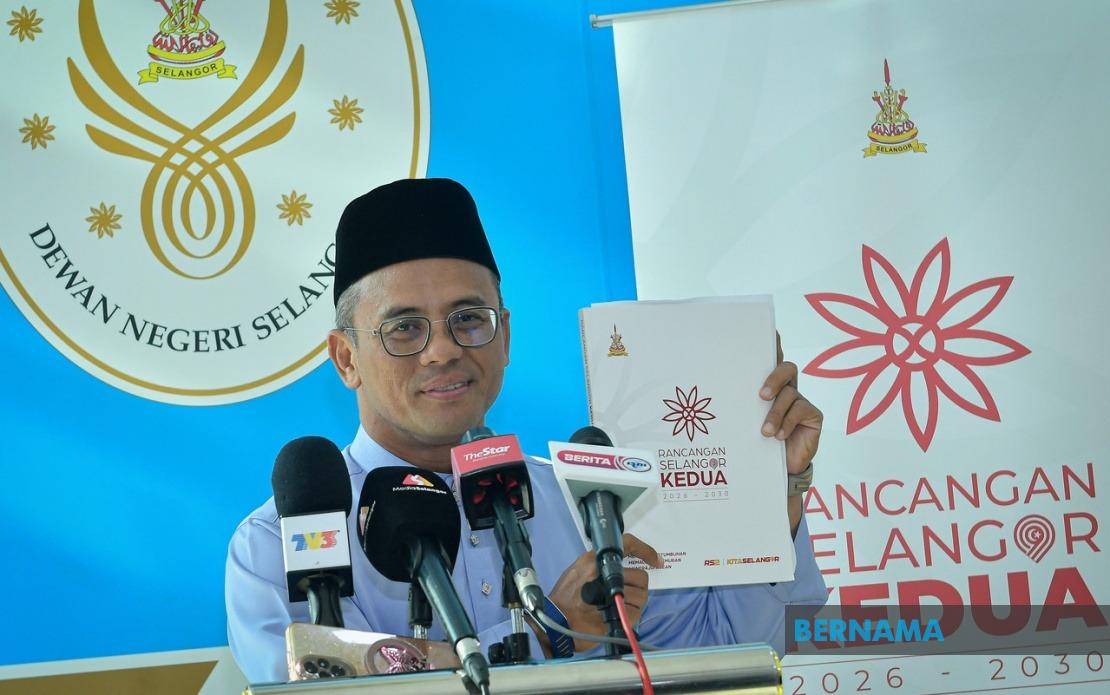
Selangor's government has set an ambitious performance benchmark for its local authorities, requiring all municipal bodies to reach a 95 per cent score under the PBT Star Rating System by 2030. Menteri Besar Datuk Seri Amirudin Shari introduced this target while presenting the Second Selangor Plan (RS-2) to the state legislature, framing the mandate as integral to ensuring residents across all districts receive consistently high-quality public services rather than experiencing disparities based on geography or administrative jurisdiction.
The significance of this target extends beyond mere numerical achievement. Currently, service delivery standards vary considerably across Selangor's 16 local authorities, reflecting differences in resources, capacity, and management quality. By mandating uniform excellence, the state government aims to eliminate a two-tier system where certain affluent or administratively efficient areas enjoy superior services whilst others lag behind. This approach aligns with broader principles of equitable governance that have gained traction across Malaysian states seeking to justify their development models.
Concurrently, the state plans to advance its digital transformation agenda with a target of achieving 85 per cent end-to-end digital government service sharing by 2030. This complementary initiative recognises that modern service delivery increasingly depends on seamless data integration and online accessibility. By digitising interactions between citizens and government bodies, Selangor hopes to reduce processing delays, minimise opportunities for corruption, and create audit trails that enhance accountability. The digital push particularly matters for younger, tech-savvy residents who expect online convenience from public institutions as they would from private sector providers.
Amirudin emphasised that local authorities must treat all complaints and feedback—whether lodged through social media platforms or submitted in person—with equal seriousness and prompt action. This directive acknowledges the reality that citizens increasingly air grievances on Facebook, Twitter, and Instagram, where complaints gain visibility and generate public pressure. By formally incorporating social media monitoring into complaint management protocols, the state recognises that perception of responsiveness matters as much as actual service quality in shaping public satisfaction.
Underlying these operational targets lies a fundamental fiscal challenge that RS-2 attempts to address. Selangor currently derives approximately 75 per cent of its revenue from land premiums and rental fees—a concerning dependency that creates vulnerability to property market downturns and limits the state's capacity for long-term investment in infrastructure and services. This revenue concentration represents what the Menteri Besar characterised as a structural risk, one that demands deliberate diversification through multiple channels rather than incremental adjustments.
The Second Selangor Plan proposes tackling this vulnerability through strategic initiatives involving government-linked companies and private sector engagement. The state intends to establish a fully integrated State Investment Holding company that would consolidate oversight of multiple government entities, theoretically reducing administrative duplication, lowering operating costs, and improving returns on public capital. Such centralisation mirrors approaches adopted by Singapore's Temasek Holdings and other regional investment vehicles, though the Malaysian institutional context and regulatory environment present distinct implementation challenges.
Enhanced alignment of government-linked companies with state priorities represents another prong of the diversification strategy. Currently, multiple GLCs operate with varying degrees of strategic coherence, occasionally pursuing overlapping mandates that dissipate resources and create confusion. By clarifying roles and redirecting energy toward technology and service-based sectors—areas where Selangor possesses competitive advantages—the state aims to catalyse economic activities less dependent on real estate speculation. This reorientation suggests recognition that Selangor's future prosperity relies on fostering innovation ecosystems and attracting high-value enterprises rather than perpetually monetising land assets.
The private sector integration component of RS-2 acknowledges that state resources alone cannot drive the transformation required for a rapidly urbanising region of 7.5 million people. By creating structured frameworks for public-private collaboration, Selangor hopes to mobilise private capital and expertise whilst maintaining public interest protection. Such partnerships have yielded mixed results across Southeast Asia, depending on transparency mechanisms and regulatory oversight quality, so successful implementation will hinge on robust governance safeguards.
For Malaysian policymakers observing from other states, Selangor's approach offers both inspiration and cautionary lessons. The emphasis on measurable performance targets and systematic service standardisation reflects global best practice in municipal management. However, achieving 95 per cent ratings across 16 diverse local authorities demands sustained capacity building, adequate funding, and political will to hold underperforming bodies accountable without resorting to blame-shifting or excuse-making. Several Malaysian states have announced ambitious plans that encountered implementation difficulties due to insufficient resource allocation or inconsistent political commitment.
The fiscal diversification agenda particularly resonates across Southeast Asia, where many subnational governments face similar land-dependent revenue models that constrain long-term development planning. Selangor's attempt to reduce this dependency through integrated investment vehicles and private sector participation represents a regional trend toward more sophisticated approaches to state-level economic management, moving beyond simple taxation and land sales toward portfolio approaches resembling sovereign wealth models.
Implementation timelines extending to 2030 suggest that Amirudin and his administration recognise transformation of this magnitude requires patience and sustained effort. Achieving simultaneous improvements in service delivery, digital integration, revenue diversification, and governance coherence across multiple institutional actors involves coordination challenges that should not be underestimated. The coming years will test whether Selangor's institutional capacity and political commitment match the ambition of RS-2's targets.

