A determination on the status of a Selangor state legislative seat is set to be concluded within the week, Menteri Besar Datuk Seri Amirudin Shari announced, clearing the way for the Election Commission to assess whether electoral proceedings must be triggered. The announcement came following reports that the state administration was evaluating whether a by-election would be warranted amid questions surrounding a state assemblyman's eligibility to hold office.
The procedural pathway remains contingent on formal documentation from the Selangor State Legislative Assembly Speaker, whose role encompasses determining the seat's status. Amirudin outlined that his administration continues awaiting this notification while the state's legal division prepares supporting documentation that will subsequently be transmitted to relevant authorities. The legal adviser's submission is anticipated within the current week, establishing the factual and juridical foundation upon which the Election Commission will render its judgment.
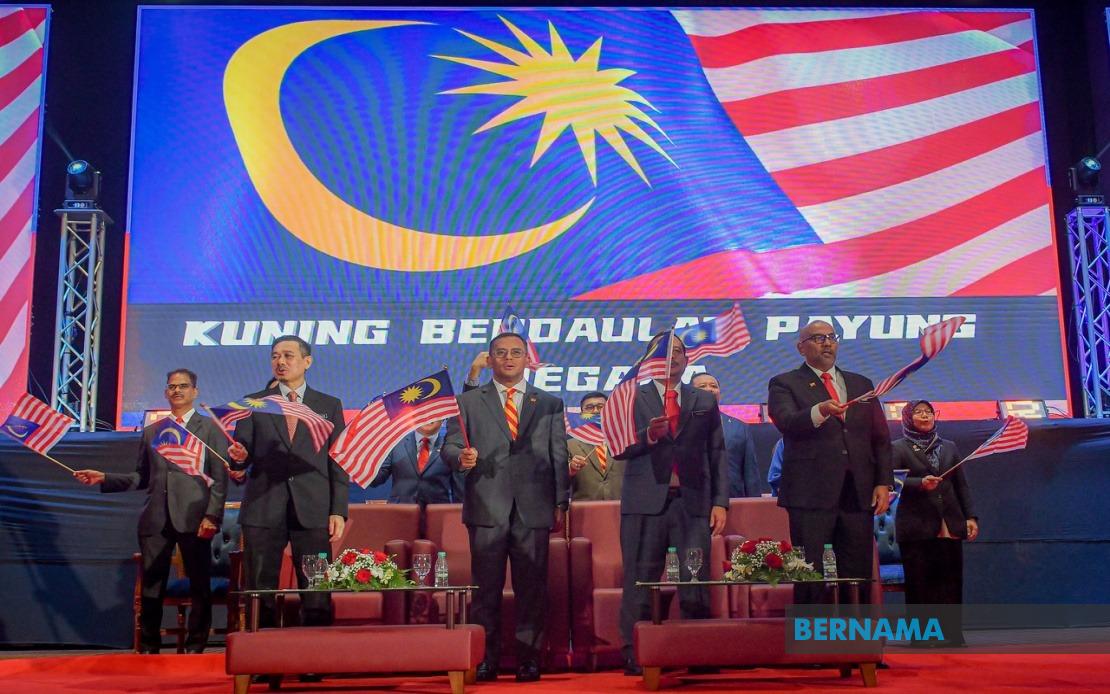
Underscoring the state government's commitment to institutional propriety, Amirudin emphasised that Selangor would honour whatever determination emerges from the Election Commission following the Speaker's pronouncement. This stance reflects the conventional constitutional arrangement whereby the Speaker holds definitive authority over seat-related matters, whilst electoral bodies retain jurisdiction over conducting fresh polls if circumstances warrant. The Menteri Besar's statement, delivered following a public engagement with civil service representatives and the launch of the Fly the Jalur Gemilang campaign, signals administrative readiness to navigate the legal process without obstruction.
Adherence to legislative frameworks and procedural requirements represents the state government's foundational approach, Amirudin stressed. The administration will defer to whatever conclusion the Election Commission reaches regarding whether fresh electoral proceedings become necessary, operating strictly within the confines of existing legal provisions governing such situations. This deference to institutional frameworks—whether Speaker determinations or Electoral Commission judgments—positions Selangor's leadership as observers rather than architects of the resolution.
The underlying eligibility concerns that precipitated this scrutiny remain matters of administrative rather than political resolution. The state government's examination focused on whether the particular circumstances surrounding the assemblyman in question meet the constitutional and statutory requirements for continued tenure. Rather than pre-empting the process through political manoeuvring, the administration opted for rigorous legal evaluation, a posture that carries implications for how other similar situations might be handled across Malaysian politics where institutional integrity increasingly faces testing.
Beyond the legislative seat matter, Amirudin addressed another significant state governance concern: the proliferation of stray dogs across Selangor and associated public safety risks. The Menteri Besar articulated a nuanced position acknowledging competing imperatives—safeguarding community welfare whilst ensuring that enforcement mechanisms remain proportionate and humane. This balancing act reflects broader societal tensions between pragmatic governance and evolving public expectations regarding animal welfare standards.
The state government has maintained continuous engagement with stray dog management rather than reacting solely to episodic public outcry, Amirudin asserted, pushing back against characterisations suggesting action materialises only when controversy surfaces. Community safety concerns connected to uncontrolled animal populations represent a persistent issue previously articulated within the State Legislative Assembly, indicating that enforcement constitutes legitimate governance function rather than political theatre responding to viral incidents. The Menteri Besar referenced the Port Klang assemblyman's prior parliamentary interventions to substantiate this narrative of consistent governmental concern.
Recent viral incidents documenting alleged animal cruelty have intensified public sensitivity to enforcement methodologies and officer conduct. Amirudin defended local authorities against criticism, arguing that implementing regulatory measures to contain public safety hazards necessarily involves enforcement action, yet opponents selectively criticise officials for exercising legitimate functions. The underlying tension reflects contemporary governance challenges where social media amplification of particular incidents can distort perceptions of administrative conduct, particularly when comparative context—such as which stakeholders raise which concerns and under what circumstances—becomes obscured.
Tengku Permaisuri Norashikin's explicit expression of concern regarding animal welfare standards carries constitutional and political significance in Selangor's governance landscape. Her intervention, communicated through Istana Alam Shah, conveyed sadness and disappointment over documented cruelty cases involving domestic and stray animals that achieved digital prominence. This high-level engagement signals that animal welfare constitutes more than peripheral governance matter, warranting consideration within state leadership's policy frameworks and enforcement prioritisation.
The Tengku Permaisuri further advocated for federal-level legislative review, specifically urging the Federal Government to reassess penalty structures under the Animal Welfare Act 2015. Her call targets systemic enforcement inconsistency and perceived inadequacy of current deterrent mechanisms against convicted offenders. This intervention from Malaysia's royal institution reflects broader societal evolution in animal welfare consciousness and suggests that constitutional stakeholders increasingly perceive existing legislative provisions as insufficient for contemporary expectations regarding animal protection standards.
Amirudin's acknowledgment of the Tengku Permaisuri's animal welfare concerns whilst simultaneously defending enforcement action represents a calibrated political response to institutional input. Rather than capitulating entirely to welfare advocacy, the Menteri Besar insisted on maintaining enforcement capacity essential for public safety preservation. His rhetoric emphasised that governmental action, undertaken with legal authority and humanitarian restraint, constitutes neither cruelty nor institutional overreach but rather responsible administration balancing community protection with acknowledged animal welfare sensitivities. This framework attempts to reconcile competing goods—public safety and animal welfare—rather than treating them as irreconcilable opposites.

