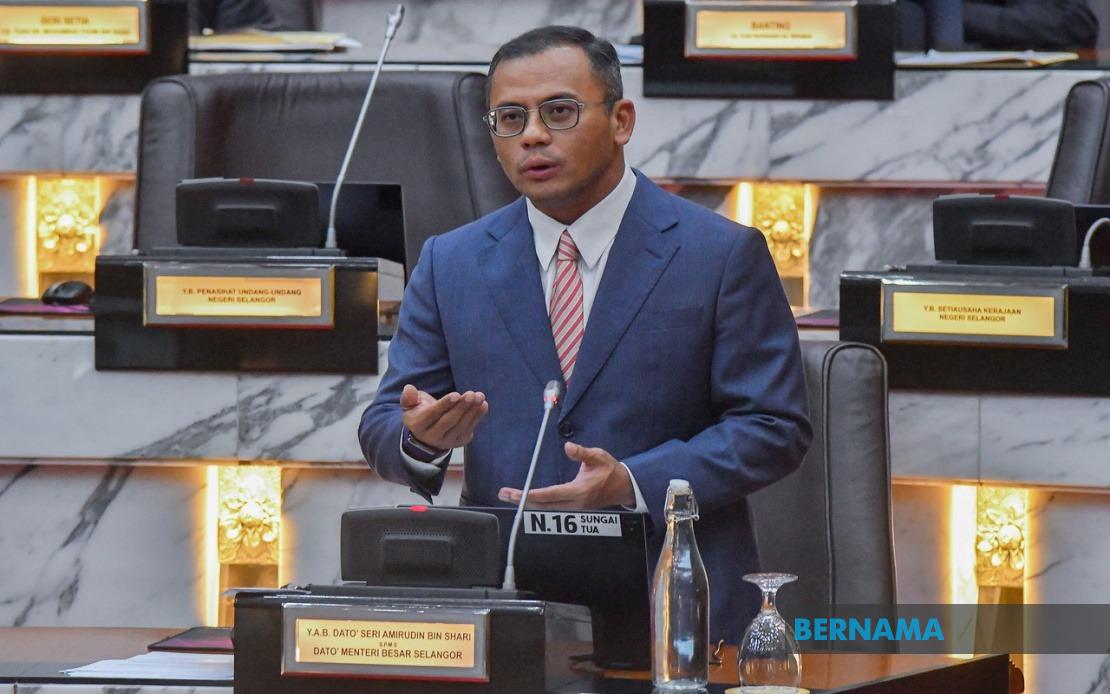
Selangor's state leadership has set in motion a comprehensive review of public transport accessibility across the state, recognising that gaps in connecting passengers to transit stations are undermining efforts to boost ridership. Menteri Besar Datuk Seri Amirudin Shari announced the directive to local authorities following concerns raised in the State Legislative Assembly, signalling that the connectivity challenge has become a priority issue for the state government.
The problem of first-mile and last-mile connectivity—the crucial journey from homes and workplaces to transit stations—has been gaining prominence on social media, with residents voicing frustration over poor pedestrian infrastructure and limited shuttle services. Rather than allowing complaints to circulate unanswered online, the Menteri Besar emphasised that local authorities must take the initiative to gather feedback directly from councillors and community stakeholders. This shift towards proactive engagement reflects a growing acknowledgement that transport planners cannot simply ignore digital-era complaints; they must integrate social media signals into their decision-making processes.
Amirudin made clear that the state government stands ready to inject additional financial resources to improve facilities supporting public transport usage. However, he stressed that investments should be cost-effective and strategically aligned with the broader objective of increasing reliance on public vehicles rather than private cars. This approach aims to balance fiscal responsibility with genuine improvements to commuter experience, avoiding wasteful spending while still delivering tangible benefits to residents.
The Menteri Besar's comments came in response to concerns raised by assemblyman Danial Al-Rashid Haron Aminar Rashid from Batu Tiga, who highlighted connectivity deficiencies around the LRT3 line and surrounding residential areas. The issue resonated strongly with legislators, indicating that transport connectivity is not merely a logistical matter but has become a visible symbol of effective governance. When transit systems fail to connect seamlessly with their surrounding communities, the entire purpose of investment in rail infrastructure is diminished.
Recognising the complexity of coordinating multiple transit operators, the state government has tasked Investment, Trade and Mobility Committee chairman Ng Sze Han with leading discussions among all public transport operators working in Selangor. The intention is to produce comprehensive service mapping that will reveal exactly where connectivity gaps exist, allowing targeted interventions rather than blanket solutions. This data-driven approach should help identify whether gaps stem from inadequate bus routes, poor timing between services, or simply insufficient pedestrian infrastructure.
The Menteri Besar raised a critical insight about subsidies and operational efficiency. While the state can reduce transport operators' costs through financial support, improved connectivity requires more than money—it demands better operational coordination and extended service hours that align with commuter needs. Subsidies alone will not solve the problem if operators continue to structure services in ways that leave gaps between transit modes or geographic areas. This points to a potential tension between the state's intentions and operators' willingness to restructure their business models.
For Malaysian commuters and regional observers, this Selangor initiative carries broader significance. As Southeast Asia's largest states grapple with rapid urbanisation, the relationship between public transport investment and actual usage depends critically on solving first and last-mile problems. Sprawling suburban development in Selangor means many residents live too far to walk to stations, yet too close to justify taking multiple transport modes. Without addressing these connectivity challenges, public transport expansion risks becoming underutilised infrastructure serving only a fraction of its potential catchment.
The state's commitment to listen to community feedback through social media and council members also reflects evolving expectations about stakeholder engagement in transport planning. Citizens increasingly expect their concerns to be acknowledged and acted upon quickly, particularly when problems are evident and documented through digital platforms. Local authorities that ignore these signals risk losing credibility and public support for future infrastructure investments.
The upcoming service mapping exercise will be instructive for other Malaysian states facing similar connectivity challenges. If Selangor successfully identifies problem areas and coordinates operators to fill gaps, the model could be replicated elsewhere. Conversely, if coordination proves difficult and operators resist changes that don't immediately boost their revenues, it will highlight systemic barriers to improving public transport usage across Malaysia.
Looking ahead, the effectiveness of this initiative will depend on several factors beyond the state government's control. Transport operators must genuinely engage with the mapping process and be willing to adjust schedules and routes based on findings. Local authorities need sufficient resources and technical capacity to implement improvements to pedestrian infrastructure. Most importantly, the state must follow through with promised subsidies and support in ways that actually incentivise operators to address identified gaps rather than maintain the status quo.