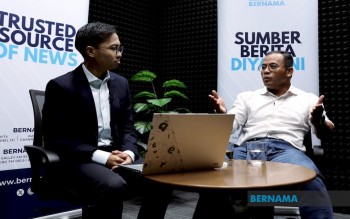
Selangor Menteri Besar Datuk Seri Amirudin Shari has outlined an ambitious vision for regional collaboration, suggesting that coordinated development between Selangor and Negeri Sembilan could establish a dynamic economic corridor capable of strengthening the competitiveness of Malaysia's central zone. Speaking recently in Seremban, Amirudin emphasized how the two neighbouring states' adjacent positioning creates substantial opportunities for building an interconnected investment landscape underpinned by modern industrial capabilities, sophisticated logistics networks, and technology-driven sectors.
The geographical advantage of proximity between Selangor and Negeri Sembilan forms the foundation of this collaborative framework. Rather than viewing the state border as a dividing line, Amirudin proposed treating it as a connector that enables seamless movement of capital, talent, and goods. This perspective reflects a contemporary approach to regional planning where administrative boundaries need not constrain economic integration. By aligning their development strategies and removing unnecessary bureaucratic obstacles, the two state governments could facilitate informal problem-solving mechanisms that accelerate decision-making on shared priorities without requiring protracted formal negotiations.
The Selangor MB highlighted specific geographic clusters that exemplify this cross-border potential. Selangor's southward expansion trajectory, particularly around Sepang and Kuala Langat, naturally complements the technology and innovation ecosystem emerging in Nilai, Negeri Sembilan. These complementary development zones could be leveraged to create a unified investment proposition attracting multinational corporations and regional enterprises seeking concentrated infrastructure and talent pools. The Selangor Aero Park, which sits adjacent to available industrial land across the state border in Negeri Sembilan, represents a tangible example of how strategic positioning could be monetized through coordinated planning and marketing.
Infrastructure connectivity forms the backbone of this proposed corridor concept. Amirudin emphasized how the Seremban Bypass project carries significance beyond serving local traffic needs—it functions as a strategic asset strengthening linkages between Negeri Sembilan's industrial establishments and Selangor's extensive port infrastructure, including Westports, Northport, and the developing Pulau Carey facility. Enhanced road connectivity translates directly into improved supply chain fluidity, reducing transit times and logistics costs for manufacturers operating across both states. This infrastructure synergy positions the combined region as an attractive node within broader Southeast Asian trade networks.
The existing transportation and airport infrastructure in the greater Klang Valley amplifies this economic corridor's appeal. Kuala Lumpur International Airport (KLIA), positioned conveniently between both states, provides direct global connectivity that manufacturing and logistics companies require. Major highway networks already crisscrossing the region create the foundation for rapid cargo movement and workforce mobility. Rather than duplicating these assets, coordinated development allows both states to maximize utilization of existing infrastructure while avoiding redundant investment, thereby improving overall return on public resources.
Amirudin articulated how technological advancement could become a differentiating factor for the proposed corridor. By concentrating technology sector development and attracting high-value manufacturing operations, the corridor could position itself as a regional hub for innovation-driven enterprises. This sector concentration creates knowledge spillovers, talent clustering, and supplier networks that generate competitive advantages difficult for other regions to replicate. Malaysian manufacturers seeking to move up the value chain would benefit from proximity to technology ecosystems and access to skilled workforces that coordinated development between Selangor and Negeri Sembilan could facilitate.
The employment implications of such collaboration merit consideration for the broader Malaysian economy. Cross-border industrial development typically generates employment across multiple skill levels—from logistics and warehousing roles to engineering and management positions. The presence of KLIA, combined with enhanced logistics infrastructure, creates particular demand for supply chain management specialists and technical professionals. For residents across both states, this development trajectory promises diversified career opportunities beyond traditional sectors, potentially reversing out-migration patterns to more developed states.
Amirudin framed this inter-state coordination as emblematic of a contemporary development philosophy emphasizing sustainability and regional balance. Rather than concentrating growth solely within Selangor, collaborative arrangements distribute benefits across the central region while maintaining competitive advantages through geographic clustering. This approach aligns with principles of inclusive growth where neighboring states strengthen each other rather than competing destructively for identical investments. Such cooperation strengthens Malaysia's overall appeal as a regional investment destination by demonstrating mature governance and pragmatic inter-governmental relations.
The political context underlying these proposals carries significance for the 16th Negeri Sembilan state election, as Amirudin specifically referenced. Voter preferences for aligned state leadership, particularly in neighboring jurisdictions, directly influence the success of inter-state economic initiatives. When administrations across borders share development priorities and possess compatible policy frameworks, implementation of complex multi-state projects encounters fewer obstacles. Conversely, misaligned political leadership can obstruct necessary coordination, creating friction that undermines economic potential.
The manufacturing, logistics, technology, and services sectors represent the core pillars upon which this economic corridor would develop. Manufacturing operations benefit from integrated supply chains and technology transfer opportunities. Logistics providers gain from consolidated freight flows and infrastructure optimization across state boundaries. Technology companies leverage talent accessibility and innovation ecosystems. Services sectors—from finance to business consulting—expand alongside the economic base. This sectoral diversity provides resilience, reducing overreliance on any single industry.
International investors evaluating Southeast Asian locations increasingly prioritize regions offering seamless multi-state infrastructure and governance frameworks. The Selangor-Negeri Sembilan corridor, if realized through sustained political alignment and coordinated planning, could differentiate Malaysia within this competitive landscape. Companies establishing regional hubs seek predictability, infrastructure quality, and efficient logistics—precisely the attributes this proposed development model emphasizes.
Looking forward, the success of this corridor concept depends substantially on sustained commitment from both state administrations and supporting federal policies. Infrastructure investments require coordinated funding mechanisms and long-term strategic planning extending beyond electoral cycles. Beyond physical infrastructure, cultivating the institutional relationships and trust necessary for informal problem-solving demands consistent engagement from bureaucratic and political leadership across state lines. When such conditions align, contiguous regions can transcend administrative boundaries to create economic ecosystems exceeding the sum of individual state contributions.

