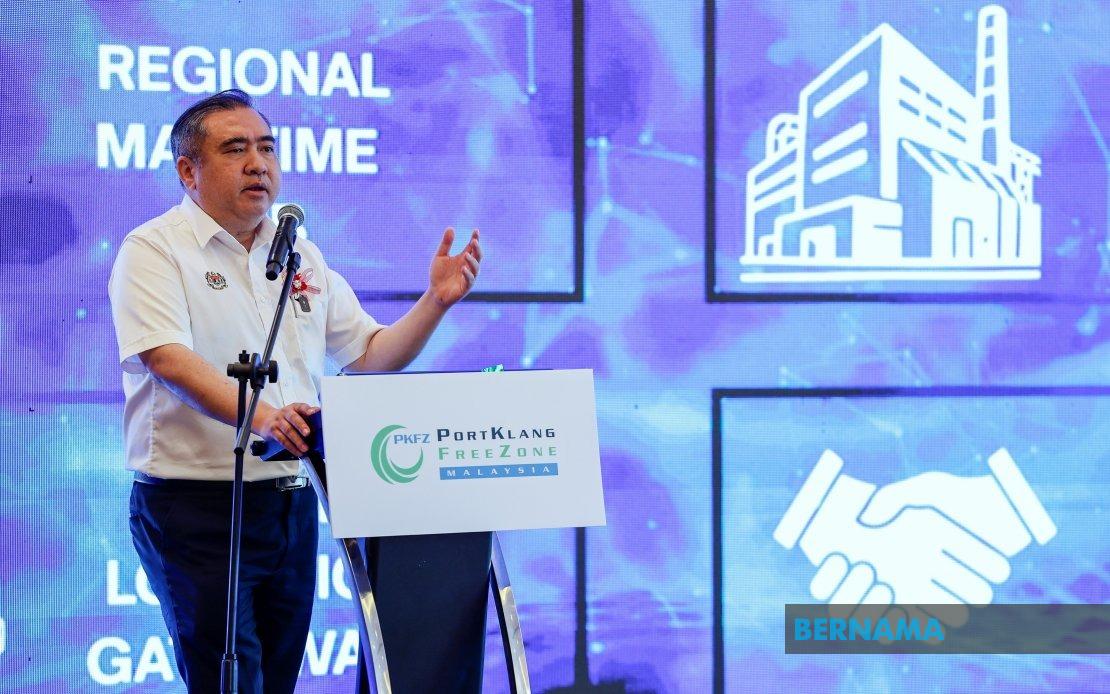
Malaysia's ambitious plan to develop a third container terminal at Port Klang has entered a critical phase, with state and federal authorities now focusing intently on resolving complex land tenure issues that have held up the strategic infrastructure project. Transport Minister Anthony Loke revealed that negotiations between the Selangor State Government, the Transport Ministry, and private sector partners are advancing in parallel, with the private operator engaged through a concession model that will follow a Build-Operate-Transfer arrangement once land complications are settled. Although officials remain hopeful about commencing physical construction within the current year, Loke underscored that clearing the land question takes absolute priority before any groundbreaking can occur.
The prospective terminal on Carey Island represents a cornerstone initiative for strengthening Malaysia's standing within regional maritime and logistics networks, addressing capacity constraints that have become increasingly evident as container traffic through Port Klang continues expanding. Prime Minister Datuk Seri Anwar Ibrahim has personally directed all agencies to accelerate progress on this development, signalling its importance within the government's broader economic agenda. The project gained formal government endorsement in May, establishing a clear policy framework that permits substantive work to proceed once procedural obstacles are overcome.
Navigating the land acquisition presents considerable complexity because the intended development site spans multiple ownership categories that must be coordinated. Selangor Menteri Besar Datuk Seri Amirudin Shari previously identified approximately 1,699.68 hectares across Pulau Carey in Kuala Langat district, comprising two distinct parcels. The Selangor State Development Corporation (PKNS) manages roughly 1,011.71 hectares of seabed land beneath the proposed terminal footprint, while Yayasan Selangor holds approximately 687.96 hectares of coastal land that would support supporting facilities and infrastructure. Harmonising these different stewardship arrangements, each with distinct administrative protocols and stakeholder relationships, demands sustained diplomatic coordination between state institutions and religious foundations.
The Build-Operate-Transfer framework selected for this project reflects international best practice for large-scale port infrastructure, distributing financial risk across public and private entities while ensuring eventual government ownership. Under this model, a private consortium would finance construction, assume operational responsibilities for an agreed concession period, and subsequently transfer the facility to Malaysian authorities. This arrangement enables the government to undertake transformative infrastructure without straining immediate public finances whilst maintaining long-term control over this strategically vital asset.
Port Klang's expansion aspirations reflect broader regional shipping dynamics that have intensified since the pandemic. As global supply chains reorganise and Southeast Asian economies attract manufacturing investment, containerised cargo volumes through Malaysian ports have accelerated considerably. Existing facilities at Port Klang face mounting pressure, with congestion occasionally constraining the facility's competitiveness relative to regional rivals in Singapore, Port Kelang's neighbour, and emerging hubs across Thailand and Vietnam. A third terminal would substantially augment throughput capacity, potentially positioning Malaysia to capture additional transshipment traffic and reinforce Klang as a significant maritime hub.
Simultaneously, Loke highlighted complementary workforce development initiatives that underscore the government's integrated approach to port modernisation. A memorandum of understanding concluded recently between Port Klang Free Zone authorities and the Armed Forces Ex-Servicemen's Affairs Corporation (Perhebat) aims to recruit retired military personnel into skilled positions, addressing documented shortages of competent workers across port operations and maritime logistics. Deputy Prime Minister Datuk Seri Dr Ahmad Zahid Hamidi witnessed the agreement, underscoring its significance within broader labour market policy.
This employment initiative extends beyond Port Klang specifically. The government has previously announced specialised training programmes enabling military retirees to obtain heavy vehicle driving licenses, directly targeting the chronic shortage of qualified drivers operating container trucks and articulated vehicles within Malaysian haulage networks. By channelling experienced former servicemen into logistics employment, policymakers address simultaneous objectives: providing meaningful post-retirement pathways for veterans whilst building the skilled workforce essential for expanded port operations and containerised freight movement.
The economic implications of successful terminal development extend throughout Malaysia's supply chain ecosystem. Shippers, freight forwarders, and manufacturing exporters would benefit from reduced handling delays and improved scheduling reliability. Container dwell times—the period cargo remains in port awaiting vessel or truck departure—directly influence competitiveness for Malaysian exporters facing time-sensitive markets. Enhanced capacity dampens congestion-driven cost inflation that ultimately passes through to producers and consumers. Enhanced port efficiency therefore translates into tangible advantages for Malaysian manufacturers competing within global value chains.
For Selangor specifically, the Third Terminal represents substantial economic stimulus beyond port operations. Construction employment would span multiple years, whilst operational phases would generate permanent jobs across cargo handling, vessel services, vessel repair, stevedoring, and ancillary maritime businesses. Port-related industries cluster around gateway facilities, creating commercial ecosystems encompassing freight consolidation, warehousing, import documentation services, and logistics technology providers. Successful terminal development thus catalyses broader industrial clustering within Selangor's Pulau Indah and adjacent industrial zones.
Regional competition remains a constant backdrop to Malaysian port planning. Singapore's Port Authority controls the world's busiest transhipment facility, handling volumes that dwarf Port Klang substantially. Thailand's deepwater ports and Indonesia's emerging initiatives across Sumatra increasingly attract traffic that historically flowed through Malaysia. The Third Terminal project accordingly reflects strategic necessity rather than mere expansion opportunity. Without enhanced capacity and modern infrastructure, Malaysian ports risk losing market share to more efficient competitors, undermining the logistics advantages that have traditionally supported Malaysia's manufacturing and export sectors.
The timeline for land resolution remains uncertain despite official optimism about commencing construction this year. Previous infrastructure projects in Malaysia have experienced delays when land acquisition negotiations extended beyond initial projections, particularly when multiple public and semi-public entities must coordinate. Nevertheless, the visible commitment from both Selangor authorities and federal Transport Ministry officials suggests that resolving these complications receives appropriate priority. Success in navigating these initial obstacles would represent meaningful progress toward realising infrastructure capacity that Malaysia's trade-dependent economy requires for sustained competitiveness within increasingly congested regional shipping corridors.

