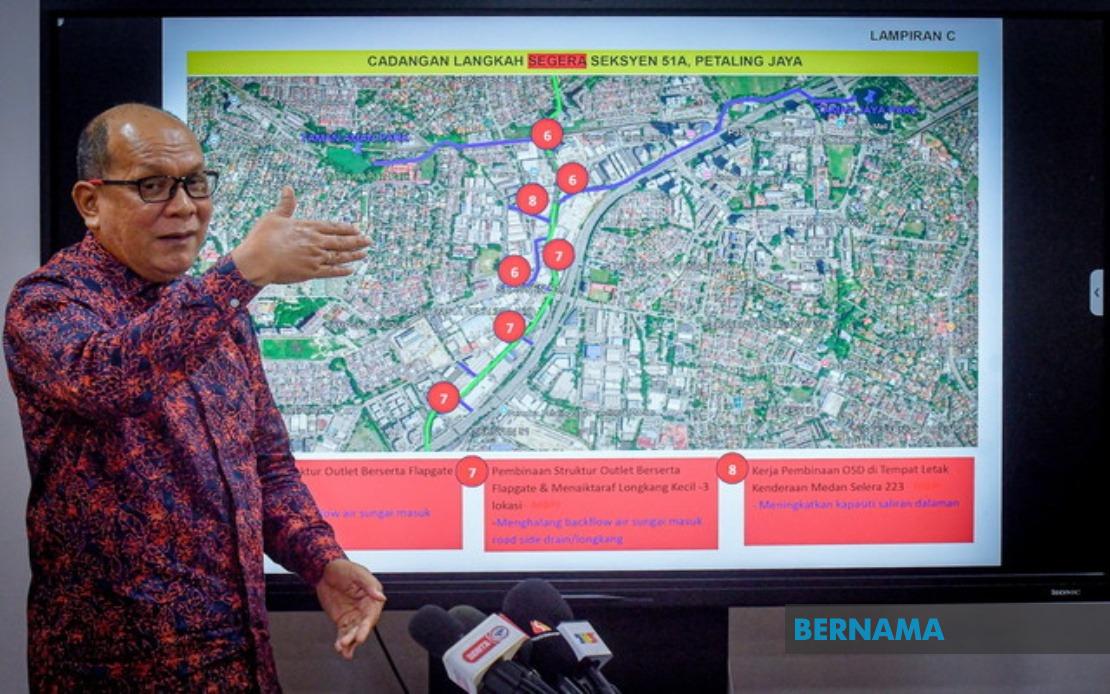
The Selangor state government has unveiled an ambitious RM40.5 million intervention to tackle the escalating flash flood crisis affecting Petaling Jaya City Council (MBPJ) areas, marking a significant financial commitment to protect residents and businesses from increasingly devastating water-related disasters. The comprehensive Immediate and Moderate Flood Mitigation Plan Project targets high-risk zones through a structured two-phase approach designed to deliver both rapid relief and lasting structural improvements across identified hotspot locations.
According to Datuk Izham Hashim, chairman of the State Infrastructure and Agriculture Committee, the substantial investment has been meticulously divided into 39 distinct work scopes, each addressing specific vulnerabilities within the affected regions. The strategic breakdown allocates RM20.1 million towards 26 immediate-action projects capable of completion within half a year, whilst directing RM20.4 million towards 13 medium-term initiatives expected to require up to twelve months for implementation. This phased methodology reflects a pragmatic understanding that some interventions demand swift deployment to provide near-term protection, whilst others require comprehensive planning and execution for sustainable, long-term resilience.
The intensification of flash flooding across Malaysia's urban centres, particularly in rapidly developing areas like Petaling Jaya, stems from a convergent crisis of infrastructure strain, climate volatility, and inadequate drainage capacity. Urban expansion has progressively reduced permeable surfaces and disrupted natural water absorption patterns, whilst climate change has brought increasingly unpredictable and severe rainfall events that overwhelm conventional drainage systems. The April 20 and May 6 floods that devastated Petaling Jaya traders underscore the urgency of state-level intervention, having caused substantial economic losses and exposing systemic weaknesses in existing flood management infrastructure.
Three areas have been designated as requiring critical priority intervention within the broader MBPJ zone. Section 51A, encompassing Jalan 223, represents one of the most vulnerable corridors, having repeatedly experienced inundation during high-rainfall events and subsequently suffering disproportionate impacts on the commercial sector. Kampung Cempaka, a densely populated residential enclave, faces similar recurring challenges that have displaced families and disrupted community life. The FAS Tunnel vicinity near Jalan PJU 1A presents particularly acute challenges due to the underground infrastructure complications and topographical constraints that complicate conventional drainage solutions. Together with nine additional identified hotspot locations, these twelve zones form the geographical focus of the state's mitigation efforts.
The proposed infrastructure interventions represent a deliberately technologically advanced approach to flood management, moving beyond traditional engineering solutions. The project encompasses construction of protective flood barriers designed to prevent water ingress into critical commercial and residential districts, installation of flap gate mechanisms that automatically regulate water flow and prevent backflow during peak drainage periods, and development of retention pond systems that temporarily impound excess runoff during extreme rainfall events. Additionally, the authorities plan to deploy innovative ecoblock technology imported from Germany, a permeable paving system that facilitates water infiltration whilst maintaining structural integrity and reducing surface water accumulation.
Implementing these multifaceted solutions demands considerable preliminary preparation before construction commences. Izham emphasised that each project component requires rigorous technical examination and detailed design specifications to navigate the complex urban environment. Critical preliminary investigations must identify underground utility routes—including water pipes, electrical conduits, telecommunications infrastructure, and sewerage systems—to prevent costly conflicts during construction. Land ownership documentation must be confirmed and any necessary acquisitions completed, a particularly complex matter in urban settings where multiple stakeholders may hold competing interests. These foundational measures, whilst extending project timelines, ultimately prevent far costlier complications that would otherwise emerge during active construction.
Recognising the severe economic toll that repeated flooding imposes upon Petaling Jaya's commercial sector, particularly the businesses concentrated along Jalan 223, the MBPJ municipal administration has instituted complementary relief measures whilst the capital infrastructure projects progress. From July through December, affected business premises will receive either complete rent exemption or a 30 percent reduction in monthly rental obligations, a direct financial intervention acknowledging the exceptional hardship imposed by successive inundation events. Additionally, the council has deployed early warning infrastructure including flood alarm systems and water level detection apparatus, enabling traders to implement emergency response protocols and minimise inventory losses during future weather events.
Petaling Jaya Mayor Datuk Mohamad Zahri Samingon highlighted the critical importance of seamless interagency coordination in translating fiscal allocation into tangible community protection. Effective flood management transcends any single administrative entity, requiring sustained collaboration among the Irrigation and Drainage Department (JPS), the Public Works Department (JKR), and MBPJ technical divisions. Regular engagement protocols ensure that capital investments address interconnected drainage challenges holistically rather than creating isolated, insufficiently integrated solutions. This collaborative framework also facilitates knowledge sharing regarding emerging technologies and best practices, whilst preventing redundant or conflicting interventions across different administrative jurisdictions.
For Malaysian policymakers and regional observers monitoring climate adaptation strategies, Selangor's substantial financial commitment signals serious acknowledgment that conventional reactive approaches—clearing drains, deploying temporary barriers, compensating affected parties—constitute inadequate responses to systemic flood vulnerability. The state's structured investment in permanent protective infrastructure, supported by rapid-deployment quick-win projects, represents a more comprehensive paradigm focused upon permanent risk reduction. As other Malaysian states face intensifying flood pressures from climate volatility and urban expansion, the MBPJ initiative provides a replicable model integrating infrastructure investment, technological innovation, stakeholder coordination, and direct economic support for affected communities.
The success of Selangor's RM40.5 million intervention will substantially influence broader perceptions regarding state-level capacity to manage climate-related disasters through proactive infrastructure development. Successful implementation would demonstrate that adequate funding, coupled with rigorous planning and interagency coordination, can substantially reduce flood vulnerability in densely populated urban zones. Conversely, delays, cost overruns, or incomplete coverage would reinforce frustrations regarding insufficient climate adaptation resourcing and governmental responsiveness. The coming months will prove critical as construction timelines progress and residents witness whether promised protection materialises in practice, ultimately shaping public confidence in governmental climate resilience capabilities across Southeast Asia's rapidly urbanising landscape.

