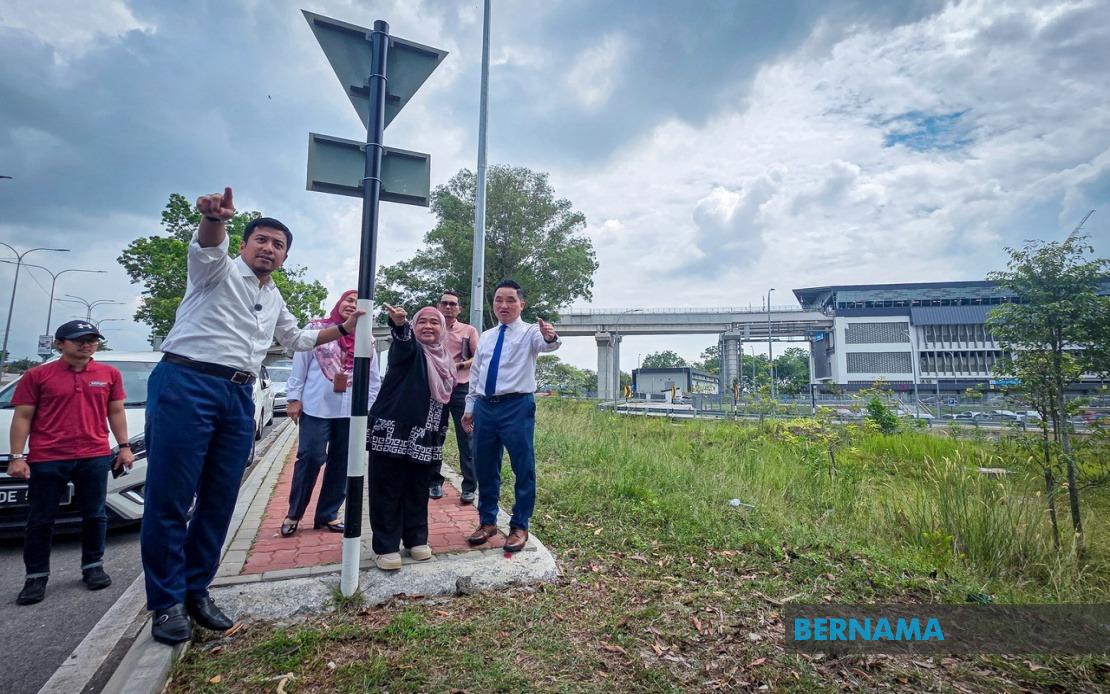
The Selangor State Government has committed to expediting the completion of connectivity facilities around Shah Alam Line LRT3 stations, recognising that inadequate pedestrian infrastructure has hindered user experience since the transit line's opening. State Local Government and Tourism Exco Datuk Ng Suee Lim outlined the administration's approach to resolving deficiencies affecting two key stations on the corridor, signalling a willingness to take responsibility for post-launch infrastructure gaps that have become apparent during the line's operational phase.
The government's focus centres on two problematic areas where connectivity has proven incomplete. At Dato' Menteri Station, the outstanding work involves administrative processes and permitting procedures that have delayed the installation of essential pedestrian infrastructure. Datuk Ng indicated that Prasarana, the public transport operator, has received instructions to complete these facilities within a two-month timeframe. The emphasis on accelerating this particular station reflects the administration's understanding that such delays directly impact commuter accessibility and reflect poorly on state governance.
Shah Alam Stadium Station presents a more complex situation, with completion timelines extending beyond the near-term horizon due to involvement by private developers in the surrounding area. Rather than imposing artificial deadlines, the state government has opted for a monitoring approach that recognises the realities of coordinating with multiple stakeholders. Nevertheless, Datuk Ng stressed that this does not diminish the government's commitment to resolution, merely acknowledging that some infrastructure components fall outside direct government control and require negotiation.
The inspection conducted by Datuk Ng and Exco Youth, Sports and Entrepreneurship Mohd Najwan Halimi underscores the political visibility the state administration is affording to this issue. By conducting public site visits and briefing the media, the government signals accountability and demonstrates that senior officials are personally engaged in problem-solving. This approach addresses public frustration over the LRT3's operational shortcomings and reassures users that their concerns are being elevated to decision-making levels.
The Shah Alam City Council will assume a coordinating role in monitoring improvements across the network, working alongside Prasarana and private developers to ensure timely execution. This multi-agency approach distributes responsibility while centralising oversight, potentially reducing the risk of accountability gaps. The state government recognises that infrastructure deficiencies rarely emerge from singular causes but rather from coordination failures between public authorities and private entities during the transition from construction to operation.
Beyond the two priority stations, the government has instructed all Local Authorities maintaining LRT3 stations within their jurisdictions to conduct comprehensive reviews of connectivity infrastructure. This broader audit serves multiple purposes: identifying additional problem areas before they accumulate into user complaints, creating a complete inventory of remaining work, and establishing clear lines of responsibility for each authority. The directive reflects a preventive approach rather than merely reactive crisis management.
The admission that completed infrastructure projects frequently reveal shortcomings during operational phases represents a pragmatic acknowledgement of real-world conditions. Rather than defending the quality of initial implementation, the government has positioned itself as responsive and willing to address problems once identified. This framing attempts to recast infrastructure deficiencies as normal teething issues rather than evidence of systemic mismanagement, though the approach's credibility depends on consistent follow-through.
Coordination meetings between the government and nearby developers have been scheduled to accelerate progress at Shah Alam Stadium Station. These discussions will address the tender processes and contractual arrangements that currently constrain completion. By bringing stakeholders into formal dialogue, the state seeks to identify potential impediments early and explore expedited pathways that respect both private interests and public infrastructure objectives.
The engagement with Royal Klang City Council and other relevant authorities suggests that connectivity issues may extend beyond the two specifically mentioned stations. By requesting that council members and assemblymen provide feedback on their respective areas, the government is attempting to identify problems that might otherwise escape official notice. This community intelligence approach recognises that users and elected representatives at ground level often detect issues before centralised authorities.
The timing of this intervention coincides with broader discussion around LRT3's operational performance. The Shah Alam Line represents a significant public investment and transport corridor serving commuters across multiple municipalities. Any perception that the infrastructure is incomplete or poorly maintained reflects negatively on the state government's stewardship of public assets. By addressing connectivity issues now, the administration seeks to prevent these concerns from becoming entrenched criticisms.
For Malaysian commuters and property developers in the Selangor region, the government's commitment carries practical implications. Improved pedestrian access and infrastructure quality will enhance the LRT3's utility as a transportation option, potentially influencing residential and commercial property development patterns around stations. The infrastructure improvements may also affect traffic patterns in surrounding areas as more users gain convenient access to the transit system.
The state government's willingness to take responsibility rather than deflect blame to previous administrations or national authorities signals a particular governance philosophy. This approach accepts that infrastructure projects evolve and requires ongoing management rather than representing fixed accomplishments. Whether this commitment translates into sustained improvements or becomes another unfulfilled promise will significantly influence public perception of the Selangor administration's effectiveness and responsiveness to citizen concerns.

