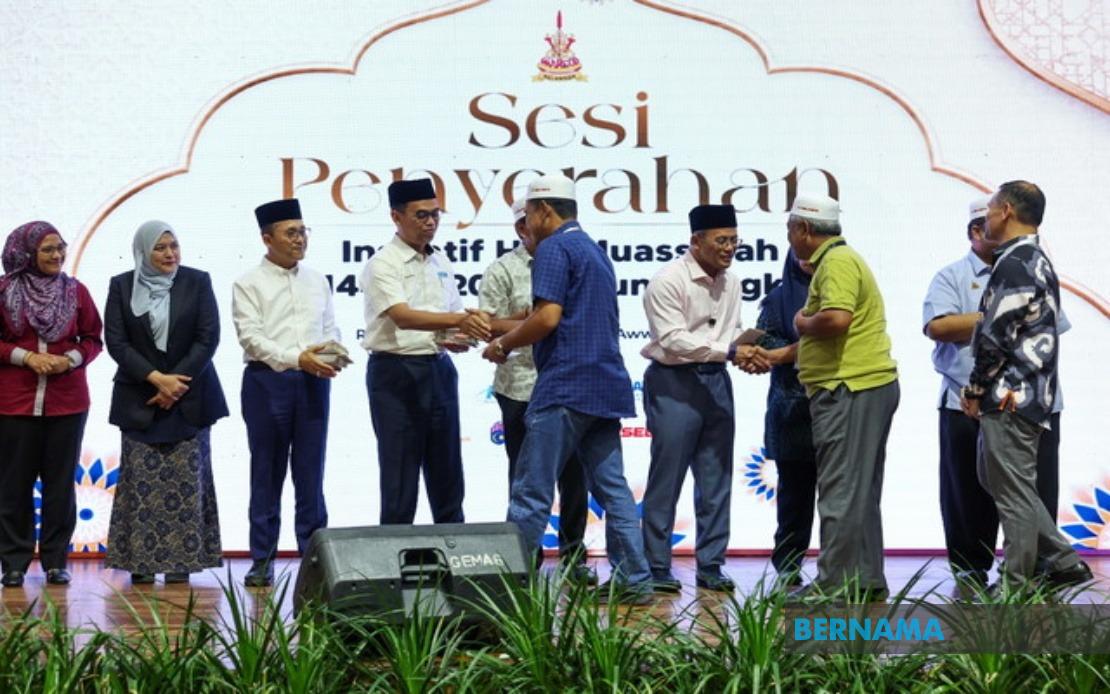
Selangor's state government is on track to complete distribution of its 2026 Haj assistance programme by September, with approximately 4,800 of 6,000 intended recipients having already received their financial support. Menteri Besar Datuk Seri Amirudin Shari disclosed this progress during a contribution ceremony in Puchong, signalling that the remaining beneficiaries would be identified and processed within the coming weeks to ensure all eligible pilgrims receive their allocated funds ahead of their religious journey.
The initiative, channelled through the Selangor Menteri Besar Incorporated Foundation (Yayasan MBI), represents a substantial commitment of RM9 million to support Muassasah pilgrims across the state. Each qualifying recipient obtains RM1,500 to address immediate preparation expenses, a sum designed to alleviate financial burdens associated with religious equipment, prescribed medications, appropriate travel clothing, and other essential items required for the Haj pilgrimage. The scheme reflects the state administration's recognition that Haj represents both a spiritual obligation and a considerable financial undertaking for many Muslim families in Selangor.
The distribution framework demonstrates administrative coordination across multiple constituencies within Selangor. The Dengkil ceremony held at Putra Perdana Community Hall involved 259 recipients and formed part of a broader series of handover events staged throughout the state. This decentralised approach enables personalised engagement with beneficiary communities and generates local recognition for the assistance programme, while also facilitating efficient verification of recipient eligibility and address confirmation.
Amirudin signalled ambition to enhance the programme's generosity moving forward, revealing plans to escalate the individual grant to RM2,000 by 2027 or 2028 at the latest. However, he tempered these aspirations with fiscal realism, acknowledging that state financial capacity and unforeseen budgetary pressures could necessitate programme adjustments. This transparency regarding future constraints reflects the complexities of sustainable social spending in an era of varying state revenues and competing development priorities across Selangor's diverse constituencies.
The Haj assistance scheme carries particular significance for Malaysian Muslim communities, given the substantial costs associated with pilgrimage. While the Tabung Haji (Malaysian Pilgrimage Fund) provides structured financing mechanisms, supplementary state-level support addresses the immediate, ancillary expenses that individual preparation necessitates. For lower and middle-income pilgrims, such targeted interventions can prove instrumental in enabling participation in what Muslims consider among the Five Pillars of Islam.
Selangor's approach aligns with broader regional trends wherein state governments increasingly tailor social programmes to specific demographic and religious constituencies. Both federal and state administrations across Malaysia have expanded Haj-related initiatives in recent years, recognising both the spiritual importance of the pilgrimage and its economic implications for families and communities. Selangor's RM9 million allocation positions the state among more generous contributors to such schemes within the country.
The programme's emphasis on practical necessities—medications, clothing, and equipment—reflects understanding that Haj presents distinct physical demands upon pilgrims, particularly those of advanced age or with chronic health conditions. By addressing these foundational requirements, the state reduces barriers to participation and potentially enhances pilgrimage experiences for vulnerable demographics who might otherwise defer their journey due to financial constraints.
The involvement of federal representation, with Deputy Housing and Local Government Minister Datuk Aiman Athirah Sabu and Sepang Member of Parliament attending the Dengkil ceremony, underscores the cross-governmental nature of Haj support infrastructure. Such coordination enables alignment between state initiatives and national pilgrimage frameworks, ensuring consistency in beneficiary identification and reducing duplication of assistance channels.
Operational efficiency in programme delivery remains critical given the scale of distribution. With nearly 80 percent of recipients processed by late August, the administration faces manageable completion of remaining cases within the stated timeframe. However, identifying and contacting over 1,200 remaining recipients within weeks demands sustained administrative effort and accurate contact information maintenance. Any data gaps or address verification challenges could necessitate timeline extensions beyond September.
The proposed future escalation to RM2,000 per recipient would increase annual programme costs to RM12 million for the same cohort, requiring either budget reallocation or supplementary revenue generation. State policymakers must evaluate whether such expansion remains compatible with other development spending commitments across Selangor's diverse and rapidly growing population. The cautious framing of the RM2,000 target suggests administrators recognise fiscal limitations, particularly should state economic performance weaken or critical infrastructure demands intensify.
For Malaysian pilgrims broadly, such state-level support mechanisms complement federal initiatives and private family contributions, creating multi-layered financing ecosystems around Haj participation. Selangor's relatively generous RM1,500 baseline sets benchmarks against which other states may be measured by constituents and civil society observers, potentially generating pressure for programme harmonisation or expansion elsewhere. Southeast Asian Muslim-majority regions with significant diaspora populations increasingly view pilgrimage support as both welfare obligation and cultural investment.
The Selangor scheme reflects governance evolution whereby state administrations proactively address constituent welfare through targeted programmes rather than relying exclusively upon federal mechanisms. This subsidiarity approach empowers states to customise assistance according to local demographic profiles and economic capacities. However, it also creates variable support landscapes across Malaysia, potentially advantaging residents of wealthier states like Selangor relative to counterparts in less fiscally robust jurisdictions.
Moving toward September's projected completion, Selangor administrators must maintain momentum in processing remaining applicants while simultaneously planning for the next cohort of prospective 2027 and 2028 pilgrims. Successful programme delivery will establish institutional foundations for the proposed enhancement to RM2,000, demonstrating both administrative capability and demonstrable outcomes that justify expanded future allocations. The scheme ultimately represents state government investment in religious observance and social support, dimensions increasingly intertwined within Malaysian governance frameworks.

