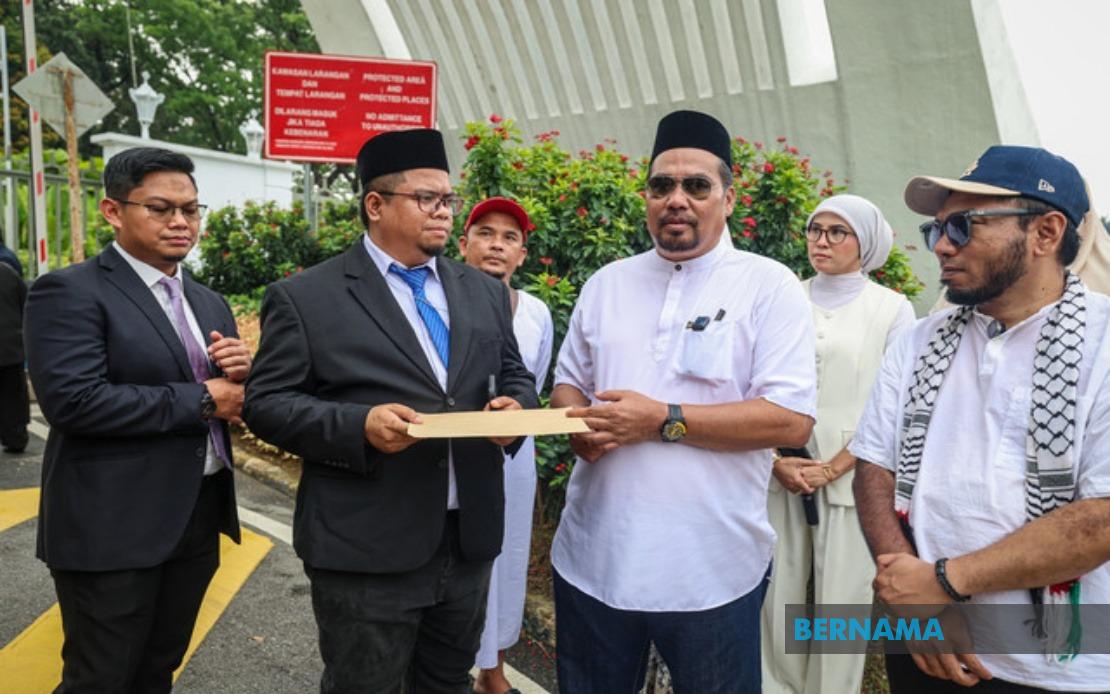
A prominent Malaysian social media activist coalition has escalated calls for accountability at Lembaga Tabung Haji, demanding that the government pursue those responsible for the institution's management failures with the full force of the law. The push from Sekretariat Gerak Gempur Media Sosial Rakyat Malaysia (SEKPUR) came as Parliament convened for a special sitting to address findings from a comprehensive Royal Commission of Inquiry into the troubled pilgrimage fund, signalling mounting public pressure on authorities to act decisively on institutional wrongdoing.
SEKPUR representatives handed over a formal memorandum at Parliament's main entrance, directing their plea toward the Minister in the Prime Minister's Department (Religious Affairs), Senator Dr Zulkifli Hasan. The submission, received by press secretary Zairudin Hashim at 12.35 pm, represents the organised voice of digital activism in Malaysia expressing deep concern over governance lapses that have eroded public trust in one of the nation's most important Islamic financial institutions. The gesture underscores how governance scandals can mobilise civil society movements beyond traditional political channels.
According to SEKPUR secretary Mohd Yani Alias, the memorandum directly invokes the Yang di-Pertuan Agong's directive that accountability must be pursued comprehensively, regardless of the political affiliation or seniority of those implicated. This framing is significant because it attempts to insulate the accountability agenda from partisan considerations, appealing instead to a principle of equal justice that transcends factional interests. For Malaysian readers, this reflects ongoing societal debate about whether institutional reform can proceed without becoming entangled in political rivalries.
The Royal Commission of Inquiry report, released publicly on July 29, spans 211 pages and documents systemic weaknesses in Tabung Haji's governance and operational oversight spanning the 2014-2020 period. This seven-year window encompasses multiple government administrations, suggesting that institutional problems transcended any single political cycle. The comprehensiveness of the findings indicates structural rather than incidental failures, which carries implications for how deeply reforms may need to penetrate the organisation's culture and systems.
Tabung Haji's significance extends beyond a single institution; it represents Malaysia's premier savings and pilgrimage financing mechanism for Muslim citizens, managing substantial public resources earmarked for one of Islam's five pillars. The trust deficit created by revealed mismanagement therefore carries broader ramifications for Muslim Malaysians' confidence in state-managed Islamic financial infrastructure. For Southeast Asian observers, Tabung Haji's struggles also highlight governance challenges that Islamic finance institutions across the region may need to address proactively.
Beyond accountability, SEKPUR has raised critical concerns about Tabung Haji's long-term financial viability and its capacity to deliver competitive returns through hibah distributions to depositors. This dual focus—on both punishment and institution-building—suggests civil society understands that justice alone cannot restore the fund's functionality. Depositors need assurance that their savings will appreciate meaningfully, particularly given competing investment alternatives in Malaysia's sophisticated financial markets.
The memorandum also highlights the escalating cost burden of performing the haj pilgrimage, which has become increasingly unaffordable for many ordinary Malaysians despite government subsidies and institutional support. This concern connects institutional mismanagement to material hardship for citizens seeking to fulfill one of Islam's central religious obligations. The inability to manage costs effectively while simultaneously mismanaging institutional resources represents a compounded failure in meeting both fiduciary and social responsibilities.
Transparency in hajj quota management constitutes another priority identified in the memorandum. Hajj quotas represent a scarce religious resource allocated by state machinery, and their governance has historically been subject to allegations of patronage and inequitable distribution. By highlighting this dimension, SEKPUR implicitly links institutional financial mismanagement to concerns about fair access to spiritual obligations, broadening the stakes beyond financial accountability to encompass social justice.
The RCI report contained 25 specific recommendations for institutional improvement, and as of July 30, Tabung Haji had implemented 75 per cent of these measures. While this completion rate suggests some responsiveness to reform directives, the outstanding 25 per cent raises questions about which recommendations authorities consider less urgent or perhaps more politically sensitive to implement. The distinction between implemented and pending reforms may reveal where institutional resistance persists.
For Malaysian policymakers, the SEKPUR memorandum represents a barometer of public patience regarding pace and depth of accountability measures. Civil society groups maintain capacity to mobilise public opinion through digital platforms, creating political costs for perceived inaction or inadequate responses. This dynamic underscores how governance reform increasingly requires not just technocratic compliance with commission recommendations but visible demonstration of political will in pursuing wrongdoing.
The timing of SEKPUR's intervention during Parliament's special sitting on Tabung Haji matters considerably. By coordinating their memorandum submission with the legislative session discussing the RCI findings, the activist group ensures maximum visibility and positions civil society expectations squarely within the parliamentary debate. This tactical timing suggests organised activism now understands how to leverage institutional calendars to amplify messaging impact.
Looking ahead, the question confronting Malaysian authorities involves translating RCI findings into concrete prosecutions and disciplinary actions against individuals while simultaneously implementing systemic reforms that prevent institutional recurrence. SEKPUR's emphasis on bringing wrongdoing to justice reflects public sentiment that financial mismanagement of Islamic institutions constitutes not merely administrative failure but potential breach of public trust that warrants legal consequences. How thoroughly and equitably the government pursues this accountability will substantially influence public confidence in Islamic institutional governance across Malaysia.

