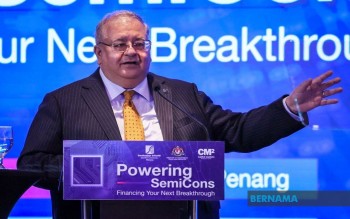
The Securities Commission Malaysia has signalled its readiness to take on regulatory oversight of Lembaga Tabung Haji's fund management and investment activities, though the final decision rests with the federal government. SC Chairman Datuk Mohammad Faiz Azmi indicated that the regulator stands prepared to implement the arrangement if deemed necessary by authorities, during remarks made in George Town on Monday.
The proposal forms part of a broader suite of recommendations emerging from the Royal Commission of Inquiry into Tabung Haji, which has been tasked with evaluating the pilgrimage fund's operational and governance framework. A dedicated task force comprising the SC, Bank Negara Malaysia, and TH itself is currently reviewing the RCI's full slate of recommendations to determine which reforms merit implementation. Faiz Azmi stressed that regulatory decisions of this magnitude ultimately require government approval rather than independent action by any single agency.
The potential expansion of SC authority over TH's portfolio reflects growing emphasis on strengthening the institution's oversight mechanisms following years of financial challenges. TH manages substantial investment holdings on behalf of millions of Malaysian pilgrims, making the scale and complexity of its operations a significant consideration for regulatory design. The question of whether capital markets supervision should extend to the fund's investment decisions represents a deliberate policy choice about institutional boundaries and regulatory scope.
Under the current structure, TH operates with its own internal governance arrangements while remaining subject to various government-level oversight mechanisms. The RCI process has examined whether existing frameworks adequately protect pilgrims' accumulated savings and ensure prudent management of the fund's resources. By contemplating a greater role for the SC—an agency with deep expertise in financial markets regulation—authorities appear to be weighing whether specialised regulatory capacity could enhance TH's accountability.
Minister in the Prime Minister's Department for Religious Affairs Dr Zulkifli Hasan had previously confirmed that the SC had been formally proposed as a potential overseer of TH's fund and investment management operations. This proposal emerged as institutional weaknesses were documented and scrutinised through the RCI proceedings. The suggestion reflects a trend toward enlisting sector-specific regulators to address governance gaps in large financial institutions, particularly those holding retail deposits or pilgrim savings.
The SC chairman's comments during his address at the SC Penang Semicon Roadshow were notably measured regarding implementation timelines. Rather than signalling imminent changes, Faiz Azmi emphasised the consultative nature of the current review process and the requirement for government endorsement before any formal transition of regulatory responsibilities could occur. This measured approach suggests that significant institutional restructuring of this nature would follow proper procedures rather than precipitate action.
The involvement of Bank Negara Malaysia alongside the SC in the task force reflects the multi-dimensional nature of TH's operations, which span both religious and financial services. Bringing Malaysia's central bank into discussions about potential governance reforms acknowledges that pilgrim fund management intersects with banking sector oversight and monetary policy considerations. The collaborative framework thus represents a whole-of-government approach to institutional reform.
For pilgrims and TH account holders, the potential regulatory shift carries practical implications regarding how their savings are invested and monitored. The SC's involvement could introduce additional compliance requirements aligned with capital markets standards, potentially affecting investment strategy or reporting frameworks. Simultaneously, enhanced regulatory oversight might be intended to provide greater assurance regarding prudent stewardship of pilgrims' dedicated savings.
Regionally, the Malaysian government's consideration of this reform aligns with broader moves across Southeast Asia toward strengthening governance of large financial institutions holding public deposits. Countries throughout the region have grappled with similar questions about appropriate regulatory architecture for institutions with dual religious and financial missions. How Malaysia structures TH's oversight may therefore carry relevance for other nations managing comparable institutions.
The task force's ongoing review process suggests that no final determination has been reached regarding the scope or timing of potential regulatory transitions. Government decision-makers remain in the process of evaluating whether SC involvement represents the optimal approach to addressing TH governance concerns identified through the RCI inquiry. This deliberative stance indicates that the reform agenda, while substantive, will proceed through established channels of government approval rather than through immediate administrative action.
For the SC itself, any expanded mandate over TH would represent an extension of its traditional capital markets regulatory domain into an institution with significant public sector characteristics and religious significance. The chairman's straightforward statement that the regulator would faithfully implement government directives underscores the SC's institutional posture of operating within mandates established by elected officials. The framing also acknowledges that institutional design choices of this magnitude appropriately remain within government prerogative rather than individual regulator discretion.

