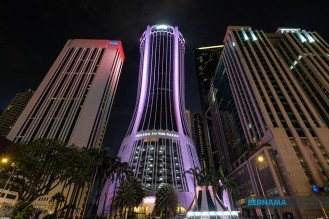
The government's decision to place Tabung Haji's investment portfolio under Securities Commission Malaysia oversight marks a watershed moment for the troubled institution, but experts warn that effective supervision requires the SC to take an active, hands-on approach rather than serve merely as a passive regulator. With millions of Malaysian Muslims relying on the institution to manage their haj savings, the stakes could hardly be higher, making robust oversight mechanisms essential to rebuild public confidence shattered by the Royal Commission of Inquiry's damning 2022 findings.
Dr Mohd Faisol Ibrahim, a senior lecturer in Islamic Economics and Banking at Universiti Sains Islam Malaysia, has articulated the central tension facing TH's reform: the institution must simultaneously deliver attractive dividend returns competitive with banking alternatives, protect capital from imprudent risk-taking, and maintain sufficient liquid reserves to meet its primary religious mandate of facilitating pilgrimage to Mecca. This balancing act requires sophisticated governance structures that go well beyond traditional regulatory compliance. The SC's role therefore extends beyond mere approval of investment proposals; it demands active participation in the decision-making process itself to ensure that each investment decision serves the depositors' interests rather than broader political or economic agendas.
The government formally announced the SC supervision framework in August following a special parliamentary sitting, positioning this reform as one of several recommendations emerging from a comprehensive task force examination of the Royal Commission's 211-page report. That inquiry, released publicly in late July, had identified widespread governance weaknesses spanning 2014 to 2020, ranging from inadequate risk management to inappropriate political interference in investment decisions. By designating the SC as the primary overseer of investment management while maintaining the Religious Affairs Ministry's responsibility for haj operations, the government attempted to create a functional separation between commercial investment activities and religious administration—a distinction that had blurred dangerously in preceding years.
Dr Mohd Faisol's recommendations for SC involvement go considerably further than passive regulatory authority. He advocates that the Commission should hold direct representation on TH's investment committee itself, positioned to evaluate proposals in real time rather than reviewing decisions after implementation. This shift from post-hoc monitoring to integrated governance reflects lessons learned from TH's crisis period, when critical investment decisions escaped meaningful review from independent financial expertise. The SC's participation would introduce professional investment scrutiny aligned with standards applied to other major institutional investors under the Commission's purview, creating consistency across Malaysia's investment landscape and preventing TH from operating under a separate, weaker regime.
Equally significant is Dr Mohd Faisol's emphasis that TH's investment standards must achieve parity with those demanded of commercial financial institutions—including solvency requirements, reserve adequacy, disclosure transparency, and governance protocols. This represents a notable departure from TH's historical positioning as a hybrid religious-commercial entity exempt from standard financial regulation. The academic argues that tightening these standards constitutes not merely technical improvement but moral necessity; the previous institutional failure inflicted genuine hardship on millions of depositors whose savings depreciated in value, and preventing recurrence demands structural safeguards comparable to those protecting customers of licensed banks and insurance companies.
To operationalize these principles, Dr Mohd Faisol proposes establishing dual oversight committees functioning as a double-checking mechanism. An investment committee would evaluate proposals on commercial merit, risk profile, and depositor benefit, while a separate risk committee would assess strategic vulnerabilities and potential exposures. Critically, both committees should include representatives from the SC, Bank Negara Malaysia, and the Ministry of Finance, ensuring that major investment decisions require consensus among multiple expert voices rather than unilateral determination by TH management. This distributed authority model creates institutional friction intentionally—slowing decisions to permit scrutiny while preventing any single actor from committing TH's resources without external validation.
Bank Negara's role within this framework deserves particular attention, given the central bank's mandate for financial system stability and its existing regulatory relationships with TH as a major institutional investor. Strengthening BNM's advisory capacity would inject monetary policy expertise and macroeconomic perspective into TH's investment deliberations, helping ensure that portfolio decisions account for interest rate environments, currency fluctuations, and broader economic conditions affecting both investment returns and the ringgit's purchasing power relative to haj expenses. This coordination across regulatory bodies represents a marked improvement over the siloed decision-making that characterized TH's troubled period.
Beyond governance and oversight architecture, Dr Mohd Faisol identifies financial restructuring as necessary to stabilize TH's asset-liability position over extended horizons. He suggests that TH's minimum savings requirements for haj eligibility might be adjusted upward, allowing the institution to accumulate larger reserves that cushion against market volatility and investment losses. Such adjustments must weigh carefully against accessibility concerns—setting minimum savings too high could prevent modest-income Malaysians from participating—but the alternative of inadequate reserves creates catastrophic risk. The proposal recognizes that sustainable haj affordability requires TH to maintain financial soundness; institutions on the brink of insolvency ultimately serve no depositor interest.
The governance prescription extends to human capital constraints that plagued TH historically. The Royal Commission recommended banning active politicians from TH's board, recognizing that elected officials brought political calculation into fiduciary decision-making. Coupled with the proposal for independent board appointment mechanisms, these measures aim to professionalize TH's leadership by selecting directors based on financial expertise, investment acumen, and religious commitment rather than political patronage. This depoliticization remains essential to rebuilding institutional credibility among depositors who witnessed their savings jeopardized by incompetent or self-interested decision-makers.
For Malaysian readers contemplating TH participation, these reforms offer qualified reassurance. The SC's direct involvement in investment oversight addresses demonstrable past failures, while the dual-committee structure and coordinated regulatory framework reduce the risk of repetition. However, depositors should recognize that these protections emerge from crisis learning, not from TH's original institutional design. The changes acknowledge that TH's religious mission and commercial investment functions require integration within robust governance structures—not separation that might prove impractical given TH's dependence on investment returns to fund operations and dividend payments.
The broader implications extend beyond TH itself. If successfully implemented, this supervisory model demonstrates how Malaysia's financial regulators can adapt governance frameworks for hybrid religious-commercial institutions serving millions. The approach acknowledges that depositor protection and religious mission compatibility need not conflict; indeed, sound financial management serves the religious objective by ensuring TH's continued ability to facilitate haj participation across generations. For regulators elsewhere wrestling with similar institutional arrangements, Malaysia's TH experience offers both cautionary lessons and a template for remedial governance design emphasizing transparency, distributed authority, and professional expertise.

