A quiet revolution is reshaping the Malaysian beef landscape. At Meat Feds in Petaling Jaya, chef Yenni Law meticulously trims sinew and connective tissue from secondary cuts of beef—work that demands precision and years of accumulated knowledge. What was once relegated to ground meat and processed products now appears on prestigious restaurant menus as the centrepiece of sophisticated dishes. This transformation reflects broader changes in how the country's culinary industry views cattle utilisation, driven by economics, education, and a growing appreciation for culinary craftsmanship.
The scope of this shift becomes apparent when examining the numbers. Malaysia ranks as South-East Asia's largest beef consumer, yet chefs historically concentrated on prime cuts—striploin, tenderloin, and ribeye—which represent merely 8-10 percent of a cow's usable yield. The remaining 80-90 percent, encompassing cuts like flat iron from the shoulder, hanging tender from the diaphragm, picanha from the top rump, and chuck primal from the neck and shoulder regions, traditionally vanished into minced meat, burger patties, and sausage casings. Consumers rarely encountered these cuts as intact proteins, leaving their textural and flavour potential largely unexplored.
Recognition of this untapped resource intensified when Law and co-founder Shelly Saw earned a Malaysia Book of Records accolade for featuring 20 different secondary beef cuts on a single menu—a testament to both their expertise and the novelty of such comprehensive utilisation. Their restaurant stands as a relative rarity in an industry long conditioned to view secondary cuts as inferior alternatives. Yet market observers detect unmistakable momentum building across the Klang Valley's mid-range and fine dining establishments, a change not driven primarily by culinary revelation but by systematic, strategic intervention.
Meat & Livestock Australia and distributors like Lucky Frozen Sdn Bhd have orchestrated targeted education campaigns, hosting seminars, master classes, and tasting events where secondary cuts receive prominent positioning. Valeska V, the regional manager for South-East Asia at Meat & Livestock Australia, frames this initiative as essential to professional development. By demonstrating proper trimming techniques and serving secondary cuts as refined steaks rather than utilitarian proteins, these organisations reshape chef perceptions. Law herself credits such workshops with refining her processing methods and validating her approach. This educational strategy mirrors successful market transformation elsewhere—notably Norway's intensive 1980s campaign that converted Japanese chefs' historical dismissal of salmon into contemporary sushi culture, where Norwegian salmon now dominates topping preferences.
Pricing dynamics have emerged as the primary accelerant for adoption. Secondary cuts cost 20-60 percent less than prime equivalents, potentially representing hundreds of ringgit savings per serving. Global oil price shocks and international beef scarcity have amplified this advantage dramatically. Prime cut prices have escalated approximately 30 percent over recent months, while secondary cuts have experienced only modest 10 percent increases, fundamentally altering cost-benefit calculations for restaurateurs managing margin pressures. Desmond Chong, head chef at Ignis KL, now features three to four secondary cuts specifically because prime cut scarcity and inflation have rendered diversification economically prudent rather than optional.
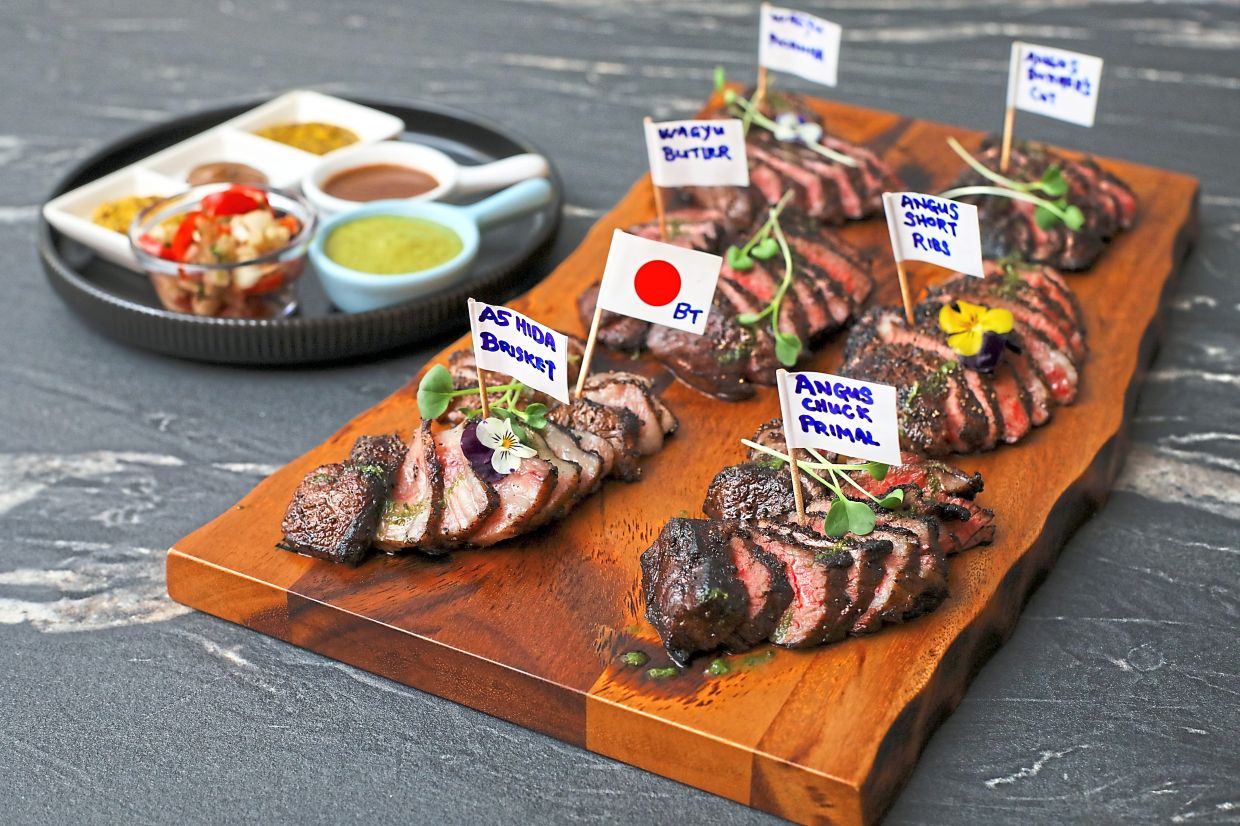
Beyond spreadsheet considerations, secondary cuts offer distinct gastronomic merit. Each presents unique textural and flavour characteristics—the buttery density of brisket, the robust bovine intensity of chuck primal, the tender bounce of short rib. When properly prepared through methods like charcoal-firing or extended braising, these cuts deliver sensation comparable to premium cuts without equivalent expense. Law's platter presentation, showcasing butcher's cut, chuck primal, brisket, picanha, and short rib alongside each other, demonstrates how a single animal offers a diverse spectrum of eating experiences. This diversity expands chef creative latitude and enables menu construction that caters to different preferences and price points simultaneously.
James See, business development director at Lucky Frozen Sdn Bhd, positions secondary cut adoption as a resilience strategy against commodity volatility. By utilising the entire carcass and distributing demand across multiple cuts, the supply chain becomes less vulnerable to disruption affecting any single high-demand item. This perspective gains urgency given Malaysia's stable beef consumption appetite coupled with global supply constraints. Diversifying consumer preferences across the entire animal's yield represents prudent risk management for both distributors and restaurateurs navigating an uncertain commodity environment.
However, widespread adoption encounters genuine technical obstacles. Secondary cuts demand substantially more processing skill than prime cuts. They contain higher proportions of sinew, silver skin, and intramuscular fat requiring careful identification and removal. Law emphasises that distinguishing fat from sinew requires systematic practice; visual similarity between these tissues creates constant pitfalls for less experienced butchers. The learning curve extends beyond trimming to encompass appropriate cooking methods. While prime cuts tolerate straightforward grilling, secondary cuts often require tailored approaches—some benefit from slow cooking that renders connective tissue into gelatin, others from high-temperature searing followed by careful resting. This knowledge transmission challenge explains why educational initiatives prove so valuable; they compress years of trial-and-error into structured professional development.
The regulatory and promotional environment supporting this transition reveals how market development operates beyond consumer preference. Meat & Livestock Australia's certification standards and promotional activities effectively shape purchasing patterns among professional chefs. This represents neither conspiracy nor market distortion but rather standard industry practice—commodity organisations worldwide fund education and marketing to expand utilisation patterns. Norway's salmon campaign operated identically. Yet the Malaysian context differs meaningfully; local restaurateurs possess the sophistication and flexibility to respond when presented with compelling economic incentives and technical support simultaneously.
Geographically, this movement concentrates in the Klang Valley, suggesting that adoption follows predictable diffusion patterns. Established fine dining establishments and progressive mid-market restaurants cluster in urban commercial districts where chef expertise, customer demographics, and supply chain reliability support experimentation. Secondary cuts will likely appear gradually in provincial establishments as confidence builds and knowledge disseminates through the industry's informal networks.
Looking forward, secondary cut adoption represents neither temporary fad nor revolutionary transformation but rather evolutionary market maturation. As global beef supply remains constrained and price volatility persists, the economics of diversification strengthen. Simultaneously, a generation of chefs receiving systematic education in secondary cut butchery and cookery emerges. Consumer education lags behind chef adoption; most diners remain unfamiliar with cuts beyond prime options. Progressive restaurants addressing this knowledge gap through menu design, staff training, and transparent communication will capture competitive advantage. The Malaysia Book of Records accolade highlighting 20 secondary cuts on a menu may eventually seem quaint as utilisation becomes normalised.
The transformation occurring at establishments like Meat Feds and Ignis KL reflects sophisticated responses to genuine constraints: supply limitations, pricing pressure, and resource efficiency. By embracing secondary cuts through structured professional development and authentic culinary craft, Malaysian chefs simultaneously address economic realities and expand their creative horizons. This pragmatic approach to market challenge generates unexpected benefit—a more resilient food system and a richer dining landscape offering greater diversity at multiple price points. The quiet revolution in Malaysian beef consumption ultimately demonstrates how education, economics, and culinary expertise align to reshape industry practice.

