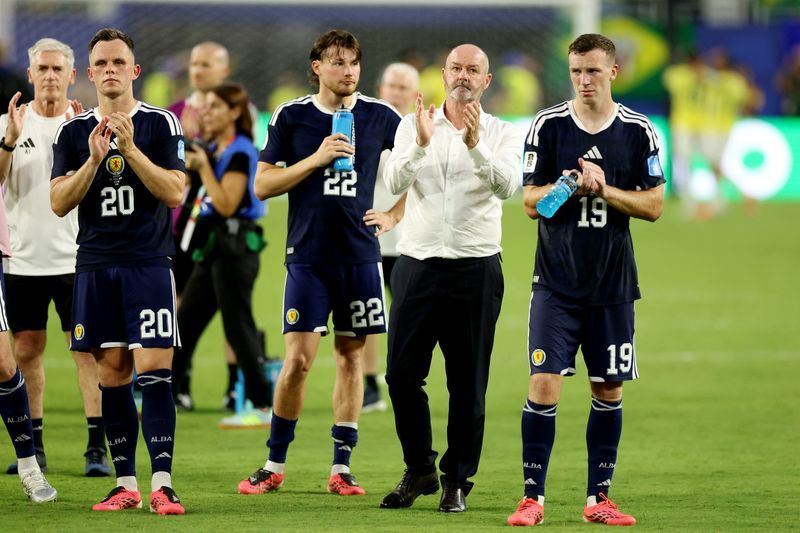
Scotland's hopes of progressing through the group stage at their first World Cup in 28 years appear to have been extinguished by Brazil's clinical finishing in Miami on Wednesday, with head coach Steve Clarke accepting that his team's own defensive frailties proved decisive in a 3-0 defeat. Despite mathematically retaining a slim chance of advancing as one of eight third-placed teams across the tournament's 12 groups, Clarke's assessment suggests the Scots will fall short, currently occupying the sixth-best position among third-placed finishers with 20 matches still to be completed across the remaining groups.
The Scotland manager's candid post-match analysis centred on what he termed a "fair result," emphasising that his team had presented Brazil with inviting opportunities rather than being overwhelmed by superior tactical execution. Clarke's frustration was directed inward, focusing on the specific moments where Scotland's defensive organisation broke down rather than attributing the outcome to any particular failing of his game plan. The fundamental issue, he suggested, was one of execution and concentration—Brazil's attacking quality simply capitalised on the defensive mistakes Scotland generously offered them across the 90 minutes.
In dissecting the performance, Clarke highlighted how Scotland had essentially gifted the South Americans their opening two goals, with the third following a similar pattern of defensive vulnerability. Notably, he was not entirely dismissive of his team's overall display, acknowledging that goalkeeper Angus Gunn produced several important saves and that Scotland had created occasional attacking chances of their own. However, these bright moments proved insufficient to overcome the fundamental imbalance, with Scotland unable to translate their limited opportunities into meaningful pressure on Brazil's back line.
While the disappointment was evident, Clarke appeared careful to distinguish between frustration with the tactical performance and any criticism of his players personally. He acknowledged the monumental achievement these individuals had already accomplished in qualifying for the World Cup, something Scottish football supporters had been unable to experience since France in 1998. Clarke recognised that despite the manner of the defeat, the players deserved credit for the journey that had brought their country to America in the first place.
Clark's assessment extended beyond the immediate tactical concerns, however, touching on deeper structural weaknesses within Scottish football that he believes require urgent attention. Having witnessed firsthand the physical intensity, raw power, and technical sophistication displayed by both Morocco and Brazil during the tournament, Clarke argued that Scottish football's development pathways need fundamental examination. The gap between Scotland's players and those of elite nations, he suggested, stems not from momentary lapses but from systemic issues in how young talent is cultivated at the grassroots and academy levels.
The former Chelsea fullback was emphatic that Scotland must prioritise developing a generation of young players capable of competing at the world's highest level without the physical and technical deficits currently on display. This assessment carries significance for Malaysian and Southeast Asian football observers, as similar conversations about talent development and structural investment are ongoing across the region's football federations. Scotland's struggles, like those of many smaller football nations, highlight the challenge of competing against countries with vastly greater resources and larger player pools from which to draw talent.
Clarke's comments regarding the Tartan Army, Scotland's renowned travelling support, were characterised by appreciation mixed with a desire to maintain perspective. While acknowledging the ambassadorial role these fans had played in representing their country with distinction throughout the tournament, Clarke emphasised that supporters should not lose sight of the primary objective. The players' qualification had made the entire American adventure possible; without their success on the pitch, Scottish supporters would have been watching the World Cup from home, as had been the case for a quarter-century.
This framing represents an important message from Clarke, suggesting that while the experience has undoubtedly been valuable for Scottish football's profile and the global visibility of the national team, the fundamental measure of success at a World Cup must always be tournament progression. The distinction Clarke draws between celebrating the off-pitch achievements and the on-pitch failure serves to refocus attention on what remains the sport's ultimate objective: winning matches and advancing through the competition.
For Malaysian readers with interest in regional football development, Scotland's experience offers several instructive lessons. The gap between qualification—itself a significant achievement for smaller nations—and genuine competition in the group stage can be surprisingly vast. Clarke's acknowledgement that Scotland fell short of the performance standards their squad is capable of reaching suggests that mental and tactical factors, rather than pure ability, often determine outcomes at elite tournaments. Furthermore, his emphasis on structural development in youth football resonates with ongoing debates across Southeast Asian football, where many nations struggle with similar issues of athlete development infrastructure and the challenge of closing technical gaps with more established football powers.

